
Electronic
Peggy Gou Goes 'Nanana' at the Old Royal Naval College: Is she worth the hype or just an 'Influencer DJ'?
Peggy Gou brought her global star power to Greenwich, but did the music get lost in a sea of smartphones? Louisa Eagle breaks down the ultimate battle between high-fashion hype and raw DJ talent at London's most historic rave.
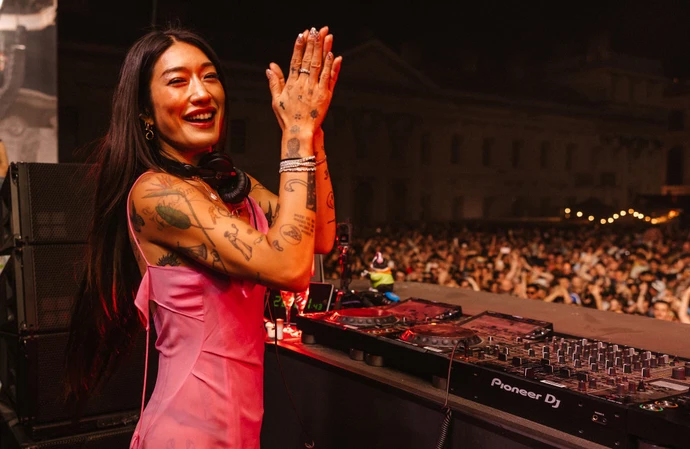
Third time’s the charm!
There are some artists that seem to keep slipping through my fingers. Peggy Gou has been one of those for me.
I completely missed her at Gunnersbury Park, then I was meant to catch her at Drumsheds. After experiencing the venue at another event, however, I decided to flog my ticket.
For all the hype surrounding Drumsheds - a temporary substitute while I patiently wait for Printworks to reopen in less than a few months – I left vowing never to return.
Turning an old IKEA into a rave venue was a brilliant idea on paper. In practice, less so.
The sound system simply didn’t justify the scale of the venue. If hard techno failed to deliver, I knew Peggy Gou’s music belonged in a completely different setting than cavernous concrete walls swallowing up every groove.
I’m glad I waited.
This marked my second consecutive summer at the magnificent Old Royal Naval College after witnessing Solomun there last year. The UNESCO World Heritage Site has rapidly become one of London's most spectacular settings for Labyrinth's open-air concert series.
As the sun dipped behind Christopher Wren's historic architecture, the golden-hour backdrop felt surreal. As if the sunset itself was a paid actor that had been hired as part of the production.
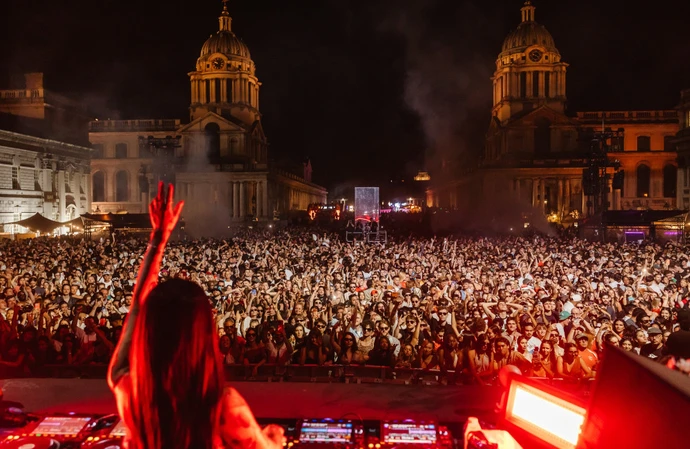
Peggy Gou performs at Labyrinth On Thames/ Credit:©@siennalorrainegray
Peggy who? It’s Peggy Gou
For anyone unfamiliar with Peggy Gou, she's the South Korean-born, Berlin-based DJ and producer who has become one of dance music's biggest crossover stars.
Long before her 2023 track (It Goes Like) Nanana became a global anthem, catapulting her into the mainstream, Peggy Gou was already a massive name in electronic music. While she began learning to DJ in 2009 and producing in 2011, 2016 was her official breakout year. During this year, she transitioned from an unknown artist to a rising underground star and made her debut at Berghain, Berlin's world-famous and highly exclusive techno institution.
Following this momentum, she released two seminal EPs - 2018's Once and 2019's Moment - projects that became the foundation for her distinct sound. Peggy built a fiercely loyal following through records like Starry Night, It Makes You Forget (Itgehane), Han Jan and Han Pan, all of which originally featured on these landmark releases.
Those tracks perfectly encapsulated what made her sound so distinctive: deep house infused with disco, funk and Korean influences, creating a sound often dubbed "K-House". It evoked the soul of vintage disco and '90s house, but wrapped it in a sleek, cybernetic production, layered with shimmering synths and pristine electronic textures that felt decades ahead of its time. It was future nostalgia – warm, playful, effortlessly cool and unmistakably Peggy Gou.
Ironically, despite Nanana being the song that made her a household name, it’s actually my least favourite.
Don’t get me wrong, it’s undeniably infectious. It carries echoes of Bananarama's Cruel Summer with a splash of Sabrina Carpenter's effortless pop cool in Espresso. It's impossible not to smile when it comes on.
But for me, Starry Night remains the masterpiece. (No pun intended. As every time I say Starry Night, I can't help thinking of Vincent Van Gogh’s painting)
That's the Peggy Gou I fell in love with.
So I was hoping to hear more of that Peggy than just her biggest hit.
Producer First, DJ Second?
This is where my opinion may divide people.
I think Peggy Gou is a phenomenal artist, but constructing a transcendent DJ set and writing timeless studio records are two very different crafts.
A DJ works in chaos. Their instrument is the crowd. Their job isn't just to play music; they need to read human emotion in real time and shape the energy of thousands of people simultaneously.
A producer, meanwhile, works in the controlled environment of the studio, sculpting every kick drum, bassline, and synth until perfection is achieved.
Peggy Gou actually started her journey behind the decks back in 2009. At just 18 years old, she was introduced to DJing and beat-matching in London, initially cutting her teeth as a pure selector. However, by 2011, she realised she wanted to play her own tracks during her sets, which drove her to pick up Ableton and learn music production.
Yet, despite her roots in the DJ booth, it is her mastery of the studio - her production - where I believe she truly shines. She has curated a distinct sonic brand that beautifully bridges underground credibility with global pop appeal.
However, as her popularity grows, the explosive demand for her to perform on stage means she often plays to massive festival mainstages where curated spectacle replaces the raw, reactive storytelling of a traditional DJ set.
As artists become increasingly successful crossover stars, the commercial pressure on their live performances inevitably grows. Festival line-ups often market the name rather than the fluid craft of mixing, creating enormous, stadium-sized expectations for an artist whose greatest current strength lies in the meticulous art of writing records.
A DJ must often be selfless, responding entirely to the room. A producer, however, creates music from a deeply personal artistic vision.
Fans buying a ticket to see Peggy Gou today aren't simply looking for standard club mixing - they're there to experience the specific musical identity she crafted in the studio, which made them fall in love with her in the first place.
The Influencer DJ Debate
Peggy Gou occupies a unique, highly debated space in modern dance music.
She has become one of electronic music’s biggest global exports, but her monumental success has drawn criticism from purist corners of the scene. Detractors often label her an "influencer DJ" - someone whose image, fashion profile, and high-end brand partnerships have become just as prominent as the music itself.
This debate reflects a wider shift in electronic music as DJs increasingly evolve into lifestyle brands. In today’s hyper-digital culture, it is easy to see why this skepticism persists; at times, the surrounding spectacle threatens to eclipse the art.
For an artist with such a formidable catalogue of original music, I was genuinely surprised by how little of her own material featured during her performance. Instead of celebrating the distinctive records that made her a household name, the set leaned heavily on safe, familiar festival formulas. Peggy Gou built her reputation on uncompromising originality, but this performance felt considerably watered down.
Viewed in isolation - and without the weight of her backstory - it was a perfectly enjoyable set.
It was light-hearted, fun, breezy, and effortlessly summery. It provided the exact sort of soundtrack you would happily enjoy at a Mykonos rooftop party or an Ibiza beach club while cocktails flow and the sun melts into the sea. Set against the majestic backdrop of the Old Royal Naval College, the atmosphere was undeniably stunning.
However, as a tech-house connoisseur - someone who has spent years immersed in dance music and naturally gravitated toward deeper, more technical subgenres - I was craving genuine artistic expression.
While the performance was polished to perfection, it frequently risked drifting into conventional, commercial EDM territory. Given Peggy Gou’s immense musical intelligence as a producer, I wanted to see her channel that brilliance into her DJ set. I wanted her to dismantle tracks, reconstruct them on the fly, and take real risks.
I was searching for filthier basslines.
I wanted dirty grooves.
I needed those hypnotic, disco-fuelled rhythms that only Peggy Gou is capable of writing. Ultimately, I wanted to see raw innovation prioritised over a sanitised festival formula.
We Lost Dancing
The problem with a performance built heavily on DJ showmanship is that it inevitably attracts the wrong crowd. The issue isn't necessarily that Peggy Gou is just an "influencer DJ" - it is the literal atmosphere that surrounds her.
Dance music has always been about losing oneself to the rhythm. Yet, while half the crowd were firmly anchored in the present moment, far too many people seemed more interested in filming than actually dancing. A sea of smartphones filled the air as people stood completely motionless, recording every single drop. There were moments where it felt as though the mere aesthetic of being there - and documenting it for social media - had become far more important than actually living it.
In many ways, this crowd dynamic perfectly mirrored Peggy Gou's own artistic crossroads. While she still carries the effortless credibility of an underground electronic music purist, she now operates comfortably within the upper echelons of mainstream festivals, luxury fashion, and global commercial appeal.
There is nothing inherently wrong with that; artists absolutely deserve to evolve and reap the rewards of their success. However, they should do so in a way that protects their core artistic identity, rather than gradually diluting the very musical DNA that made them unique in the first place.
Long Live the King!
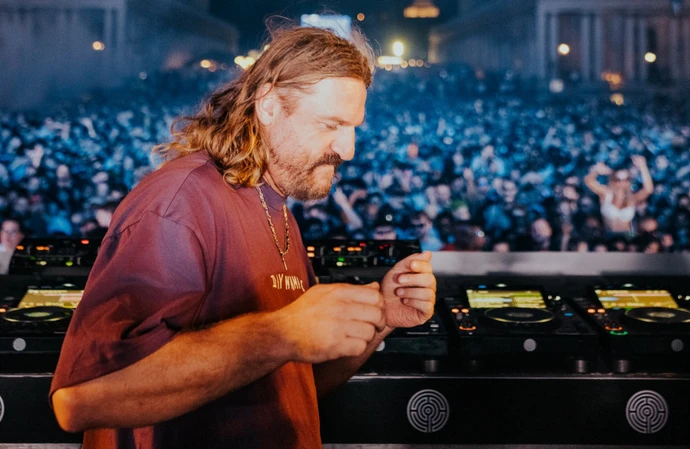
Perhaps the real problem is that my expectations have been permanently ruined by Solomun.
To this day, my benchmark for transcendent DJ sets remains unchanged, defined by his relentless grip on London’s most iconic spaces:
Solomun at Printworks (April 2022)
Solomun at Finsbury Park (August 2024)
Solomun at the Old Royal Naval College (August 2025)
Solomun at Alexandra Palace (February 2026)
Nobody can dethrone him. The crown on his head remains firmly intact.
What makes Solomun extraordinary isn’t simply his impeccable track selection; it is his masterful, borderline-wizardly technical skill. For hours, you are completely transfixed, anchored entirely by rhythm and sound. His transitions are practically invisible. One moment you are immersed in one groove, and the next, you are somewhere entirely different, yet you never once feel the gears turning. It is only in hindsight that you realise he has quietly smuggled you across multiple subgenres while maintaining a singular, cohesive narrative. Momentum builds progressively, and the energy remains relentlessly high until the very final beat.
Watching Solomun command a room is like watching a behavioral psychologist conduct an experiment. He reads a crowd with almost supernatural precision, adapting like a musical chameleon. He quietly takes your mind hostage until rhythm becomes the only language you understand, leaving the crowd moving involuntarily, possessed by the beat.
He DJs with the calculation of a chess grandmaster and the unsettling psychology of the Dark Triad. He possesses the strategic foresight of Machiavellianism, constantly playing several moves ahead of the dancefloor. He carries the unwavering confidence of narcissism, trusting his musical instincts without a shred of hesitation. And finally, he wields the cold detachment of psychopathy - willing to ruthlessly dissect a beloved record only to resurrect it as something entirely new. It is a calculated massacre on the dancefloor, executed with absolute, ruthless precision.
It Makes You Forget
Dance music is not about polished perfection; it is about surrender. It is about disappearing into the music until time ceases to exist. The greatest DJs do not just soundtrack a night - they alter your state of consciousness. They leave you feeling as though you have travelled somewhere profound without ever leaving the square foot of dancefloor beneath your feet.
A producer creates memories. A great DJ manipulates time.
The best sets are never measured by how many videos end up on Instagram, or how spectacular the stage production looks. They are measured by the rare moments you completely forget to reach for your phone because you are entirely consumed by the music. A truly transcendent set distorts your perception, quiets your internal monologue, and suspends reality for a few precious hours. You are no longer thinking; you are simply feeling.
Ironically, this is the exact philosophy Peggy Gou herself championed in her 2018 breakthrough hit, It Makes You Forget (Itgehane) - using the power of electronic music to wash away real-world anxieties, stress, and societal pressures in the present moment.
Peggy Gou gave us a beautiful evening in Greenwich. She has already proven to the world that she can write timeless records in the studio. Her next chapter requires bridging that creative brilliance with her live performance, allowing the producer and the DJ to finally become one and the same. When those two worlds truly collide like atoms on stage, she will become an unstoppable force of nature.
Until then, we need more of the Peggy Gou who wrote Starry Night.
A 300-Year Rave: Reimagining the Old Royal Naval College

Louisa Eagle for Contact Music goes VIP - The Painted Hall at Old Royal Naval College
The performance was part of the 2026 Labyrinth on the Thames series, which took over London’s Old Royal Naval College for an eight-date, completely sold-out run spanning the first three weekends of August. The event transformed the spectacular UNESCO World Heritage Site in Greenwich into a massive open-air arena overlooking the River Thames.
This year’s edition carried a distinct historical weight, coinciding with celebrations marking 300 years since the completion of the venue's iconic Painted Hall. Against this grand, Baroque backdrop, the organisers brought a heavy-hitting lineup of electronic music's biggest trailblazers to the riverside stage. Following the opening weekend sets from indie-rockers The Kooks (31.07.26) and house heavyweight Dom Dolla (01.08.26), Peggy Gou's highly anticipated appearance on Sunday (02.08.26), served as a major focal point of the summer.
On her specific night, she anchored a stellar billing that featured curated supporting sets from exceptional selectors. Opening duties fell to Daisybelle, followed by Welsh producer Kelly Lee Owens, who warmed up the crowd with her signature blend of melodic, ethereal techno-pop. Next came MPH, delivering a high-energy set at the forefront of the new-wave UK garage scene, before electronic duo Prospa took the stage, leaning heavily into high-octane club sounds, classic house piano, and blissful rave euphoria. Their performances set the stage for subsequent weekend takeovers from electronic visionaries like Overmono (07.08.26), Adriatique (08.08.26), Anjunadeep (09.08.26), Moby (15.08.26), and Michael Bibi (16.08.26).