Pop
The Communards' Sarah Jane Morris says Radio 1 'ban' 'suddenly ended her career in the UK' after refusing to change 'Me and Mrs. Jones'
Sarah Jane Morris says BBC Radio 1 "banned" her "Me and Mrs. Jones" cover after she refused to change the lyric from "Mrs" to "Mr", derailing her UK career but paving a way for a successful career in Europe, as she reflects on her journey and her Sisterhood project decades later.
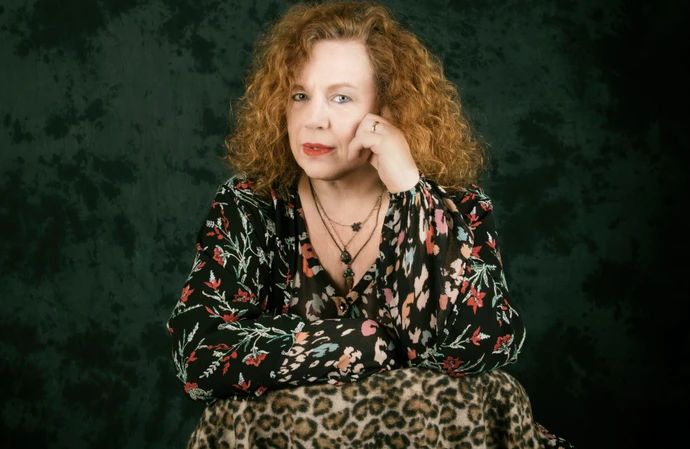
Sarah Jane Morris knows how it feels like to have a career derailed for refusing to play by somebody else’s rules. Forty years after making her mark as one of the most distinctive voices of the British 1980s, the singer-songwriter and activist has opened up on the moment her UK career ground to a halt when Radio 1 banned her version of Me and Mrs. Jones because she refused to change the song’s lyric from "Mrs" to "Mr".
Sarah Jane had already established herself as a formidable performer before embarking on a solo career. She joined the Communards alongside Jimmy Somerville, now 65, and Richard Coles, now 64, scoring the 1986 smash-hit Don’t Leave Me This Way, which celebrates its 40th anniversary this year, before signing to Jive Records. Her first solo album arrived in 1989, at a time when the music industry was changing and the long-term artist development that had benefited contemporaries including Annie Lennox, now 71, Alison Moyet, now 65, and Sade, now 67, was disappearing.
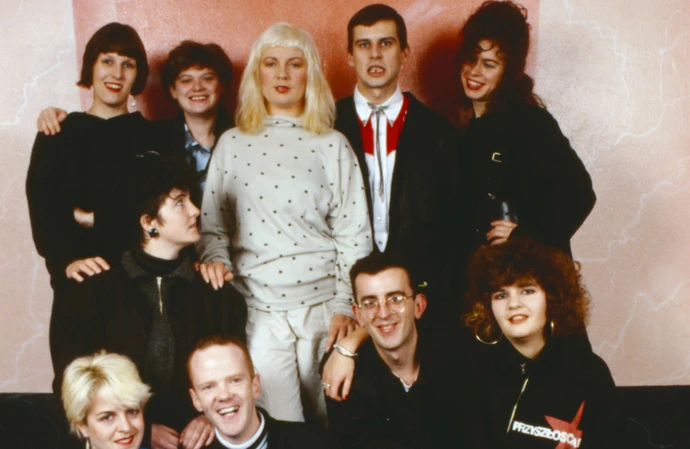
The Communards with Sarah Jane Morris (top far right)
Her first solo single was a cover of Billy Paul’s Me and Mrs. Jones, a song with deeply personal meaning because Sarah Jane had sung it to her much younger brother. But after releasing the track without changing the lyric, speculation immediately erupted around her sexuality. Having already made her name with a gay band, Sarah Jane suddenly found herself being asked whether she was a lesbian, whether she was “coming out of the closet” and whether she was deliberately playing with the media.
Her refusal to change the lyric came down to a simple question: “No man had needed to change the lyric. Why should I have had to do so?” Radio 1 banned the record and, Sarah Jane said, “Suddenly, it was the end of my career in this country.” She was asked onto BBC Radio 1’s Newsbeat three times to discuss the speculation and now describes herself as a “scapegoat of that time”, caught between a gay press that knew she was not gay and a left-wing press that had previously embraced her.
Yet what could have been the end instead became the beginning of a remarkable European career. A support slot with Simply Red took her around Europe, where she found success without being asked to explain or justify her sexuality. A European number one followed, then more continental hits, while an album was eventually shelved in Britain after Virgin Records was taken over by EMI.
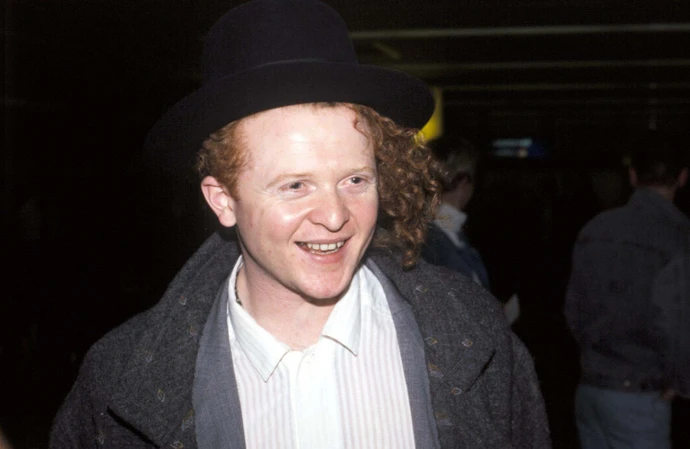
Sarah Jane Morris credits Simply Red, fronted by Mick Hucknall, with helping revive her career after Radio 1 banned her single
Decades later, Sarah Jane has channelled that experience into Sisterhood, her ambitious project celebrating the women who challenged the music industry and paved the way for future generations of female artists. Inspired by stars including Bessie Smith, Etta James, Joan Baez, 85, Janis Ian, 75, and Amy Winehouse, the project is about “women empowering women” and the idea of passing the torch from one generation to another. She will perform Sisterhood 2 with a 12-piece band and a 40-piece choir at London's Union Chapel on September 20.
And after everything she has endured, Sarah Jane has arrived at a definition of success that has nothing to do with chart positions or celebrity. She said: “I sit here, age 67, I'm writing the best music I've ever written. I'm singing the best I've ever sung. I'm still doing it, and I'm loving it, and I'm good at it. And that to me is success. So I'm happy with my lot."
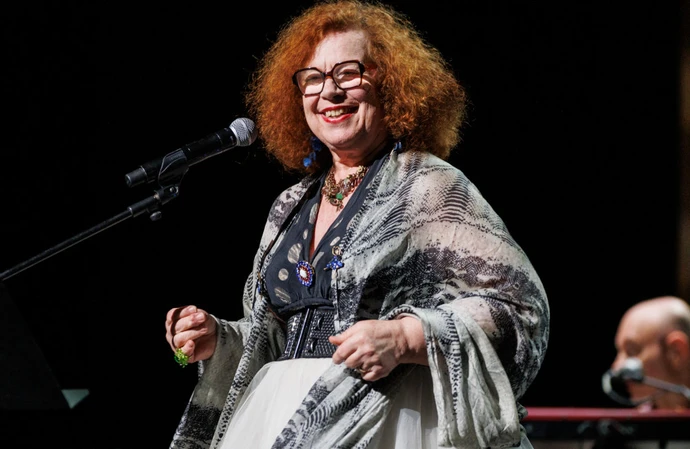
Sarah Jane Morris says she is writing and singing the best music of her career at the age of 67
ContactMusic caught up with Sarah Jane about her mission to celebrate the women who paved the way for today's female artists, and the enduring legacy of the Communards' Don't Leave Me This Way 40 years after its release.
Sisterhood has become such an important part of your career. Why do you think its message resonates so strongly with people?
The reason I started writing the project was that men are always in the history books, and women are not. And I thought, ‘Gosh, these stories need to be told.’ Some of them we know; we know part of the stories of a lot of these singers that were in the public eye. Still, a lot of the other groundbreaking artists, we do not know the hard journey they had to dare to put their head above the parapet and do things differently and say, ‘No, I'm not doing it that way,’ in a man's world because the music industry is very male dominated.
I like what it is, the essence behind this whole project, which is women empowering women with the help of wonderful men, because it's definitely not an anti-male project. I've written it with my guitarist Tony, and my band is male. But I've been inspired and influenced by many wonderful male singer-songwriters. But I felt that the sisterhood needed to come first.
So, in the end, I saw it as the passing of the torch from one generation to another. So it starts with Bessie Smith. And the youngest that we've written about so far was Amy Winehouse. So it's passed through, so far, 21 different hands to be passed on to the next. But for volume three, because we've already started writing volume three, there are so many other women to still write about. I'm definitely going to write about Raye because I think Raye ticks the boxes that I'm looking for, which are great singers, great songwriters, but someone with empathy that uses their platform to do good. She's already showing to be that person and writing epic songs. But the other thing that I want to get over is the fact that the reason there are so many wonderful young female singer-songwriters in the charts and have been for quite a long time now is because they stand on the shoulders of these women, these giants. They paved the way for them.
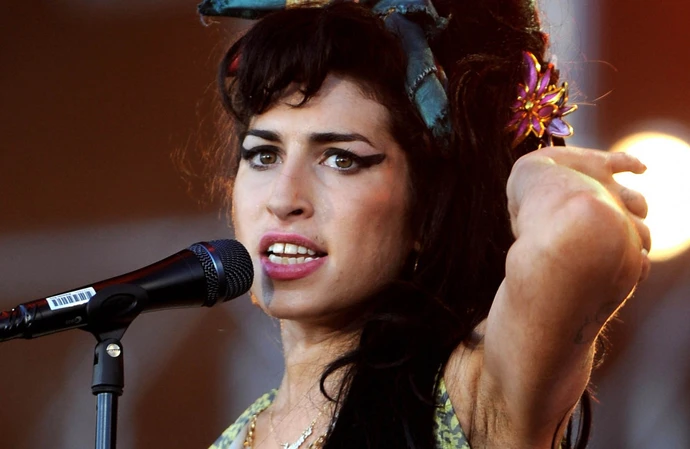
Amy Winehouse is among the pioneering women celebrated on Sarah Jane Morris' Sisterhood project
Looking back 15 or 20 years ago, we’ve come a long way when it comes to female representation in the music industry. What more needs to be done to make women even more comfortable in music?
The industry so needs to change, doesn't it, and, in fact, it's being forced to, but it's a very different industry to the one that I joined in the ‘80s.
Back then you were A+R’d, you did have somebody that had a trajectory about your career, two or three albums on, they were going to be developing you over a period of time. Now, if you won on The X Factor, you'll get a quick contract. If you don't have a hit with the first song, you don't ever get to make the album. It's that cutthroat.
And the fact that the music industry moved so slowly with the whole download industry, and the fact that it's now so hard for us, we musicians, to make any money out of our own music. There's a whole generation that hasn't paid for music, that thinks that you pay for a cup of coffee, but not for music.
And we're all suffering. So it's not just women; in this regard, the music industry is imploding. I think people like Raye can take the reins themselves and are able to find a way of financing her own career and doing it herself. I would encourage young female singer-songwriters to know as much as they can about the internet and how it works. Do it themselves.
Now what happens is Olivia Dean, Raye, Amy Winehouse, Adele - they all have been to the Brit School. The Brit School turns out fantastic talent. But what it also does is it has all the connections in the industry that you need from a course. You do get to meet the managers and the producers, and you get the experience you need. I would suggest to anyone, if they were able to, to try and get on to that course, because it seems to be something that helps people move into the industry in an easier way. But, of course, not everyone has the chance to do that.
You recently made a sequel to Sisterhood. What inspired you to revisit the project, and what was different about making it this time around?
The first one, the idea came about in the second lockdown. I don't have a television. My husband and I read to each other, and that's when I said I wanted to find out, as a research project, about the female singer-songwriters that inspired me and had been the backdrop to my life. So I made a list of 50, and once we'd started to do our research, we fell in love with their life stories. And that's when I realised this is an album, and this is a project. And that's when I had to think of it differently.
Tony, my co-writer, was Annie Lennox's guitarist for many years, he is such an all round musician, he came to stay, and we decided to write each song in the musical genre. Now, when we realised it was going to be an album, it could only be 10. That's all you can get on one album: 10 out of 50; that’s not fair. So we had to carry on writing. We wrote another 11, which is volume two, but we are already starting to write the next 11, which will be volume three. And, if we're able to health wise and financially wise to carry on writing and get through that list of 50, then that would be amazing.
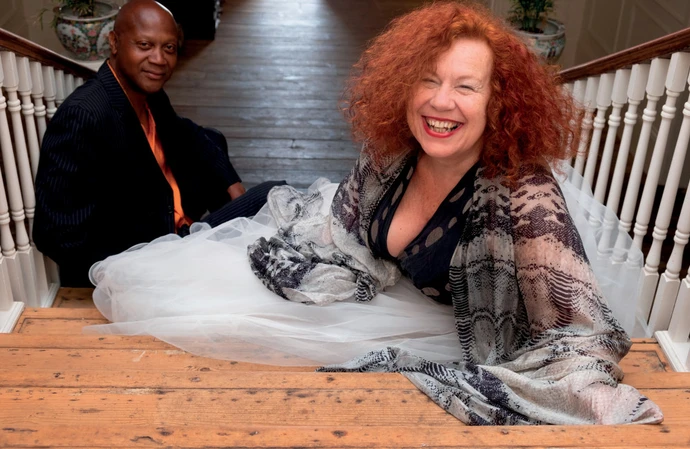
Sarah Jane Morris and guitarist Tony Remy are long-standing collaborators, having worked together for many years
Raye wasn't in my initial 50, but she's someone that's come into my radar and that I think, no, actually she belongs in the sisterhood. So I changed my mind as I went along. A couple of months ago, I was asked to present a lifetime achievement award to Chaka Khan for the Jazz FM Awards. And so I did a lot of research because I wanted to do my speech and do real justice to her for her incredible career. And by doing that research, I realised we absolutely need to write a song about Chaka Khan. She influenced us all. And she is a very generous spirit, and she helps other people. And so I suddenly thought, ‘Oh, gosh, she wasn't on that original list, and she so deserved to be.’
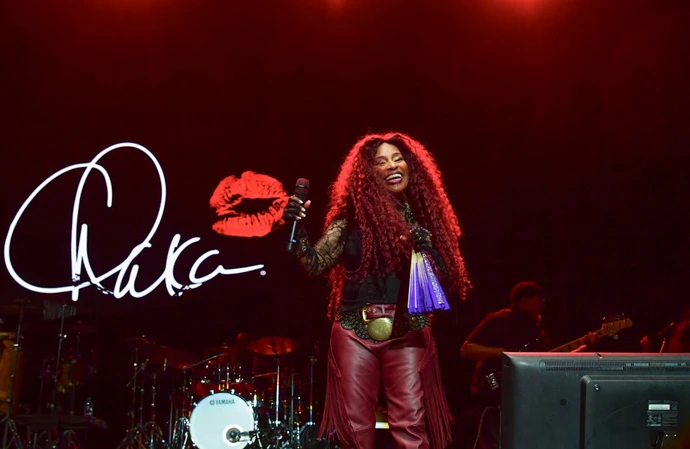
Chaka Khan is one of Sarah Jane Morris' many musical influences and is celebrated on her Sisterhood project
And so it's got juggled about a bit, but I'm writing about her. Raye. Those are the two that are very definite, but it's an interesting list that'll be on volume three as well. And it just goes on. It's an educational project. Not everyone in the audience who is either at a concert or listening to the album knows about these different singer-songwriters. And you hope that they'll read enough into the song because we've been very respectful as to how we've written the story. Hopefully, they'll want to go away and find out more about those artists. You hope that it brings a whole new audience to these incredible women.
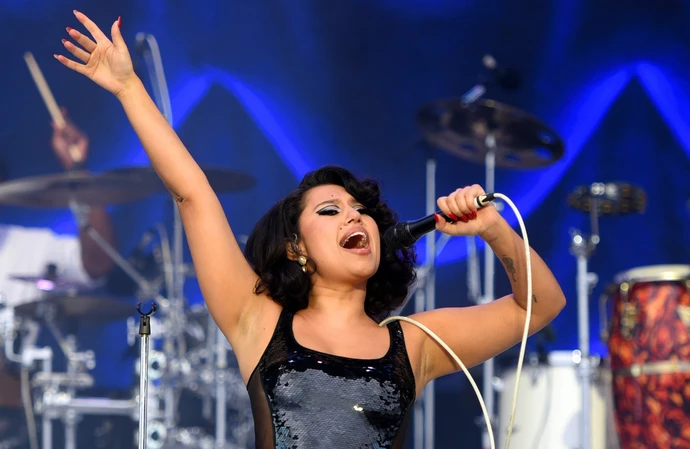
Raye has all the qualities Sarah Jane Morris looks for in a Sisterhood artist
What did you learn personally by creating the Sisterhood project?
I learned that they are just phenomenal. All of them. Every single one of them. Some of their life stories are like train crashes, and you think, ‘Hh my God, how do I recover from that? How do they recover from that?’ And then it happens again. And then it's like, whoa, you're on the edge of your seat.
Etta James’ life story was just phenomenal. What a powerhouse. And then you find out, amongst all of these singers, about the generosity. Bessie Smith, who was the founding sister, as far as I was concerned, sold so many records to a black American audience that that money put Columbia Records on the map. It was because of her success. We’re all told that it was the male blues singers that were the most successful. No, it was Bessie Smith. She was so successful. As a black artist, she couldn't eat in a restaurant. She couldn't stay in a hotel. So what she did, because she was so successful, was she bought a train and she traveled around America on that train. But she was being shot at by the Ku Klux Klan as they traveled. Those were those times. And she ended up by having been incredibly successful. She ended up dying without leaving any money because her ex-husband stole the lot. So she was in an unmarked grave.
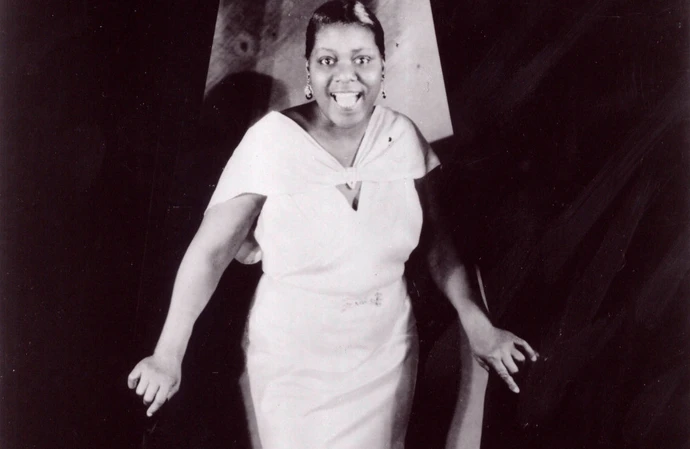
Sarah Jane Morris celebrates Bessie Smith as a pioneering force for women in music
And then 33 years later, when Janis Joplin, who's doing what I'm doing now, on television, talked about those women that had influenced her. And she mentioned Bessie Smith, Etta James, and Big Mama Thornton. Bessie Smith's maid, who was now a much older woman, because this is 33 years hence, she hears this. She contacts Janis Joplin through the record company and says, 'I know where Bessie Smith is buried, and there is no headstone.’ And Janis Joplin paid for that headstone. But she died later that year, age 27. But what a generous spirit. And Janis Joplin changed the way that people sang rock'n'roll forever. Because of her. And so it's discovering these little acts of generosity, through the way, which has been really, really inspiring.
When I wrote the Joan Baez song, Joan Baez is so significant because in her 80s, she's still right up there out front, standing up against Trump, against everything that needs to be stood up against. She and Jane Fonda are out there at the front. And so I decided not to write about her relationship with Bob Dylan. I wanted to concentrate on her bravery, to have stood up for and gone to prison as a result of standing up against the draft for the Vietnam War. And so her whole song is about her bravery to do it her way with so many risks involved. And she's still doing it.
With Peggy Seeger, her song, I've written her a feminist anthem called Half of Us Are Longing to Be Free because here she is at 91 still singing.
So it's just showing them all whether they're dead or alive. And if they're alive, I hope they hear their song, and they get to know that Tony and I have paid them our utmost respect, and we thank them.
You’ve said that joining the industry in the 1980s was a very different experience compared to today. Do you wish you had been given more respect as an artist back then?
I was one of those ‘80s artists that was signed because Don't Leave Me This Way came in 1986. I signed, and my first solo album was ’89. That was when the industry was changing. So unlike Annie Lennox, Alison Moyet, Sade, I didn’t have that A+R’ing that would develop my career. I was part of that next chapter that suffered from the fact that if you don't have the quick hit, you don't necessarily get to make it.
So I signed to Jive Records. My first single, because I wasn't a writer at that point, I started to write with their in-house writers and producers, I did a cover of Me and Mrs. Jones, which was the Billy Paul hit, which I used to sing to my brother, who was 14 years younger than me. I didn't change the lyric to Me and Mr. Jones. I sung Me and Mrs. Jones because I'd had a hit with a gay band. The whole of the press and the radio. Were like, ‘Is she a lesbian? Is she playing with us? Is she coming out of the closet? What's going on?’ No man had needed to change the lyric. Why should I have had to do so? So it was banned; Radio One banned it, so suddenly, it was the end of my career in this country. And had it not been for the fact that exactly at that point, Simply Red had asked me to support them around Europe, which is why I started to have success. And nobody asked me, ‘Was I a lesbian?’
Three times I was asked onto Newsbeat to be asked that question because it was suddenly OK to be gay because Jimmy [Somerville], Holly and the Johnsons and various people had been brave enough to come out and write about being gay, but no lesbian had come out. It was four years later that k.d. lang came out and that everyone wanted to celebrate that. So I was a kind of a scapegoat of that time. The gay press didn't touch me because they knew I wasn't gay. And the left-wing press, which I'd been the darling of, didn't touch me. So I suddenly disappeared.
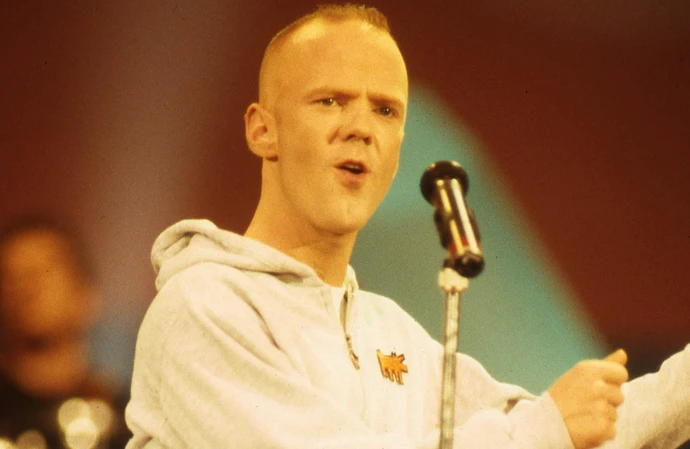
Sarah Jane Morris credits Jimmy Somerville and other openly gay artists for helping make it more acceptable to be gay in music during the 1980s
And luckily, because I supported Simply Red, I had a number one with that in Europe. And it started me kind of concentrating on Europe and in a way ignoring England, because then I signed to Virgin Records, and I started to have a couple of hits in Europe first, and then EMI took over Virgin and because I was already having hits in Europe, they shelved my album. It never came out in England. So it's, it's always about timing. Maybe I would have been much more successful had various timing situations not happened. But, do you know what, I sit here, age 67, I'm writing the best music I've ever written. I'm singing the best I've ever sung. I see this as success. A lot of my contemporaries aren't doing it. They might be a lot richer, they might be a lot better known. But I'm still doing it, and I'm loving it, and I'm good at it. And that to me is success. So I'm happy with my lot.
When your record was dropped and the gay press wondering about your sexuality, that must have been very difficult to deal with, even more so because you were so young.
It was a strange thing, but the music business is like that or any of the creative arts, you are just constantly knocked over or had a door shut, and you have to find a crack in the wall and get yourself back up there. Luckily enough, I was hungry enough to sing. I wanted to sing, and I wanted to do the best I could. And along the way, I became a good songwriter.
But it did take me till I was about 50-years-old before I started writing decent songs, because I picked up age 30, where I left off as an A-level student. So I had to make my first albums writing A-level type lyrics. And over the years I developed, and I understood what you have to look out for. And I wanted to write the human story.
So when I'm not writing the Sisterhood, that's what I'm doing. I'm writing about what I see around me. I am telling other people's stories, tapping into my own because that's obviously what makes me understand somebody else's story. I do a lot of research, and I'm a human rights songwriter. And there is so much to write about.
With Sisterhood, it must have felt really nice just to be able to put your thoughts and feelings into the lyrics.
Tap into all of that and to celebrate these incredible women. Rickie Lee Jones, her album Pirates was the backdrop to my early 20s, and I knew that she had gone out with Tom Waits for a whole year; I knew that they both inspired each other. And I actually got to do a concert with her and a lot of some of these singers, including Joan Armatrading. Quite a few of these singers that I've written about, we all did this huge concert in Rome for International Women's Day with Vanessa Redgrave presenting it. And so that's where I met Rickie Lee. And I was a fan girl at her dressing room saying, ‘Gosh, your album, your song Skeletons,’ you know, I would just carry on and on and on.
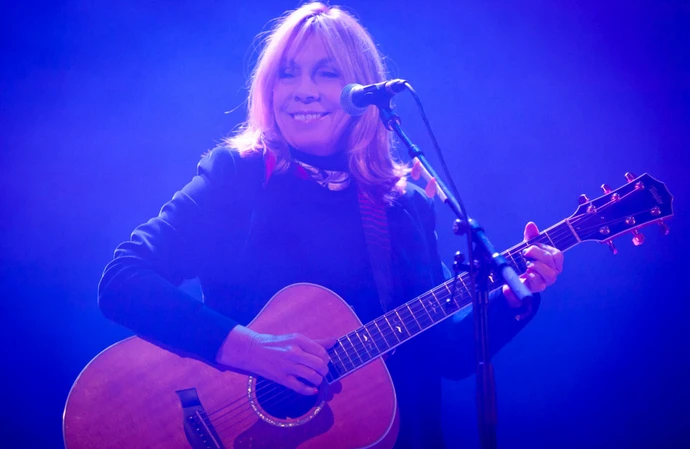
Sarah Jane Morris was a 'fan girl' when she met Rickie Lee Jones, who is honoured on her Sisterhood project
It was one of the first songs we wrote. And her autobiography is brilliantly written, but it just gives you this unbelievable story. She's 12-years-old. She's hitching her way around America. This beautiful blonde girl with a guitar on her back. How dangerous is that? And her grandfather - I mean, this is a gift - was a one-legged tap dancer called Peg Leg Jones in vaudeville. We've put him into her song. I found out that she was incredibly influenced by Van Morrison, who she did eventually meet. And I don't think it was an easy meeting, but musically she was linked, and that's why there's a lyric in her chorus, which is, ‘a jazz side of the road,’ and I've put ‘thumbing in the headlights,’ ‘thumbing’, meaning ‘hitching’, ‘in the headlights on the jazz side of the road.’ ‘Jazz side of the road’ is kind of the nod to Van Morrison.
I talk about her relationship with Tom Waits within it and the heartbreak. And she wrote to me and said that she cried so many tears hearing her song that it was like being in a GTO car, driving through a car wash with the roof down and getting all wet, which was the most wonderful description, and only she could have written that of what that song had done to her - our song about her. She said, ‘Thank you. Thank you for my truth.’
And so Tony and I, we bought tickets to see her at the Barbican a couple of months ago, and she invited us backstage, and we were able to give her both vinyls and have our photograph with her. And it was a wonderful exchange. A full circle, and those kind of moments make it totally worthwhile.
Janis Ian, who wrote At Seventeen, which is such an important song to so many of us. She bought the album herself in America on the day of release, and I, because I'm the record label, everything pings through my mobile phone. So I look to see who bought it on the day of release, and Janis Ian, America. And so I emailed, and I said, ‘Are you Janis Ian that we've written about?’ And she said, ‘Yes. One of my fans has alerted me to this project, which I think is a fantastic thing to do, and I want to have it in my collection.’
And I said, ‘Well, it's going to take ages for the album to get to America. Can I send you a download link so you can hear it now?’ And an hour later, she wrote to Tony and me and said that our research was amazing, that the songwriting reminded her of her own. But the song which we'd written for her, which is called The Dignity of Love and it closes the whole album. She said, ‘I couldn't have written my story better.’ So it's little gifts like that that you hope will keep coming.
I would love that Dolly Parton got to hear her song because we've so celebrated her. And she is one of the most generous spirits out there. She's done so much with all the money that she earned from Whitney Houston covering the song I Will Always Love You; she put all of that into buying an entire road, which was once a buffalo track. In a nearby town, and gentrifying it and gave people work. She created her library, which gives books to young children wherever they are in the world. She created Dollywood so that rather than give her family money, she gave them a lifetime job. I mean, how smart is that? So in her chorus, we call her ‘the hillbilly feminist with Jesus in her heart.’ And I just hope that she gets to hear it. I know she hasn't been well lately, and I don't know how to get the song to her. I've tried all sorts of different ways, but I don't have all of those connections that a major label would have. So you just hope that bit by bit, somebody gets to hear it and gets it into her ears.
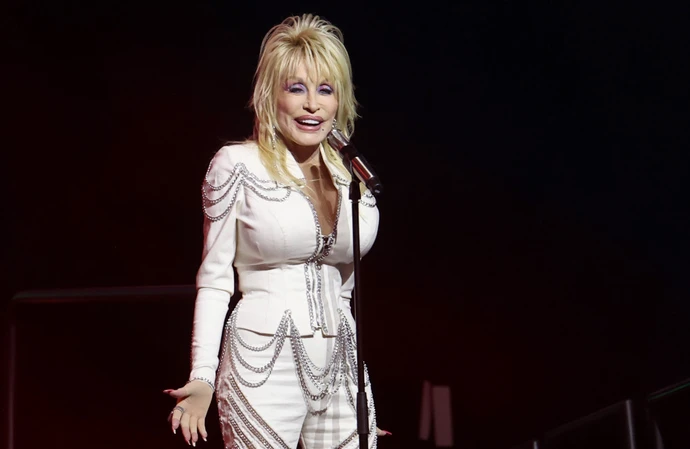
Sarah Jane Morris hopes Dolly Parton gets to hear the song she wrote for her Sisterhood project
Don’t Leave Me This Way is celebrating its 40th anniversary this year. Why do you think the song remains so powerful to generations of listeners?
There were two hits before we ever covered it. But they were never massive hits; ours was, I think, the most successful. But they were brilliant. Each version, Thelma Houston's and the first one with Harold Melvin and the Blue Notes.
But I think it was a song the way it was produced because Mike Thorne was integral to it. Mike Thorne had produced all of Bronski Beat and all of Marc Almond, and he was very much that kind of producer of the early ‘80s. And he bought a synthesizer. It was a kind of computer keyboard. And it was by feeding Jimmy and my voices into it that right in the middle where we change the key, where he stretches our voices to the point where we humans can't actually hold a note that long, you know it goes on and on and on and on when we go into the last part of the song. That had a lot to do with it.
The fact that Jimmy was a red-headed Glaswegian man with an incredibly high voice, incredible falsetto voice, and I was this very tall, red-headed woman with his baritone voice. So we looked strange together. We sound with each other's voices what the other should possibly have. And because the song is so celebratory, it was right bang in the middle of Thatcher's Britain. Boy, was the country in a bad place. Boy did we need to celebrate. That song gave people the excuse to dance around their handbag and celebrate.
The video we created in the warehouse in the Docklands, that sort of undercover secret location, that all became something of the ‘90s, didn't it? All of those kind of you only know by word of mouth whether there's a gig happening somewhere and you have to get out quick. You know, we kind of created that in the mid-‘80s. All of Jimmy's friends were involved in the directing and all parts of it. And what was amazing also was when we were recording the album in New York, it was just Jimmy, Richard [Coles], and me. They put the band together afterwards. And we were all staying in an open-plan apartment, and it was party time. But they did invite friends from the UK over. So we had the wonderful Mark Ashton. Now, Mark Ashton, is he politicised us all We already were politicised, but boy did he drag us there and show us so much more. He is the person who celebrated in the film and now the West End musical Pride. He was such an important young man. He was our first friend to die of Aids. He was 26-years-old. It was the year after Don't Leave Me This Way.
We were in the next studio to Yoko Ono. As Jimmy was already incredibly successful in Bronski Beat, we were being asked to any club anywhere for nothing. We were given free drinks and free clothes. I'd never experienced that before. I'd been a jumble sale girl who had to either sign on or clean people's houses or waitress at tables. My whole life changed. It was an amazing time. It really did change for me.
I knew Richard from years before. Richard was at the same drama college as me, and he was my brother's friend. He's three years younger than me, and he used to come along to all my early concerts with the Republic and the Happy End, and the Happy End and I teamed up with Kay Sutcliffe, who was a Kent miner's wife, who wrote these fantastic lyrics called Coal, Not Dole. We recorded it, and it became the anthem of the miners' strike. And that's why Richard brought Jimmy along to one of my concerts during the miners strike, while he was incredibly involved with Richard with Pits and Perverts, that huge concert, which was very important to raising money for the miners. And so we were linked initially through the miners strike, which is quite powerful.
I have a wonderful son who's a gay, young singer-songwriter, and he's grown up, of course, knowing Jimmy all his life, but knowing its importance. And they've made a documentary about Jimmy, a French and German company called Arte. And I was asked to be part of it. And they contacted my son and said, ‘We know that you are a singer-songwriter with a falsetto voice. We would love to interview you because you've grown up knowing Jimmy. We want you to know his relevance to you. But also, would you record Small Town Boy?’ So the whole documentary starts off with my son playing Small Town Boy. So again, it's like the passing of a torch.
My son brought me tickets to see the press night of Pride the musical at the National, because I'd taken him as a teenager to see Pride. And he knew that Mark Ashton had been our friend. I've got a new knee, and I need the other knee replacing. And by the way, my new knee is called Nina Simone. It happened during the project, and so I needed to sit down. There were no seats. This was before the show started. So we went down into a tiny enclosure where there was a big trestle table, four men sitting there looking they’re about to sign books, and I think it was books to do with Pride. And I went in, and I said, ‘Is there any way I could sit down?' And they all stood up and said, ‘Sarah Jane Morris, thank you for everything you did in the miners strike.' And they were the people that were being represented in this musical. They were the people on the committee that knew Mark Ashton that had been part of that whole story, and they knew who I was. I was gobsmacked. And they knew that I, all those years back, put my head above the parapet and said, ‘Whoa, this is all wrong. I'm doing my bit.’ And that was a wonderful moment, especially for my son to hear these people that are part of history acknowledging that his mom was part of the fight.
What would you think about reuniting with Jimmy and Richard for a special performance of the song?
I'd absolutely love to. Richard would love to. But Jimmy has retired. Jimmy very definitely retired. And I think he's happier for it. And unless Jimmy changes his mind somewhere along the way and decides that he wants to come out of retirement, I don't see that happening. It would be lovely. We were all part of his documentary, and we've all recently been part of Billy Bragg's documentary because we were all part of the Red Wedge tour. So we're part of his journey too.
But I'm still very good friends with all of them. I did a concert in Louis, not so long ago. Jimmy, Richard and June Miles-Kingston, who was a wonderful drummer who went on to do a duet with Jimmy on the next album. She came. Sally Herbert does the string arrangements for the Sisterhood. She was in the Communards. I'm still friends with Anne [Stephenson], Joss [Pook]. Everyone's gone on to be musically and artistically creative. That's all I can offer you at the moment; we are all still friends.
What did you make of Richard appearing on I’m A Celebrity…Get Me Out Of Here!?
I don't have a television, you see, so I've missed it. I haven't had a television for 17 years, so I haven't seen any of these things. I gather he was on Strictly Come Dancing, which I've never watched in my life, so once again, I can only imagine it. I gather from my son, because my son watched I'm A Celebrity… Get Me Out of Here!, he told me that he'd become the darling of the country. He knew what to say. He is empathetic. And Richard is a very funny man. Right from being a teenager, because I knew him from being 16-years-old. He has always made you laugh. And if you're going to go on a long coach trip, have Richard Coles sat next to you because he's very entertaining.
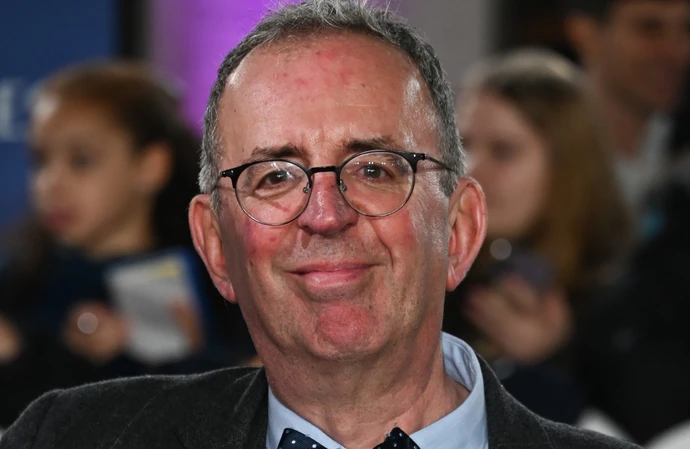
Richard Coles finished third on I'm A Celebrity...Get Me Out Of Here! in 2024 and 14th on Strictly Come Dancing seven years beforehand
So he lives within half an hour of me. Jimmy lives within an hour of me. June lives within an hour of me. So we're all here in the southeast, and that’s lovely.
But also, whenever I'm catching an aeroplane, I'm on aeroplane several times a week, right there when you're choosing your book to read on the aeroplane, Richard is always there in the best list. It's like, ‘My gosh!’ So he's got that as a career too, and a presenter. The world is his oyster.
And you are performing Sisterhood 2 in London soon, which is fantastic.
It’s at the Union Chapel. It's with a twelve piece band, including Sally who that was in the Communards and her husband playing strings, and it's a 40-piece choir. So it's quite a big affair.
The new album The Sisterhood 2 is out now.
Sarah Jane plays Union Chapel in Islington, London, on September 20. To purchase tickets, click here.
And for full touring dates, click here.