
Interview: Mark Grimmer reveals how David Bowie: You're Not Alone was created and whether there will be a Bowie hologram
David Bowie: You're Not Alone creative director Mark Grimmer spoke to Contact Music about how his incredible new immersive musical experience was created with the full support of Bowie's family.
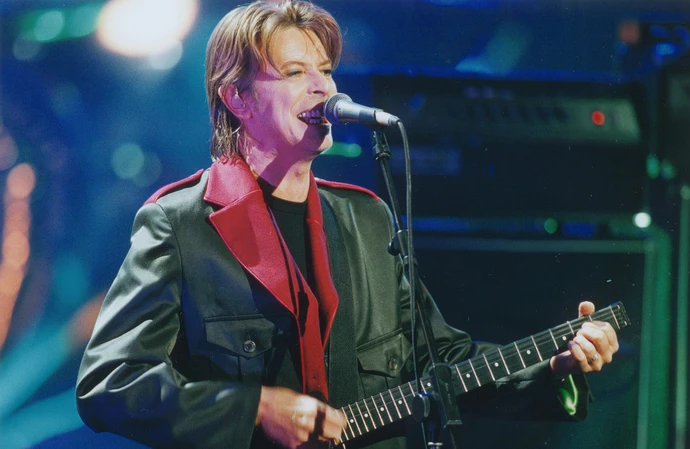
Launching the David Bowie immersive You're Not Alone at the Lightroom marks the latest major project drawing on the late singer’s vast archive, 10 years after his death in January 2016.
Organisers say the production will allow audiences to see and hear Bowie through previously unseen digital footage, performances and interviews spanning his career.
The immersive event will run for more than an hour and will be divided into seven chapters, each exploring a different theme from Bowie’s life and work. Visitors will be able to enter at any point once the doors open, with the show designed as a continuous experience rather than a linear biographical narrative.
Creative director Mark Grimmer of 59 Studio revealed the project had been given extensive access to the Bowie archive.
“The family were very keen to share things that hadn’t been seen before and I’m primarily talking about digital stuff – certainly footage of performances that hadn’t been seen, photographs that hadn’t been seen – and they’ve got this archive and it’s only really valuable if people get to see it,” he said.
While the physical collection is housed in Stratford at the V&A Storehouse East, Grimmer said the challenge was how to present it in a new way.
“All the physical objects are there in Stratford (at the V&A Storehouse East) if anyone wants to go and look at them, but how do you bring them to life and how do you see them in a way that makes people excited about the artist rather than just venerating the object?” he said.
He added that the family were clear about two priorities: “One, we represented the full breadth of his career – whereas a lot of people tend to focus on that period from ’72 to ’79 – and the other element was David the performance of David on stage. That was something they were more than happy to do. It was like, how can we have this iconic performance?”
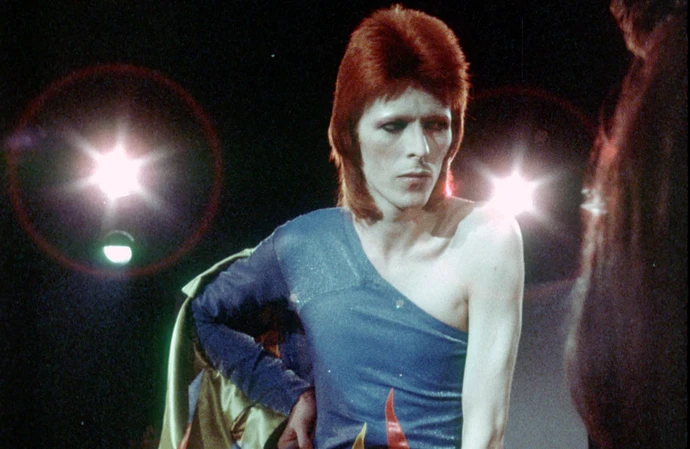
David Bowie as Ziggy Stardust / Credit: Getty Images
Among the material to be shown is previously unreleased digital footage from Bowie’s 1978 Earl’s Court performances.
“We were given access to all the cameras so we were able to build it specifically for the space,” Grimmer said. “It was all due to be released at the time and then a cut was done which DAVID wasn’t keen on and then it just never got looked at again. The film prints are in the archive and I think this is the first time, apart from some short extracts, that the stuff’s being seen.”
The team have also drawn on extended interview rushes. “In some instances we’ve been given access to all the rushes and tapes from particular interviews. You might be familiar with an extract that aired on television but there’s another 40 minutes of material that hasn’t been spliced.”
The scale of the archive has grown significantly since the 2013 David Bowie exhibition at the Victoria and Albert Museum in Kensington, which featured around 400 objects. “Now there’s 90,000 in the storehouse,” Grimmer said. “You could be a Bowie scholar for the whole of your life and not necessarily see everything and that’s kind of exciting.”
The production will not use holograms or avatar-style technology similar to ABBA Voyage.
Asked about the possibility of Bowie becoming a performing avatar, Grimmer said: “No. I think a lot of people are realising that people want to connect with artists even when they’re no longer with us. For ABBA, I mean they are with us - ABBA of course it’s fine because they can make that decision. But we are using material we’ve been given access to, stuff in the archive.
“There’s so much that’s in the public domain, it’s clear what he stood for. He doesn’t need to be resurrected in some ghoulish way for us to connect with him as an artist and a human being.”
On the family’s reaction to the show, he said: “They loved it. It’s still an ongoing dialogue and they’re sending notes and we are sending them. The show is changing – we send them updated versions that they can watch.”
Organisers say the aim is to reach a wider audience while reflecting Bowie’s resistance to straightforward storytelling. In the past few months Bowie has seen a huge increase in his streaming numbers due to his 1977 song Heroes being featured in Season 5 of Netflix series Stranger Things.
“They weren't prescriptive except for giving general guidance and saying wouldn’t it be great to reach a wider audience and wouldn’t it be great to remember David the performer,” Grimmer said. “They were quite clear that they weren’t interested in an additional linear way and neither was David and neither were we. He was never interested in simple narrative. He was interested in art that reflects the chaos of what it means to be alive – you see that in his painting, in his lyric writing, in his music – and capturing that spirit was important to us.”
Go to lightroom.uk for information and tickets.
By Julia Kuttner.