Pop
Boy in Space: How losing it all helped Robin Lundback find himself again
After COVID derailed his rising music career and mental health struggles forced him to confront himself, Boy in Space channels his darkest experiences into his debut album, The Man Who Lost It All, and embraces a more authentic future.
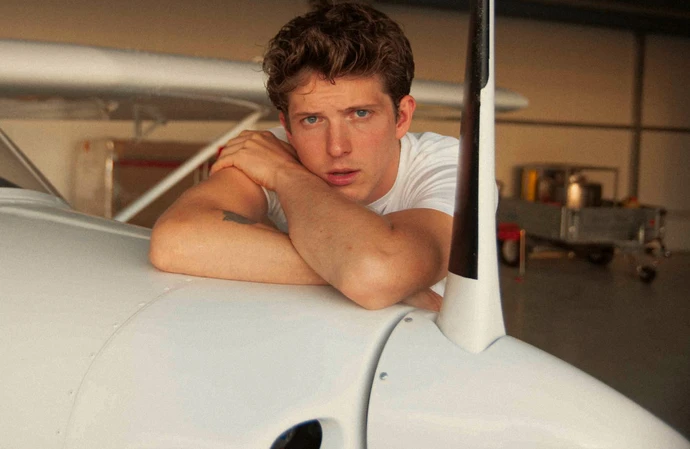
In 2018 and 2019, it felt as though everything was finally falling into place for Boy in Space. The Swedish singer-songwriter, whose real name is Robin Lundback, had already experienced the music industry as a member of boy band JTR, whose appearance on The X Factor Australia in 2013 introduced him to audiences far beyond his Swedish hometown. But after launching his solo project Boy in Space in 2018, he was building a career of his own, eventually accumulating more than half a billion streams and watching opportunities arrive at an extraordinary pace.
With major playlist placements, offers to tour Europe and the prospect of supporting artists including Alec Benjamin and Jeremy Zucker, the childhood dream he had chased since he was 11 finally seemed within reach. Boy in Space said: “I was like, ‘It's happening. This is the moment I've been waiting for. I've been working for this since I was, I don't know, 11.’”
Then COVID hit, and the momentum that had been building beneath his feet suddenly disappeared. Alongside the professional uncertainty came serious mental health struggles that eventually developed into physical problems requiring surgery. For an artist who had believed his big break had finally arrived, the interruption was devastating. He said: “For many years, I was like, ‘Man, I had my opportunity. I had my chance. Everything that I'd worked for so hard was finally happening, and I lost that opportunity.’”
But the story behind Boy in Space's debut album, The Man Who Lost It All, is about more than a career interrupted by circumstances beyond his control. It is about what happens when the life you have dreamed of no longer provides the escape you need, forcing you to confront the things you have spent years trying to avoid.
He admitted: “I've had this escapism mindset my whole life where I'm always running from reality. I think I needed to face the hard questions and thoughts and things in life that I had to deal with, like my relationships and my relationship to myself.” Looking back, Boy in Space believes that getting knocked off course was necessary, giving him the chance to examine his loneliness, question his habits and learn more sustainable ways of living. He reflected: “I was so lost, and I still am to some extent.”
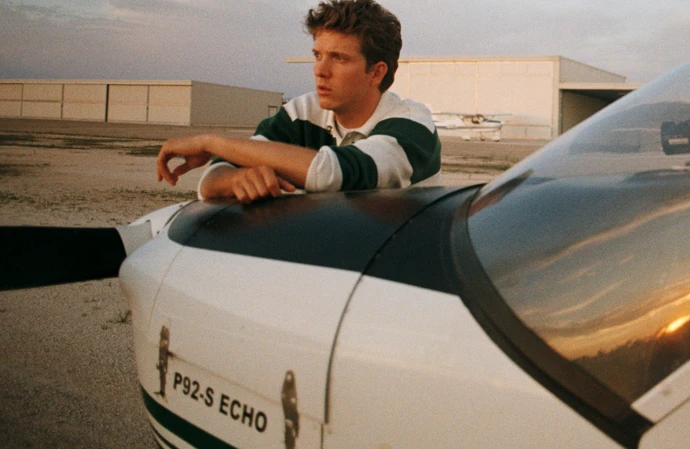
Boy in Space's setbacks reshaped his music career
Written largely in the space of a single week, after more than a year of piecing the project together, The Man Who Lost It All represents a new level of honesty for the singer. Rather than maintaining the polished image of an artist who has everything figured out, Boy in Space has chosen to share the uncertainty, pain and vulnerability that shaped this period of his life. His hope is that listeners who recognise themselves in those songs will realise they are not alone.
Now, with his debut album released and a new wave of momentum building, Boy in Space is learning to approach his career differently. He remains ambitious, but his priorities have shifted towards authenticity, personal growth and the freedom to evolve rather than repeat the past. He said: "The further I go, I hope the more authentic and truthful I can be. It's almost like I'm trying to strip back my whole life that people that I didn't even trust told me that I needed. It's like you're taking off an armour.”
He may not have everything figured out, but Boy in Space is no longer trying to outrun himself. With The Man Who Lost It All, which is out now, he is turning the hardest chapters of his life into music that might help somebody else find their way through theirs.
Contact Music spoke to Boy in Space about his deeply personal debut album, The Man Who lost It All, struggles with mental and physical health, how his setbacks reshaped his music career, and how he embraced vulnerability and honest storytelling...
Contact Music: Your debut album, The Man Who Lost It All, is coming out on October 23rd. How are you feeling about that? You must be really excited.
Boy in Space: Yeah, I'm always excited. It's always a lot of work and a lot of things happening, squeezed into two weeks. The preparation before it, it's this slowly chipping away of working on music. What do we need to do for the videos and everything? So it's fun. It's almost like, you know, when a furnace gets super hot and the full flame just starts to burst out. That's kind of how it feels at the moment.
We just spent a full day yesterday recording live recordings of the songs from the album. So yeah, super excited. A lot of things happening, a lot of fun momentum.
How long have you been working on the album for?
More than a year, for sure. And funnily enough, most of the album was written in literally a week. But, you know, it's about finding the right space to record everything. And all those little pieces have been a bit of a mission, but a fun one.
You only have the chance to make a debut album once. And I felt like it needs to be, I don't want to overwork it, but also I want it to be what I feel. I want to pay homage and respect to even the word 'album', the idea of what an album is. I don't want to just throw it out.
You have to relish that experience because, like you say, you only get that one shot. But it must be just so nice to finally get it out there and show it to the world.
Yeah, for sure. It's going to be fun, especially going on tour with it. I feel like that's going to be a special place to be, just in front of the crowds and see how the songs have affected people or if it's been with them for a particular reason.
I feel like after every live performance that I do, I always have the chance to talk to the crowd or get to know them a little bit. I always ask about, "Why are you here?" I understand you might like a song or whatever, but I really want to know.
It's crazy to me that I'm the Swedish guy and I go somewhere and people are like, "I will pay money to be in a room with you when you sing."
And it's fun to hear the story behind how they started listening to my music, "This song was with me through this summer or when I lost someone." It's fascinating to hear.
And I'm super excited to hear that about this new set of music because it's written in such a different way than I've written music before. And I'm just interested to see if that draws people closer to my music or they feel more distance because it's so personal to me. They feel like it's less about them, I don't know. Do my little experiments.
The Man Who Lost It All is your most personal work. What was the inspiration behind that?
Well, if you're looking at my early career, 2018, 2019, I feel like my trajectory was very rapid and it was all happening within those years, really, for me.
I had good management, everything was happening. The good playlists, I was getting offers to tour Europe and you're going to be support act for Alec Benjamin, Jeremy Zucker. Everything was just happening for me.
And before that, previously I'd worked in music for a long time. And you're always asking a musician or artist, you're waiting for your movie moment when it happens. And I was like, "It's happening. This is the moment I've been waiting for. I've been working for this since I was, I don't know, 11."
And it was all exciting. And then all of a sudden, I feel like everything just kind of crumbled under my feet. COVID happened. I was dealing with a lot of mental health issues that later on then became physical problems that I had. So I had to undergo some surgeries.
And when you're in that, everything is happening, I feel like especially in music, you feel like you have to keep the ball running. And in some sense you do, you really do have that moment and chance. You need to harness it. And whilst it's happening, you need to just go.
I couldn't. The world was just telling me no.
And at that moment, for many years, I was like, "Man, I had my opportunity. I had my chance. Everything that I'd worked for so hard was finally happening, and I lost that opportunity."
So I think it's about that, but also so many different things.
So how did that tough period in your life impact you as an aspiring musician? Did you maybe have second thoughts about pursuing music, or did it, to an extent, spur you on to achieve your end goal?
I think I was always just persistent and I really wanted to do it, but of course I had my moments of doubt.
And I still have those moments of doubt. I think every musician, I mean, it's a weird industry. It's not your nine to five. It's not, you know, I know what's going to happen. I know how my life is being planned out. I have these many vacation days. There's so much uncertainty.
And I think with age, you're kind of longing, you're looking for a sense of comfort. So I feel like every musician that I talk to and every artist that I talk to, they always have their moments of doubt. And I don't think that's ever gonna change.
But I think within that doubt, there's always the thing that keeps on reminding me that I really love this, it's my passion and my love for music.
Sometimes I feel like I didn't choose music really. And that sounds super cheesy, like it chose me, but it really did. I've had nothing else be a clear path for me in life.
And I can remember even as a child, singing in front of a crowd the first time and that being the true first moment when I was appreciated.
And I think everyone on this planet needs to be appreciated for something. And I think that's where I find that. And that's where I see that I can make a difference somehow. Be heard or seen.
So in that sense, it kind of kept choosing me even in my doubts. It keeps coming back and being like, "Hey, you don't really have a choice."
How did that experience impact you as a person? Could you say it's made you more resilient? It's made you a stronger individual?
Yeah, I think these lessons have been necessary. And I think there was a reason why I went through everything that I did.
I feel like if I had everything that I had ever dreamed of at that time, I don't think I would have known what to do with it.
And I think I've had this escapism mindset my whole life where I'm always running from reality. And I think if everything would have gone exactly the way I wanted it at that point, I would have just continued that spiral.
I think I needed to face the hard questions and thoughts and things in life that I had to deal with, like my relationships and my relationship to myself. And learning how to figure out sustainable ways of functioning as a human being.
And I think if it would have kept going, I mean, when everything was going super well for me, or when people would have looked at me like, "Man, he's got it all figured out," I had no idea. I was so lost. And I still am to some extent.
And you're so young as well. So to navigate all of that, it's hard, isn't it?
It is hard. And I was finding every way to just kind of numb the loneliness, the lonely feelings and the pain that I felt. I was just trying to numb it.
So I think it was pretty good that the rug that I was standing on was kind of swept underneath my feet so I could land on my a** and be like, "OK, what if I get this opportunity again? How can I approach it differently?"
Respect it and harness the gifts that I'm given.
I suppose this experience will stand you in good stead as your career continues to progress, having a better understanding of how to approach and deal with similar situations in the future.
Yeah, I think there's something beautiful when you give something up and you move forward towards something new.
And I think having an artist career for that long, you have to do that constantly. I could make the same music that I did back in 2018, but it wouldn't be true to who I am. It wouldn't be exciting. It would be so boring.
And the most exciting part about music is that I get to keep evolving and I get to keep moving forward towards something that I couldn't even maybe fathom when I was younger.
I probably had bigger dreams when I was younger, but I feel like I have more beautiful dreams now.
What message do you hope The Man Who Lost It All will give to listeners?
I think expressing how lonely it can be or feel, if I can express the feelings that I had, hopefully someone else can listen to it and be like, "Oh, I'm not the only person," in some sense.
And I think some things, I also feel like I just wanted to express. It's almost like I was holding it on my inside.
And I think I just wanted to, as if you're cleaning your apartment or a room, you need to collect all the things that you don't want to keep there.
So I think that's more of what it is. And hopefully it can lead to someone else being like, "You know what? I also have, underneath my bed, there's a bunch of bulls*** that I need to take care of."
So hopefully it can inspire that part of it.
And I'm still waiting. I want to hear other people too. I want to listen to people's stories of, "Hey, when I listened to The Man Who Lost It All, this is what it meant to me. And this is how I took it and kind of applied it to my life."
Do you think you'll talk more about your personal life on future albums?
Yeah. I think it's also one thing that I want to break down a little bit as well with The Man Who Lost It All, and one thought that I had with it was that I'm not perfect and everything's not perfect.
I think sometimes you get caught in a loop as an artist and you feel like you have to almost have a front of, "Everything's amazing. I'm super successful. I'm filthy rich. I never have any doubts."
And I think for me, it was healthy to just feel like I can be a person, and I can be human and I can be like, "You know what? It sucks sometimes. And sometimes I have so many doubts."
And even me talking about wanting to have a hot dog stand. That's so real. That's a thought that I have every day. Because it is that sense of comfort and it's nice to just be honest with that.
And I think the honesty, hopefully I can just become human.
It's kind of like after the show, when I get to talk to the people that came to the show. It's like, "Hey, I am a human being. I am a person." And we can break that barrier because in the beginning, it's like, "You're the stage person." - and I'm not saying I'm famous, but it's like, "You're the person that was on stage and there's a barrier between us."
And it's not that I want to be like this, "I'm so humble." But it's healthy for me. For me to not believe that, if I start believing that I'm this bright and amazing human and I'm so much better than everyone else, I'm up here and this is normal people and I'm this shiny object that can't be touched or seen.
If I truly believe that, my life would be so miserable.
It's so nice for me to just be like, "We are all here and we're sharing this room together," and we all have the experience of being human.
I had a story to the song. Someone else is going to have that. I don't even know what I'm saying.
Reflecting on your career, what are you most proud of and where would you like to see yourself maybe in five years, 10 years' time?
I think I'm proud of my consistency. And that I've kept going back to the drawing board and reinvented myself in some sense.
And I'm proud that I tried. I've always kept trying. And I'm just happy that I have that in some sense.
And then obviously the music that I make, but I don't know, half the songs I feel like were given to me in some weird way.
I know that's said a lot, when you're in the room and then all of a sudden it's like, "I had this idea."
What is an idea? How do we get ideas? I don't know.
It's so crazy to me that I'm in a room and I get to write these songs and then they connect with people somehow.
And I get to write the theme songs to people's lives, not only myself. I mean, it starts there and then it kind of transfers into anyone who listens to it.
I'm so happy about that. And I think that's what I want to continue to do.
And I think I'm from the generation of TV and huge media, and it's like, you shouldn't just be yourself in front of a camera. You should say this line and you have to practice.
And I think the further I go, I hope the more authentic and truthful I can be. That's my goal.
It's almost like I'm trying to strip back my whole life that people that I didn't even trust told me that I needed.
It's like you're taking off an armour in some sense.
And I hope that can be something that I get to do for as long as I want to do it, and as long as people want to hear about my journey and my life.
The Man Who Lost It All is out now.