
How Do We Actually Prove What Gear an Artist Used?
Ever wondered what equipment musicians actually use to achieve their signature sounds?
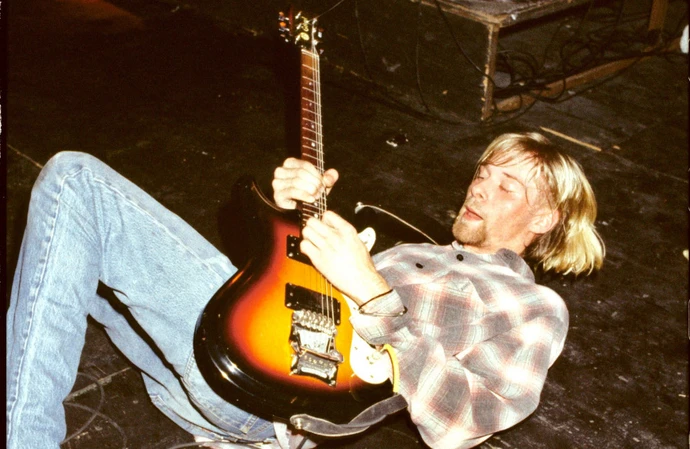
There are claims that travel through music journalism with such quiet confidence that no one thinks to question them. That Kurt Cobain tracked Nevermind through a specific amplifier. That the sound of Paul McCartney’s bass owes everything to a particular model. That a certain synthesizer is responsible for that bridge section on that record. Readers absorb these details as facts - and they have little reason to push back, because the claims sound authoritative, they appear in multiple places, and after all, this is music, not nuclear physics. Who is going to check?
But if you ask where that confidence actually comes from, the answer turns out to be considerably less straightforward than it seems. Much of the technical memory that music culture carries about itself — what was played, what was recorded through, what appeared on stage or in the studio - does not exist in the form of a verified archive. It exists as a collective reconstruction: scattered across interviews, live photographs, concert videos, social media posts, the recollections of sound engineers, and the testimony of fans who know how to read an image carefully enough to identify a logo on a pedalboard. This is not archival work in any academic sense. It is something more unruly, more alive - and perhaps, for that reason, more interesting.
The question of how we actually prove that a given artist used a given piece of equipment has long outgrown the fan forum. It has become a structural question about how technical knowledge in music is produced in the first place - by whom, on what basis, and with what degree of accountability to the people who will eventually rely on it.
Equipboard, an American platform launched in September 2013 and dedicated to documenting musical equipment in relation to specific artists, offers one of the clearest available answers to that question. Not because it resolves it. But because it makes the mechanics of the answer visible.
On artist pages, the platform states plainly that what you are looking at is a community-built gear list. Not an expert panel, not an official label statement, not the musician themselves. The community. And alongside that disclosure comes a note about which sources are considered most useful when confirming an entry: an artist’s social media, YouTube footage, live photographs, interviews. This is not a random list. It is a small but functional theory of verification - articulated not in a policy document, but directly in the interface.
The platform’s forum includes a dedicated thread for entries that lack a supporting source. The discussions there follow a recognizable pattern: someone raises a doubt, someone else arrives with a screenshot, someone finds a five-year-old interview in which the musician briefly names a specific model. Entries are corrected, supplemented, reconsidered. The database operates on a principle that in another context we would simply call a wiki: it is not static, it improves - and it improves precisely because someone is willing to bring a source rather than an impression.
None of this means the result is always reliable. Collective verification is not the same as peer review. Errors enter the system. Durable myths can prove more resilient than the actual evidence. But what is significant is something else: the fact that the platform builds a distinction between “submitted” and “confirmed,” between an impression and a source, indicates that the question of proof is being taken seriously - not as a formality, but as part of the underlying logic of how the thing works.
At this point it is worth pausing to ask why any of this matters.
It is easy to wave the subject away as narrow. Pedals. Amplifiers. Synthesizers. Does it really make a difference whether a given claim about Prince’s guitar or a specific studio chain is documented or merely repeated? The answer becomes clearer when you trace how this kind of information actually moves through the music ecosystem.
First, it enters journalism - where it often gets fixed in place without additional verification, simply because a source looks credible or because the same information appears in several places, which is mistakenly read as confirmation. Second, it shapes fan culture and the market: instruments associated with particular artists carry a different kind of weight, both symbolic and financial. In February 2017, when Ed Sheeran took the stage at the Grammy Awards performing with his custom Chewie II looping system, traffic to the corresponding page on Equipboard spiked so sharply that the site went down entirely - a 502 error that held through the performance and for roughly twenty minutes after it ended. That incident became a small media story in its own right, and it illustrated something precise: the line between a live performance and a surge of documentation-seeking behavior had effectively collapsed.

Third, and perhaps most consequentially, this kind of information shapes how younger musicians learn to hear sound and understand where it comes from. “That sound comes from that synthesizer” is not, for someone starting out, merely a fact. It is a point of entry - a guide to understanding a sonic vocabulary, a reason to seek out a particular piece of equipment, a way of connecting technical means to artistic result. When that information is wrong, it does not simply mislead. It distorts the way people understand music - its production, its history, its possibilities.
And yet official archives are largely silent here. Studio documentation is sealed or inaccessible. Labels do not maintain public equipment records. Artists themselves rarely document their own gear with the kind of specificity that would be useful to anyone outside the room. This means that the space between “we know” and “we think we know” is filled not by institutions but by individuals - often anonymous, with varying levels of expertise and varying degrees of care about accuracy.
This is what makes platforms like Equipboard interesting not simply as services but as cultural phenomena. They do not create a new kind of expertise - they transform an old one. A person who can locate a concert photograph from the right year, identify a specific pedal model within it, find an interview in which the artist mentions it by name, and assemble all of that into a single sourced entry - that person is doing something that specialized publications once did rarely, and now does continuously, in a distributed way, outside the structure of traditional newsroom editing, but within a platform that still uses rules, moderators, source requirements, and quality signals.
What results from this is an open question. The digital memory of music is becoming simultaneously richer and more fragile: richer because it captures a level of detail that traditional media could never have sustained; more fragile because there is no single center of accountability. An error, once it enters the system, can propagate at the same speed as the truth.
But perhaps what matters most is this: the question of “how do we know?” - as applied to musical equipment, to recorded sound, to the technical history of albums and live performances - has ceased to be rhetorical. It has become operational. The fact that it is now being asked not only by researchers but by people adding an entry to a crowdsourced database is, in itself, a shift worth paying attention to. Not because it makes for a tidy story about a useful service. But because it is a story about how cultural knowledge is organized in an era when preserving it no longer necessarily means controlling it.