Metal
Interview: Wes Orshoski reveals why Di’Anno: Iron Maiden’s Lost Singer is a story of loss, regret and redemption...
Wes Orshoski talks to Contact Music about his new documentary film Di’Anno: Iron Maiden’s Lost Singer, a emotional journey with Paul Di'Anno during the final years of his life.
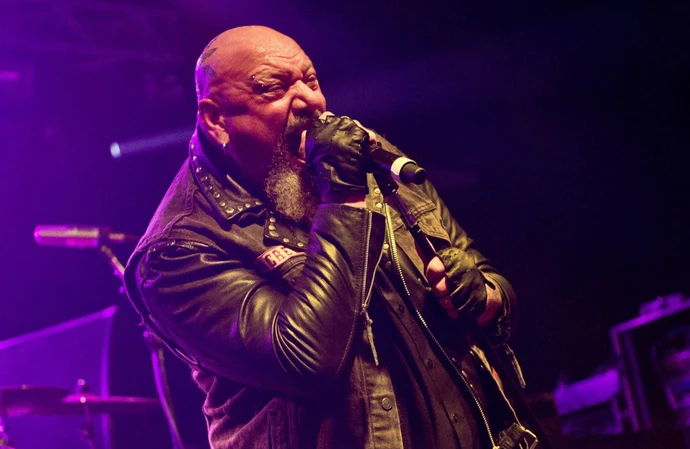
Most have heard of Iron Maiden, one of the most successful and influential heavy metal bands of all time, but before Bruce Dickinson became the voice that would lead the group to arenas, stadiums and global superstardom, there was another singer who helped lay the foundations. Paul Di’Anno was Iron Maiden’s original recording frontman, the rebellious East London vocalist whose raw, punk-influenced snarl gave the band their first identity and helped define the sound of their earliest years.
Now, director Wes Orshoski, the filmmaker behind the acclaimed Lemmy documentary, tells the extraordinary and emotional story of the late metal legend in new feature film Di’Anno: Iron Maiden’s Lost Singer, an intimate portrait of a musician whose influence has often been overshadowed by the enormous success that followed his departure from the band.
Di’Anno joined Iron Maiden during their formative years and provided the vocals on their first two groundbreaking albums, 1980’s Iron Maiden and 1981’s Killers. His gritty delivery, aggressive stage presence and punk attitude helped separate the band from the emerging heavy metal pack, giving them an edge that would become a crucial part of their early identity.
However, in 1981, Di’Anno left Iron Maiden after bassist and founder Steve Harris and manager Rod Smallwood decided the band could not continue with an erratic frontman who was hittting the self-destruct button with substances. Bruce Dickinson stepped in as his replacement and the rest is history. While Iron Maiden went on to become one of the biggest metal bands on the planet, conquering the world with classic albums, sold-out tours and enormous arena and stadium shows, Di’Anno was forced to watch from the sidelines as the band he helped build reached unimaginable heights, including now a Rock and Roll Hall of Fame induction.
His own career continued through a series of projects including Battlezone, Killers and Architects of Chaoz, as he carved out a reputation as a cult figure within the metal community. Yet behind the music, Di’Anno’s later years were marked by serious health battles that threatened both his independence and ability to perform.
Orshoski’s documentary follows Di’Anno through some of the most challenging years of his life, capturing his struggles with debilitating illness and the incredible support of fans who refused to let his story end there. The film documents how supporters Kastro Pergjoni and Stjepan Juras helped raise funds for a life-changing knee operation in Croatia, allowing the wheelchair-bound singer to undergo surgery and begin the difficult journey back towards performing.
Featuring appearances and contributions from some of metal’s biggest names, including Iron Maiden’s Steve Harris, Metallica’s James Hetfield, KISS’ Gene Simmons and members of Exodus, Overkill, Slayer, Megadeth and Sepultura, Di’Anno: Iron Maiden’s Lost Singer explores the man behind the myth, from his turbulent career to his remarkable resilience.
Following Di’Anno’s death in 2024, tributes poured in from across the metal world, with bands and musicians celebrating the impact of a singer who helped shape the future of heavy music. Even Iron Maiden themselves continue to acknowledge the importance of his contribution, opening their huge recent Knebworth performance with four songs from the Di’Anno era, a powerful reminder that his legacy remains woven into the fabric of the band’s history.
Raw, emotional and deeply human, Di’Anno: Iron Maiden’s Lost Singer is not just a story about a heavy metal vocalist. It is a story about survival, loyalty, redemption and the enduring connection between an artist and the fans who never stopped believing in him.
Contact Music's Philip Hamilton caught up with Wes Orshoski to discuss how Di'Anno never recovered from being known as the Pete Best of Iron Maiden, how the devotion of his fans got Paul back on stage, why his film will touch the hearts of metal fans and how his next film will explore a forgotten Stax Records soul band...
Contact Music: First of all, congratulations on what is a great and very unique documentary. To start off with an obvious question, what drew you to work with Paul Di’Anno on this project?
Wes Orshoski: I was approached by Matt Green at Cleopatra Records in Los Angeles. They had licensed my previous film about The Damned for distribution in North America. And he had known Paul since the early ‘90s. He, from New York and when Paul lived in New York in the early ‘90s, he just had been talking to his old friend Cliff, who was in the band Killers, who is in the film. Cliff and Matt had, I guess, been talking about it for a while, and they pitched it to me. To be honest with you, I grew up with the Bruce Dickinson Iron Maiden. My entryway to Maiden was Seventh Son of a Seventh Son. Of course, I, I knew of Paul's existence in the early days, but I didn't really know much about him. And I thought that in itself was kind of interesting as his legend still looms large. And so there's a film to be made. But I had no idea what I was getting myself into.
You talk about Paul’s legacy looming large, Maiden just played this huge show at Knebworth and the first four songs were all Paul’s songs, that proves his legacy is intact, right?
For sure.
You say you didn’t know what you were getting yourself into. Did you envisage that this film would become about his health and mental health struggles when you started work on it?
Not at all, man. I was kind of terrified, to be honest with you. I started shooting in 2017. Paul completely misled me. I spoke to him before I signed the contract, and he completely misled me about where he was health-wise.
So the first day I meet him is at Salisbury District Hospital. You see it early in the film. And he made me think that he just needed this minor procedure. Then, like, six weeks later, we'd be in Brazil because I signed on to make the film over 12 months. Then the doctor tells me that he may lose his leg. He could even pass away on the operating table. So I was like, ‘What am I going to do here?’ Like, he's not going to walk anytime soon. He barely leaves the house, he maybe goes for a pint every once in a while and then straight back home or to a doctor's appointment. How can I make this interesting for people? I don't want it to just be talking heads, because I had a small budget.
So Paul was missing appointments with the NHS, and then he was never really well enough to continue care. There was just delay after delay. Weirdly enough, I was getting more and more bummed that years were going by and then COVID happened. I was like, ‘Oh my God, this is just killing me.’ It was becoming sort of a dark cloud in my life, to be honest with you. And then that's when these two angels kind of stepped in. I did not expect it, and I'm completely thankful that it happened.
Castro, the guy who runs the pub known as the birthplace of Iron Maiden, he started a crowdfunding campaign. And then at the same time, there was a Croatian super-fan who lured Paul to Croatia. There was only £13,000 raised, so it wasn't enough really to get everything done. But you could make that money stretch much further in Zagreb, in Croatia. And so eventually Paul agreed.
The thing was, Paul had one of his knees removed and he had what he described as medical cement and a spacer put in. But he never passed, like, blood tests and certain tests in the UK to continue finishing that operation and continuing with the additional operations. So he was just getting worse and worse. And then when COVID hit, man, it was like he was going to die. And so these people came in and they were like, ‘If you're willing to take the risk, we'll find a doctor, a great doctor in Zagreb who will take the risk with you.’ And so he said, ‘Okay.’ And that's when everything kind of changed. And, and man, I just I'm super fortunate that those people entered the picture because I was like, now I have a film.
You got a film, a narrative and a story, which was quite emotional, and I'm sure most people who watch it will feel the same. Paul’s health battles are seen in the film, but do you believe the key point in his life is when he leaves Iron Maiden in 1981? Bruce Dickinson comes in and they go from being a very cool punk / metal band to this stratospheric level. Paul is often compared to the Pete Best of Iron Maiden, do you think he ever really came to terms with that?
I mean, how could you? I mean, imagine, this is 1981. You have to compartmentalise it and keep it far away from hurting you, you know? I don't think I could handle that, honestly, dude. You know, imagine that, they hit the stratosphere, just as you said with Bruce. I mean, it wasn't like they were playing stadiums in 1983, but they were on their way. Paul just kept stumbling. How do you get over that?
There's a moment in the film where, while he is complimentary and he says, ‘I think they did great.’ But there is a moment where he pauses, and he's kind of lost in thought in front of that audience, and his eyes kind of glaze over, and it’s like, there it is. It's all right there. It's in that moment, you know. There's a couple of moments in the film that just speak volumes.
I'm not trying to hit you over the head and hold your hand and explain to you what's happening. But the heart of the film to me is when Stephan and Castro have gone to speak with Steve Harris from Iron Maiden, and they come back and they say that he's going to pay for the surgery. And that's the heart of the film right there in that frame.
You have two guys from different countries, wearing Iron Maiden shirts, making the former lead singer of Iron Maiden cry and consoling him and changing his life. That's everything. That's the whole heart of the film right there.
The fact that Steve Harris is prepared to do that after the decades of history between them, I can only imagine that for Paul it must have meant a lot, that Steve still cares about me even though this thing happened...
There is such grace. The whole Maiden camp, have so such grace and dignity. There was an interview a couple years ago where Paul referred to Steve Harris as 'Hitler', you know. And I saw an interview with Steve where he's just laughed it off. He's like, ‘That's just Paul being Paul.’ Not everybody could do that. That takes maturity and elegance and grace.
Especially when it comes to rock and roll and metal bands because as history has shown us they fall out and don't make up...
Not at all.
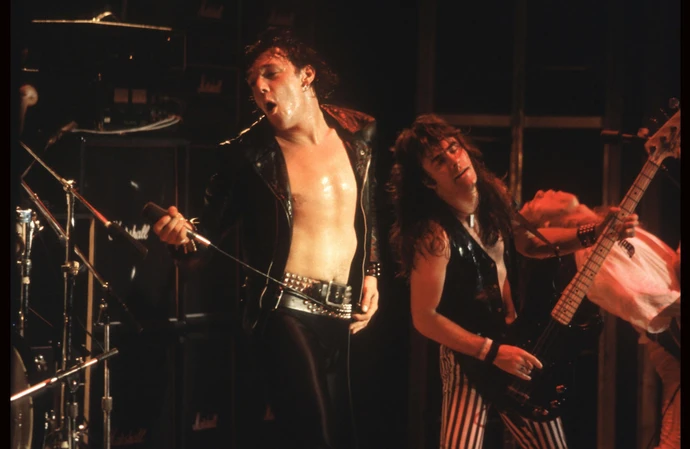
Di'Anno on stage with Iron Maiden in Belgium in 1980 / Credit: Getty Images
We’re talking about this brilliant film, but I’m sure you have seen that Iron Maiden have sold off 50 per cent of their likenesses and music. As someone who has spent this time with Paul would you like to see him included in this new era of Maiden digitally? There is talk they could become an ABBA type avatar show, would it be cool if they included Paul in that? Like move from the Paul era to the Bruce era?
Oh my God, that would be so incredible! It's like if they did what KISS has been talking about. I never even thought about it. If this thing is going to happen, to go to an Iron Maiden experience, how amazing that could be.
Like, I just went to the The Sphere for the first time. And it was it was unbelievable. None of the iPhone videos do it justice at all.
Imagine in 5, 10, 20 or 30 years, you go and you see Paul, then Bruce, then Blaze [Bailey], then Bruce again. That would be incredible. You know, maybe even a nod to the guys that preceded Paul that were never on the records.
Are hologram shows the future of music?
Well, I mean, we're losing all of our rock and roll heroes Ozzy [Osbourne], Ace Frehley from KISS, Lemmy, all these people. In the future everyone will have passed away. So it could be cool.
The issue is who is replacing these acts?
Well, I’m into several young bands that I go see a lot, but I don't have the same connection because, you know, you fall in love with things as a young person. Those are the people that stick in your heart. I don’t know.
I mean these people aren’t new but someone like Jack White matters and has a long legacy. I mean, imagine if he and Meg ever reunited as the White Stripes, imagine how big that would be?
Talking of music legends, we have people like James Hetfield in the documentary, do you think Paul knew how loved he was in the metal community. James says he had the perfect voice for metal, do you think he understood the respect he had?
I don’t know. We talk about James Hetfield and Metallica. The funny thing about Hetfield and Metallica was when I would film Paul at physical therapy, there were two bands that he would play and it would be Metallica, the early records, and Depeche Mode. You know, Paul listened to all kinds of music. He loved Erasure, he loved thrash metal. He would listen to all kinds of music.
I know he felt loved in South America. We'd be running into fans who would be in tears when they met him. There were people all the time flocking to him in Zagreb, when I was with him there. I knew that he knew. And maybe that's part of the reason why he was so frustrated and having the mental health struggles that he did, because he knew his place was out there with his community. Being on stage was the only place that probably made him feel like he belonged. And ironically, because during his time in Maiden, he just seemed to be shooting himself in the foot and blowing up that job and that opportunity. But all these years later, he realised that was his place in the world and those were his people. That was his tribe.
I never saw him happier than when we were in Brazil. At the end of the film, when I go to Brazil with him, he would sweat so much because he was a bigger guy and he had a bald head and the sweat would come down his face and he'd be towelling off. He'd have a towel with him on his lap, but there'd be tears. He was crying in Brazil. He was so happy. I don't think he thought it was the end, but, you know, I can't tell you how many times in Rio, Brazil, especially he would just put his face in his hands and you knew he was crying. There was no mistaking it. He could barely sing. He was very throaty, raspy, but he could feel the love.
To go from that guy in a wheelchair for 10 years to be on that stage again, you could see why it was worth it to him. He was in no shape to be out there traveling, but you could see why it mattered.
This is a brilliant film, previously you have done a documentary on The Damned, the Lemmy film and more. What is the next project from you Wes?
While I was making the Paul film, a friend of mine came to me and he said, ‘I want to make this film about my cousin.’ Years ago, he told me that his cousin was one of the people who died with Otis Redding in the 1967 plane crash that killed Otis.
We describe it as the most famous rock and roll plane crash that nobody knows anything about. Because on that plane was a band from Memphis called The Bar-Kays. And they still exist. Five of the six band members were on that plane. My friend Adam’s cousin Ronnie, was the keyboard player, and he died in that crash. One person survived, and he died in 2015. And there’s one guy there wasn’t enough seats for, and he's the only living Bar-Kay. They've been sampled by hip hop groups over 500 times. You would know Gettin' Jiggy Wit It by Will Smith and Hey Ladies by the Beastie Boys, they are two prime examples.
We've decided to tell their story. Adam came to me a couple of years ago and he's like, ‘I want to remember my cousin and his bandmates.’ And so we basically we're almost done with it. We shot this film that remembers them and tells the story of the original Bar-Kays. They had a hit song called Soul Finger and they had a hit record. So we tell the story of The Bar-Kays and James, the bass player who has kept the band alive all these years. Weirdly enough, it's my first film about an American group, and I'm super honored that it's about a group from Memphis and a Stax group, a Stax Records soul group. I’m super honored to even have the experience to talk to some of these people, like Steve Cropper from Booker T and the MGs and, and Sam Moore from Sam and Dave. A lot of the people we've talked to have passed away. So that's what's coming. Hopefully it'll be out next year
I’m sure a lot of people will be intrigued to see that...
The funny thing is you will know a lot of songs that The Bar-Kays played on, that you wouldn’t know because they are not credited. Like Shaft, that features the two members who survived the plane crash. They were in line to be the replacement to Booker T and the MGs. Booker T and the MGs were the house band at Stax and then they became so big that they were touring. So The Bar-Kays were like a group of neighborhood kids who then kind of were slotted in and they started doing these sessions and they had so much promise. They were like phenoms. So it's just an honour to be the one that is telling their story.
Any plans for anymore films on British rock legends?
Well, I’m sure the Brits are like, ‘Enough with this Yank!’ But who knows? I may curse you once more.
Di’Anno: Iron Maiden’s Lost Singer is available on digital from Miracle Media now.