Jazz
The Songs, Stars and Sounds Behind Casino Culture
How have some of the world's most popular musicians influenced casino culture?
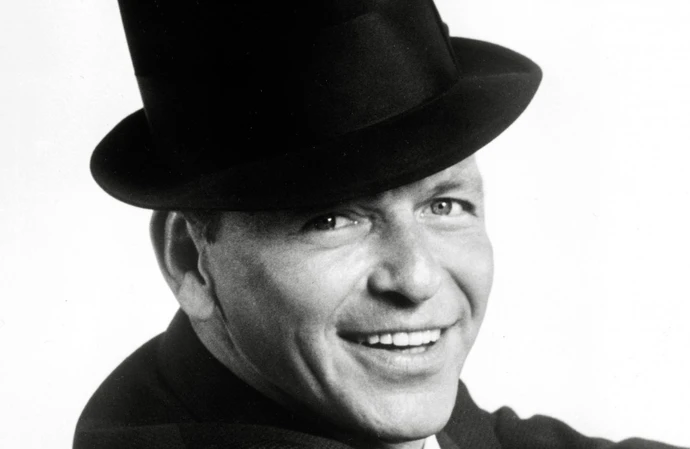
On the last day of August 1963, Frank Sinatra rang the chairman of the Nevada Gaming Control Board and swore at him. Ed Olsen had been asking awkward questions about Sam Giancana's July stay at Sinatra's Cal-Neva Lodge on Lake Tahoe. Giancana was a Chicago mobster with no business being in Chalet 50 or anywhere else on a licensed property. Five weeks later, on 7 October, Sinatra announced he was giving up his Nevada gaming interests, the lodge and a small stake in the Sands included. The man who had defined what a casino sounded like was, in the regulator's eyes, no longer fit to own one.
He'd defined it ten years earlier. Sinatra opened at the Sands in October 1953, in a room Jack Entratter had named the Copa after the New York club he'd come from, and in January and February 1960 the Summit, Sinatra, Martin, Davis, Lawford and Bishop, played it with all five on stage at once by the end rather than taking turns. Casino Royale, Ocean's Eleven and every tuxedoed heist since have been running on the fumes of that room. The casino is somewhere you go to hear something started at the Copa.
The room becomes the star
Elvis made the room the star. From 31 July 1969 he played 57 shows in four weeks at the International Hotel, in a showroom that held 2,000, twice the size of anything else in town, and broke every attendance record Las Vegas had. Colonel Parker renegotiated the contract on a tablecloth in the hotel coffee shop. That's the template for everything since, from Celine to Adele, whose Weekends with Adele ran a hundred shows at the Colosseum on the Strip between November 2022 and November 2024, and it's why Oasis have three Las Vegas nights in their 2027 dates, three weeks before Knebworth.
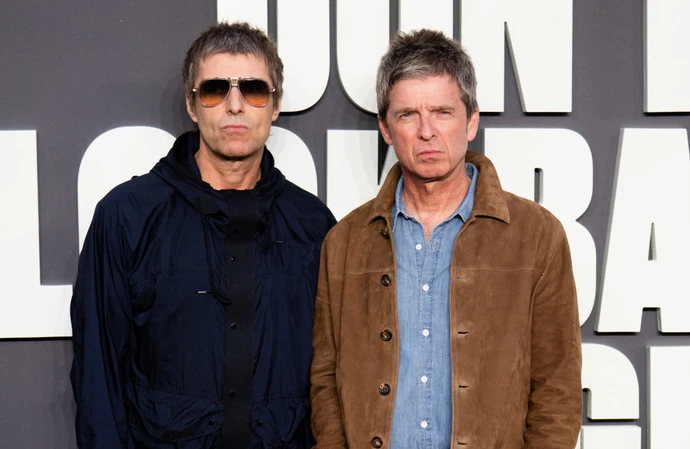
Oasis brothers Liam and Noel Gallagher / Credit: Getty
The music off the stage was always doing quieter work. Lounge jazz, then piped playlists, then whatever the machines themselves were putting out. The industry has never said much about why, but a 2010 pilot study by Spenwyn, Barrett and Griffiths sat 56 people at roulette under fast or slow music and white or red light, and found tempo alone made a measurable difference to how quickly they bet. The light didn't. The speed of the song did.
Licensed noise
That study is the background to an odd corner of the record business, where bands license their catalogue to slot developers. Play'n GO has run a music series since 2019, Def Leppard's Hysteria among its better-known titles, and in 2022 it went the other way round with Lordi, the Finnish monster-rock band, who wrote original music for the game and shot a video for it. The Lordi title shows what the audio job on online slots games has become: a score written to the game's own events, louder when a feature starts and quiet again when it ends, mixed for a phone speaker rather than a stadium. Song first, game second has turned into game first, song second, and the roulette study explains the priority.
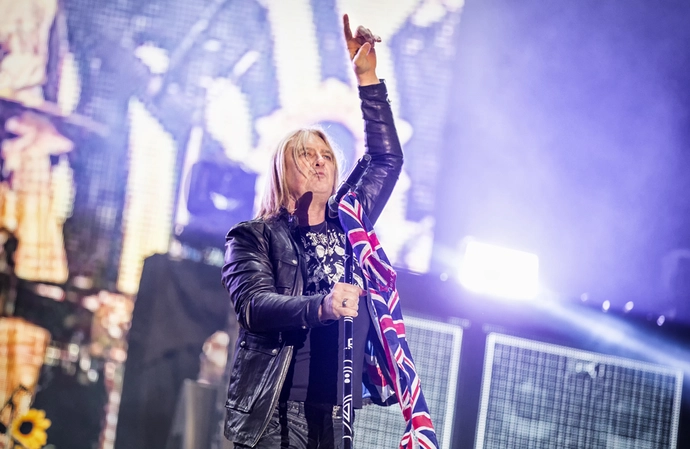
Def Leppard singer Joe Elliott / Credit: AVALON
The stars who can't say yes
Here the British and American stories split. In Las Vegas a pop star's name on a casino is still a straightforward licensing deal, a residency with merchandise attached. In the UK, since October 2022, the advertising code has barred gambling ads from using personalities with what it calls "strong appeal" outside the adult audience the ads are allowed to reach, which in practice rules out most of the current charts as the face of a British casino campaign. Sinatra, dead since 1998 and never exactly youth-coded, would pass. A chart act with a big following on TikTok would not.
So the crossover in Britain runs backwards: the casino borrows the sound of the stars rather than the stars themselves. Sixties Vegas on the lobby playlist, a rock band on the reels, a Copa Room echo in the lighting. It's a business that spent seventy-odd years building itself around live performers and now, on this side of the Atlantic at least, mostly has to make do with their records.