Pop
Sean Penn was 'lurking' around Madonna at Live Aid, recalls Thompson Twins' Tom Bailey
Tom Bailey remembers how Sean Penn kept a close eye on then-girlfriend Madonna when she and the Thompson Twins did backing vocals for each other's sets at Live Aid in 1985.
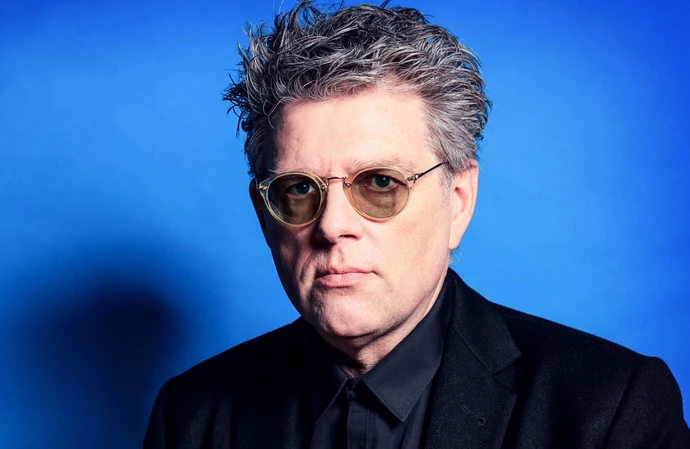
On July 13, 1985, the world’s biggest musicians gathered for Live Aid, the historic global charity concert staged across Wembley Stadium in London and JFK Stadium in Philadelphia. Among the unforgettable moments from the Philadelphia show was when Tom Bailey, now 72, and the Thompson Twins joined forces with Madonna, now 68, for a spontaneous vocal swap that neither artist had planned.
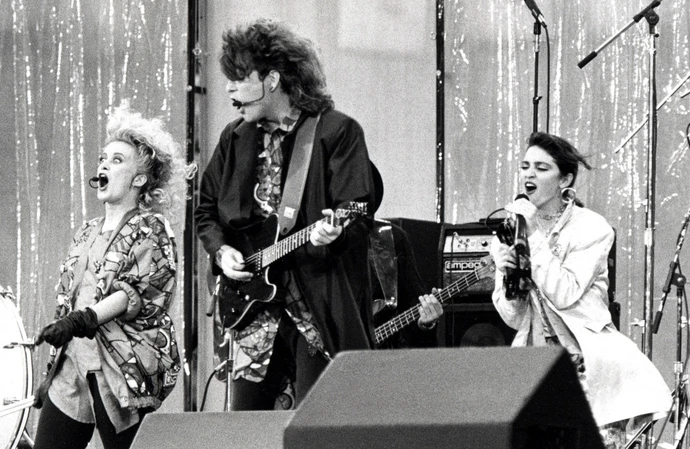
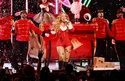
Thompson Twins' Alannah Currie and Tom Bailey performing at Live Aid with Madonna as their backing vocalist
The Thompson Twins, formed by Tom, Alannah Currie, now 68, and Joe Leeway, now 70, had become one of the defining British pop groups of the early 1980s, scoring international success with their blend of new wave, funk and electronic pop. Hits including Hold Me Now, Doctor! Doctor!, You Take Me Up and King for a Day turned them into global stars, with their album Into the Gap, released in 1984, becoming a multi-million-selling success. Madonna, meanwhile, was rapidly ascending into another level of fame, with hits including Holiday, Like a Virgin, Material Girl and Into the Groove establishing her as one of the most talked-about performers on the planet.
By the time Live Aid arrived, Madonna was dating actor Sean Penn. The couple had married in August 1985, just weeks after the Philadelphia concert, following a relationship that began in 1984, but their turbulent marriage would end in divorce in 1989. At Live Aid, Tom remembers Sean, now 66, keeping a close eye on his superstar girlfriend as her fame reached new heights. Tom said: “He was kind of lurking around in the shadows, keeping an eye on things at all times. Her fame was just taking off. She entered that kind of stratosphere of celebrity.”
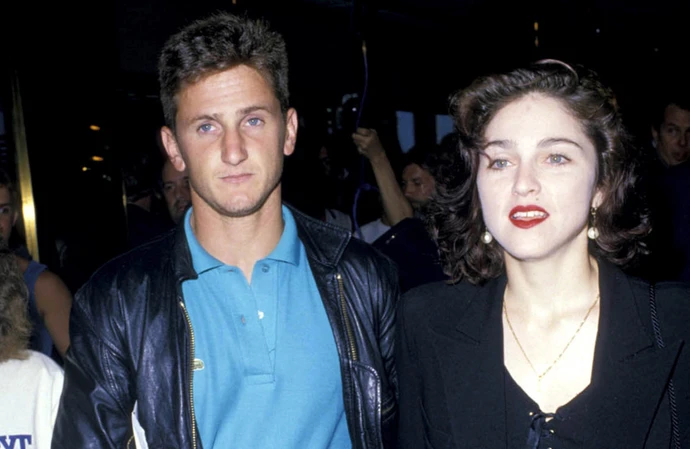
Sean Penn and Madonna were married from 1985 until 1989
The surprise came when Madonna and the Thompson Twins agreed, just an hour before their performances, to provide backing vocals for each other’s sets. Madonna joined the Thompson Twins for their performance of Revolution, while Tom, Alannah and Joe added their voices to Madonna’s performance of Love Makes the World Go Round, creating one of the most unexpected collaborations from a legendary day in music history.
Looking back, Tom has nothing but admiration for Madonna’s extraordinary career, saying: “I preferred her early work for various reasons." He praised her collaborations with Nile Rodgers, 73, and the late William Orbit while recognising her ability to constantly reinvent herself. Tom added: “She's done great things and, like all long-term experimentalists, some of the stuff is great, some of it not so great. But overall, I think what a career."
The Thompson Twins eventually split in 1993, with Tom and Alannah retired the band name and rebranded as Babble, but he has continued making music and performing live. Now touring with Blancmange, Tom jokes that Madonna could always make a surprise return as a backing singer. The artist laughed: “You never know with Madonna. That was a bit of a surprise on the day, anyway, back in Live Aid!”
Tom's current tour continues with dates at Birmingham Town Hall on September 18, London’s Indigo at the O2 on September 19, Brighton Chalk on September 20, Guildford G Live on September 21, Cambridge Junction on September 23, Buxton Opera House on September 24, Nottingham Rock City on September 25 and York Barbican on September 26, and tickets can be purchased here.
ContactMusic also spoke to Tom about his tour with Blancmange, why he "chickened out" of a call with Yoko Ono, now 93, about covering The Beatles' hit Revolution, and working with Tom Hanks, now 70, before he became a Hollywood legend...
You must be really excited about going out on tour with Blancmange. You love touring, don't you?
Yes, I do. I’ve kind of gotten back into it in recent years. I didn't do it for a long time and I really enjoy being on the road. Great gang of people, fantastic band. And we move from place to place and have real fun trying to deliver the best we can, you know?
Do you agree with artists who prefer performing now compared to back in their heyday?
I think mostly because we're older and, hopefully, a little bit wiser. So we kind of pace ourselves better because touring isn't about partying every night. But there's something inside that's very rewarding. And I think once you latch on to that, then that's better than any party.
It must be nice to work with Blancmange again.
It is. I did know Neil [Arthur] back in the ‘80s and I admired his work. A couple of years ago, we kind of crashed into each other again and had the opportunity to work. And we thought, yeah, this is a good combination. Let's do it again. So that's why we're touring.
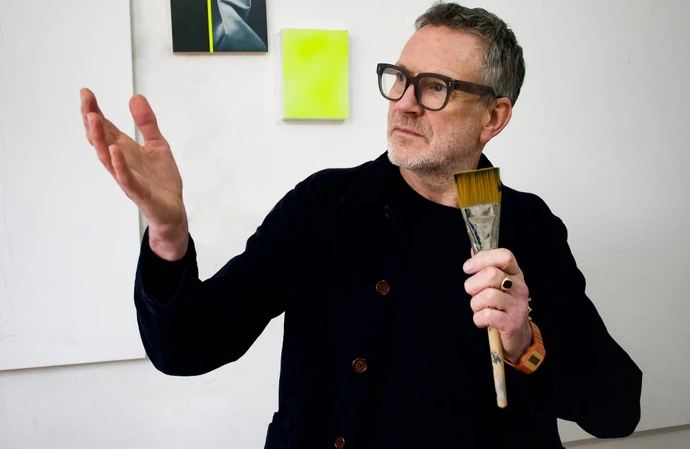
Blancmange's Neil Arthur is supporting Tom Bailey on tour
What can you promise fans who want to go to your show?
We're performing quite a long set, which includes all the hits, all the well-known stuff. But also, I'm just going to sneak in a few less well-known things and even a few surprises.
I can't give too much away, but my band, which is an all-female band, interestingly, are all multi-instrumentalists moving from instrument to instrument. So that's part of the show too, to see how these fantastically talented musicians, and I often point out that they are quite young, so they weren't born when some of the hits were written and recorded. And that makes it interesting for me because they're not writing any kind of nostalgia personally. They're musicians delivering the best version of themselves to that music. And it helps me steer clear of that feeling it was great back in the day.
Nostalgia is a great thing, but it can kind of trap you underfoot.
I suppose one thing you probably can't promise is Madonna doing backing vocals!
You never know with Madonna - that was a bit of a surprise on the day, anyway, back in Live Aid! But people always ask me about that. It's just one of those things that we just agreed.
Like an hour before the show, we said, ‘Let's sing backing vocals on each other's sets.’ And so we did.
Sean Penn was her boyfriend at the time. What do you remember about him keeping such a close eye on Madonna during the Live Aid set?
I remember that. He was kind of lurking around in the shadows, keeping an eye on things at all times. Her fame was just taking off. She entered that kind of stratosphere of celebrity. I don't know what he was thinking. Anyway, in the end, it didn't work out for them, but I think everyone had a great day.
What do you make of Madonna’s success story?
I preferred her early work for various reasons. I love the things she made with Nile Rodgers, which was my connection with her through Nile, and with William Orbit, who died recently. She's done great things and, like all long-term experimentalists, some of the stuff is great, some of it not so great. But overall, I think what a career.
Could it be suggested that the pressure and focus of trying to release songs and sell records took away from the experience of Live Aid?
We were in the middle of making an album when we did it, which is partly why we put together a local, American-based band just for that show.
David Letterman's band.
That's right. And we were absolutely focused on finishing the album, which, as it happens, was long overdue. So we were under pressure for sure. But, you know, that's part of the reality of being in a pop group. You have to move on. You have to keep it going. You have to put your best efforts into it. And it's not just about hanging out with the superstars backstage, it's about getting back to the writing and recording.
Recently, you released Industry and Seduction, the compilation album. In past interviews, you said that you and Alannah spent an “interesting few hours” deciding on what tracks to include. How easy was that process to decide? I can imagine it might be quite hard because you've got so many to choose from.
Half the list was just obvious, right? We had to include the hits and what have you. And then I think we both provided a kind of wish list. And again, there was a big crossover between the two lists, so it was only really a few outsiders and we just traded off a few; you include that one. I'll include this one. I can't even remember which, but we were very happy. There were no disputes about it. And the thing was we wanted to tell a story of a kind of historical arc, if you like, of the progress of the band, and it includes some things from the very early days and the late days that perhaps weren't so well known. But that’s part of the beauty of an anthology. You use the hits to bring some of those deeper cuts to the audience. And I think it was good. After a long time not doing very much, the record company really delivered on it. So that was nice.
When you were both getting all the tracks together, was there some songs that you forgot you made/released?
Oh, for sure. Partly because we had a terrible habit of coming up with kind of weird names for B-sides and remixes and dub versions. Sometimes I'd hear a title and think, 'Well, I can't remember what that is.’ And then you play it. ‘Oh yeah, it's the remix of that!’ So I really need an assistant to catalogue all those things and put them in my head again. But, in fact, what I prefer to do is just bask in the glory of having somehow continued to do it for nearly 50 years. So that's what happens, you accumulate a lot of titles.
Alannah's previously said in an interview that she doesn't talk much about the Thompson Twins now because she's “interested in what's going on now” and moving forward. So what made her want to get involved with Industry and Seduction then?
Well, I think it was a trade-off, having some involvement in the choice, so that she felt that we were represented correctly, according to her view of things. And that's what happens. Sometimes they'd say, ‘Well, we're going to release something anyway.’ But if you got involved, then you'd have a word, you'd have a voice in the procedure. Alannah always wanted to kill off the Twins at the end of what she thought was its kind of golden age. But as a musician, I need to keep going and I need to do other things as well - and I have done lots of other things. But also there's a point in every artist's life when it's appropriate to look back and do a kind of retrospective and say, ‘OK, what were we doing 45 years ago? Does it have any relevance now? And can it be reinterpreted?’ Which is kind of what I do in my live show. The songs will be very recognisable, but they won't sound exactly like the record you might have heard all that time ago.
You’ve got to keep it fresh, haven’t you?
Yeah. So we contemporise things, and that's partly because technology has changed. There are new musicians involved, and I'm not the same person I was 40 years ago; experience and life changes us all. And so it's interesting to me. I'm not kind of doing this reluctantly. I think it's a fascinating process.
You and Alannah have remained very close since your divorce. So did that make working together on Industry and Seduction feel that bit natural?
Yeah, it was very easy to do. There was no conflict in that particular case. We just more or less agreed with everything and thought, ‘Well, this is good.’ And as it happened, we started to see a big increase in our streamings because we were being promoted again by the record company for that record. So we're not going to complain about that. It was worth doing.
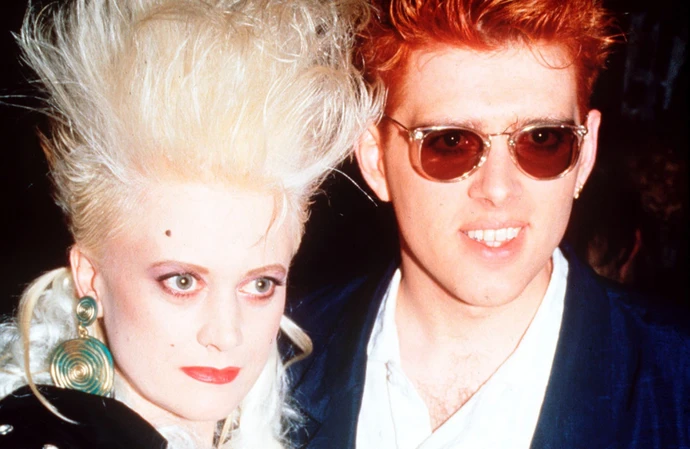
Alannah Currie and Tom Bailey were married from 1991 until 2004
And I guess it's just really nice to reminisce as well after all these years.
Yeah. I got to say, we don't spend too much time doing that together. ‘Oh, the good old days!’ But it does come up, of course. And because I live in New Zealand most of the time and Alannah's moved back there as well, we actually see each other quite often.
What do you think is the secret to maintaining such a strong relationship after your divorce?
Well, I mean, at the risk of sounding like I'm linking it too strongly back to the work, we wrote Hold Me Now because we'd had a big disagreement, a big argument. And then we kind of realised that actually there's something more important going on. And as human beings who care for each other, we have to make up and be friends again. And, as I say, in the slipstream of that realisation, we both got together and wrote Hold Me Now, which is a song of reconciliation. We’re the kind of people who can do that. We're in the mood for making friends.
You both have children together, Indigo and Jackson, and you’ve recently become grandparents, many congratulations. Does Indigo and Jackson think that they’ve got cool parents?
Well, that's for them to decide, I hope so! We all get on, and I have three other kids as well that I've assumed into my family - so there are actually lots of grandchildren at the moment! We hardly ever get the whole extended family around the same table because they're all living in different countries. And so, luckily, because I travel a lot, I do get the chance to see them.
Do they play some Thompson Twins music now and then?
I have no idea. Gosh, probably secretly show the grandkids, and say, ‘This is what your granddad does!’
Surely they have a few Thompson Twins songs on their Spotify playlists?!
Maybe. Although I noticed with my kids, they never really understood what I did, like, what's your job? He just seems to hang around in a room and play music. That's all he does. They didn't understand that it was actually hard work being a musician.
What I think is cool is that you, Alannah and Joe did the title track for Nothing in Common, the Tom Hanks film, also the final movie starring Jackie Gleason. What do you remember about spending those few days in that Chicago car park making that music video?
Well, oddly enough, a couple of years ago, I finished my tour of America by playing the Chicago House of Blues, and it's right next door to that car park. So I was able to just kind of stare up at it and think, ‘Wow, I remember that day. We were driving around with Tom Hanks in an open-top Jeep.’ He was somewhat reluctant because he had a contractual obligation to do a couple of days' hard promotion for the film. And so he flew in from wherever he was to Chicago for the day. But it was fun. I thought that was a good track. The film is not so well known in the UK, so I'm surprised that you even talk about it, but, of course, Jackie Gleason was a massive star in the US, and Tom Hanks was to become the biggest star that he is as well.
What made those moments with Tom Hanks so interesting?
A bit like the Madonna story, he was on the cusp of stratospheric stardom. He was a young kid on the block destined to be. So it's difficult to look back and see him in isolation because we know now that he's a mega film star, but it was good. He was driving, we just sat in the back of the Jeep or in the front of the Jeep and told funny stories for the day.
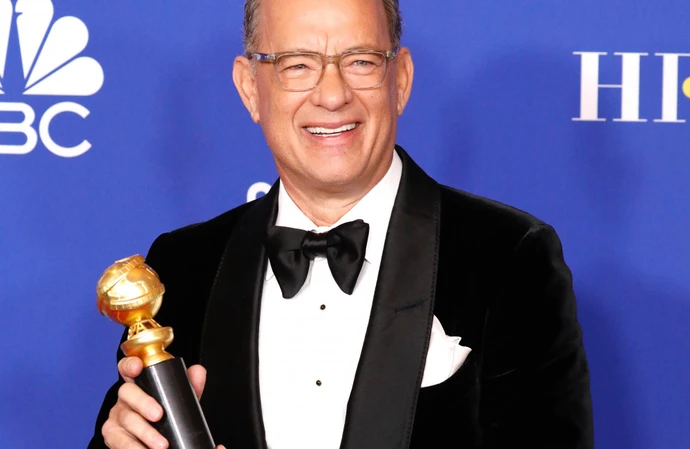
The Thompson Twins recorded Nothing in Common specifically for the 1986 comedy-drama film of the same name, starring Tom Hanks
Is it true when you guys were driving around the Chicago area, fans spotted Tom and shouted out his name, but you thought they were shouting at you?
I can't remember that. It's possible, and quite likely, come to think of it. But there you go.
One of the famous covers the Thompson Twins did was Revolution, the Beatles track - a big commercial hit. Did you ever worry about how The Beatles would react to the Thompson Twins covering Revolution?
I did worry a bit. In fact, at one stage someone got Yoko Ono on the phone for me. I thought, ‘I’d better discuss the fact that we're going to do this.’ And I kind of chickened out. I thought, ‘No, once I get into a discussion about it, I'll lose the nerve to do it.’ So I cancelled the call and went ahead and did it anyway. Oddly, enough, I kind of exhumed the song as well and been rehearsing a version of it. So if it works out in the next set of rehearsals, I'm going to try doing it on some of these shows as well.
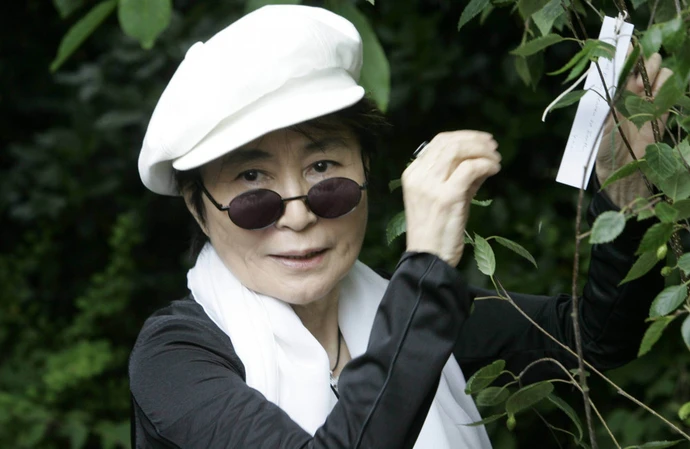
Tom Bailey was too starstruck to speak with Yoko Ono about covering the Beatles' 1968 track, Revolution
What did The Beatles and Yoko Ono make of you just doing it anyway without permission?
I don't know what they made of it. I know that Paul McCartney's daughter was a fan and she actually invited us to play at her birthday party and for some reason we couldn't do it. I guess we were already booked to play somewhere. But that's a nice connection, isn't it? And, of course, I was a big, big, big fan of The Beatles, especially their more experimental and psychedelic side at the time. But I just love all their work.
I can imagine you being in a state of shock after hearing Paul mentioning the Thompson Twins when asked in an interview if he liked contemporary music.
It was a nice thing to hear. I presume that was the influence of his daughter saying, ‘Hey, dad, check out this band.’ Which is sometimes how it happens, isn't it? I learn things from my kids as well.
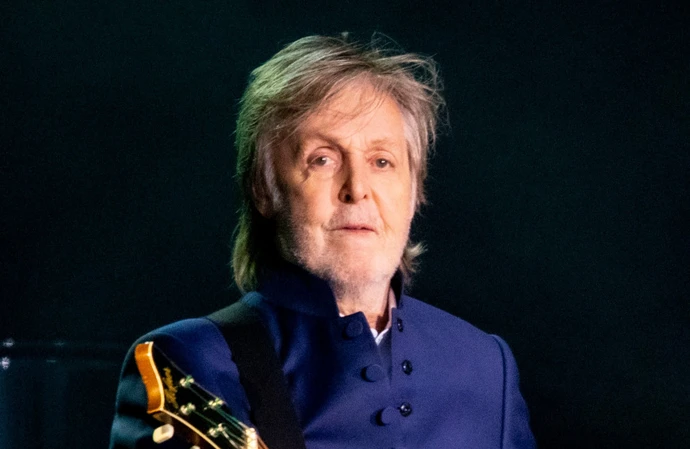
Tom Bailey was in shock after Sir Paul McCartney mentioned them when asked about contemporary music in an interview
What do you learn from your children?
Whatever they're listening to, sometimes which staggers me, and sometimes it's because of the internet, they’ve gone back 40 years and discovered something that's new to them. But, of course, it was a big part of my life. They’re like, ‘Hey, check this out, dad. Pink Floyd!’ I’m like, ‘I've heard it.’ My son Jackson is a musician, and sometimes he can make a comment that makes me stop and think and reappraise what I was doing. And sometimes it can be very, very helpful.
When you, Alannah and Joe got together, you wrote like a little manifesto and divided the jobs between you. So you were in charge of music, Alannah was in charge of visuals and Joe was in charge of live performances. How did you decide who was responsible for each part of the creative process?
Well, it was very easy. It was a natural thing because, in a sense, I was the musician. Alannah had this very, very strong sense of visual punch. She'd make visual ideas about the way we looked that worked very well. And Joe had come from a theatre background, so he was all about performance and how you staged these things. Oftentimes in interviews now, I found myself saying that’s the point we stopped being a band and became instead a kind of design team, where we took responsibility for those three areas, music, performance and visual, and made sure that we covered all those bases, because I think in the past, we just concentrated on writing songs, recording albums, and then hoping for the best, hoping that the public liked it. But there are, of course, skills on those sides, communication skills, that we'd been ignoring. So that's one of the reasons that the three-piece Thompson Twins, I think, really kicked in.
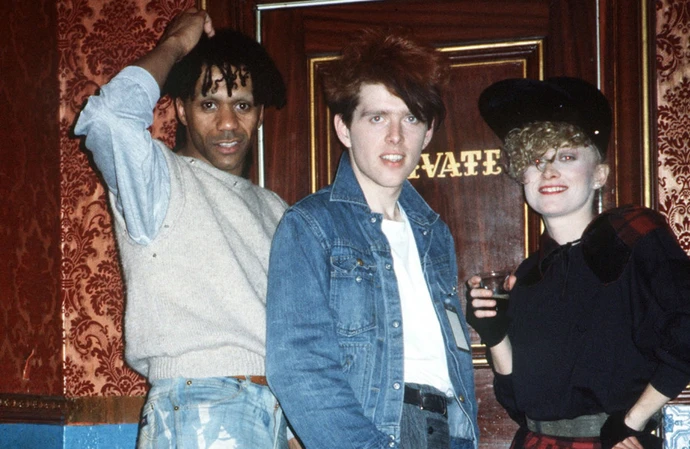
The Thompson Twins was formed of Joe Leeway, Tom Bailey and Alannah Currie
Grace Jones' boyfriend at the time, Jean-Paul Goude, told you guys to make yourselves look more cartoonish with the hairstyles.
His idea was you take your stereotype and push it further. He saw that Joe's hair was black, Alannah’s hair was blonde, and, therefore, he said, ‘You're a little bit kind of auburn-haired, why don't you dye it red?’ And, sure enough, that's what we did.
Going back to the design group, did you have a rule that you would all agree to follow when it came to respecting each other's creative decisions?
Yes. We could make suggestions and have input, of course. It’s a weird thing to say in the context of a pop group, but we were heads of department, so we would definitely listen to the other members of the group, but we had responsibility for getting that part right.
Were there any clashes over whose vision should win?
Well, that's another thing, is that with three people, you can't have a split decision, it always goes two to one or everyone agrees. So we found decision-making in that sense really easy. We would just be quite light-hearted about it in a way, we just get on with things and as long as there was a sense of - and, of course, you develop a sense of trust. So I didn't lie awake thinking, ‘Can Alannah get her costumes right? Can Joe do this?’ It was perfectly obvious that they had skills.
The Thompson Twins was already established before the three of you formed. Did the original band members ever tell you what they thought about the band's success as the trio after the line-up changed?
Not really, it was a discussion we never really had. But I'm very pleased to say that one of the original members, Pete Dodd, has just brought out a solo album, and so I've been in touch and some of the old-school fans of the Thompson Twins are showing an interest in the fact that he's done that, partly because he's re-recorded a couple of early songs that he'd written for the Thompson Twins, and also I played keyboards on one of the tracks as well, just as a friendly gesture and for a bit of fun. So there's that. And then we've reconnected and he's coming to one of the shows, and I said, ‘Well, look, if you're coming, why don't you jump up and play with us?’ So that's going to be a little bit of history in the making.
Looking over your illustrious career with the Thompson Twins and as a solo artist, what would you say is the thing that you are most proud of?
Well, I try to avoid being proud of anything. I'm very lucky. I prefer to look at it that way. I'm really, really fortunate to have had a lot of creative fun and a lot of challenges, which is part of the fun in a way. If it's all too easy, then it stops being meaningful. But it's gone on. Who would have thought 45 years after we made those early songs that we'd still be listening to them? And so I feel so fortunate. And along the way, I've worked with amazing people. So, yeah, not pride, but gratitude. And not quite done yet!
Tom Bailey's tour dates 2026:
September 18 - Birmingham - Town Hall
September 19 - London - Indigo at the O2
September 20 - Brighton - Chalk
September 21 - Guildford - G Live
September 23 - Cambridge - Junction
September 24 - Buxton - Opera House
September 25 - Nottingham - Rock City
September 26 - York - Barbican