
R&B/Soul
Pop legends Johnny Hates Jazz join forces with soul icon Jaki Graham
Johnny Hates Jazz and Jaki Graham have joined forces on the track, Soul Believer - their first collaboration, but not their last.
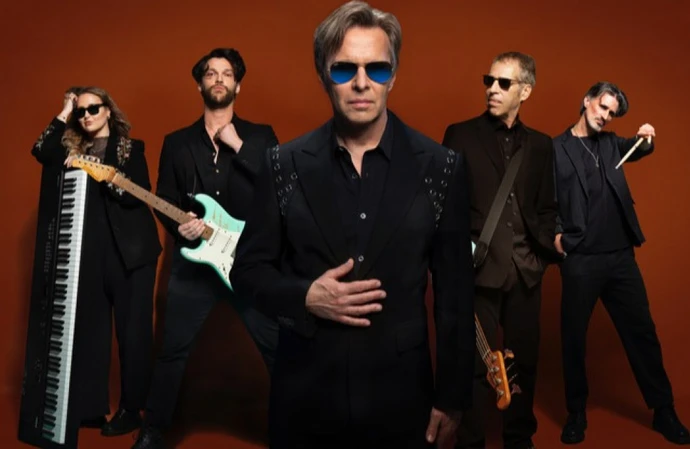
When Johnny Hates Jazz and Jaki Graham first crossed paths in the 1980s, the British music landscape was ruled by chart battles, record sales and the race for the next big hit. Decades later, a chance meeting backstage at a festival has brought two of the UK’s most distinctive voices together for the first time, proving that some musical connections are simply waiting for the right moment.
The result is Soul Believer, a soulful collaboration between pop legends Johnny Hates Jazz and soul icon Jaki Graham, 69, released on August 21. The track will also be celebrated with a special live performance at the Circuit Club in Kingston-upon-Thames on the same day, marking the beginning of what promises to be a much bigger creative partnership.
For Johnny Hates Jazz vocalist Clark Datchler, 62, Soul Believer has been on its own journey long before Jaki’s voice became part of the story. Originally born from a jam session with Mike Nocito, 63, and Average White Band founding member Hamish Stuart, 76, before the pandemic, the song was initially destined to appear on Johnny Hates Jazz’s album Wide Awake. But something about it felt different.
Clark explained: “We always had this feeling, ‘No, no, there’s something different about Soul Believer. It’s got its own journey,’ We didn’t know what that was. Of course, that journey includes Jaki now, so I’m absolutely delighted.”
Johnny Hates Jazz became one of the defining British pop acts of the 1980s, exploding onto the scene with their classic debut album Turn Back the Clock and timeless hits including Shattered Dreams, I Don’t Want to Be a Hero and the title track Turn Back the Clock. Their sophisticated blend of pop, soul and jazz influences helped them become international stars, with Clark’s distinctive vocals remaining instantly recognisable.
Jaki Graham was already a powerhouse of British soul by the time Johnny Hates Jazz were dominating the charts. Her huge voice and emotional delivery made her one of the country’s most successful female soul artists, with hits including Could It Be I’m Falling in Love, Round and Around, Set Me Free and Breaking Away cementing her status as a trailblazer.
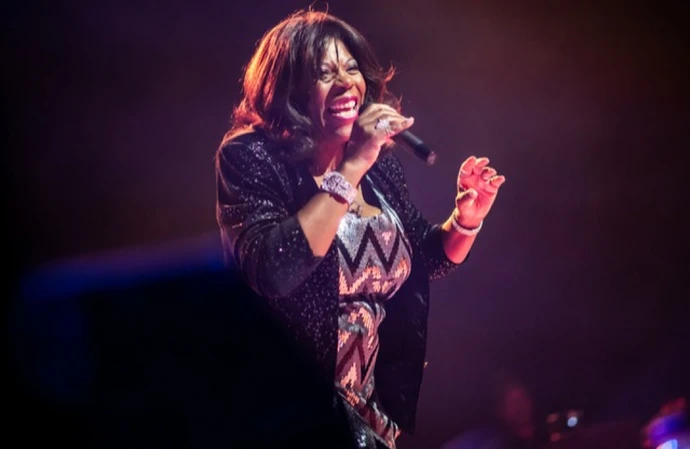
Jaki Graham collaborates with Johnny Hates Jazz on Soul Believer
Despite sharing the same musical era, the pair never truly connected until their meeting at Uptown Festival in Blackheath, London. What followed was an unexpected “mutual appreciation society”, with both discovering they had been fans of each other’s work for years.
Clark said: "I had no idea that she held the Johnny Hates Jazz recordings in such high esteem. She responded with, ‘I love what you do with Johnny Hates Jazz. I love the songs. I love your voice.’”
What began as a single collaboration has quickly evolved into something much bigger. Alongside Soul Believer, Clark and Jaki are planning another duet, a new podcast exploring the history of famous soul songs, and further creative projects together.
Clark said: "I think what you tend to do is start thinking, ‘This is great. We’re enjoying this. What could we do together?’ Actually, in our case, those plans have become a podcast.”
From 1980s chart dominance to a new chapter built on friendship, shared influences and mutual respect, Soul Believer proves that great music has no expiry date. For Clark, the song has already become something special: “Every time Soul Believer comes on… I think, ‘That is one cool track.’ I’m really, really proud of it.”
ContactMusic spoke to Clark ahead of the release of Soul Believer to discuss Johnny Hates Jazz's collaboration with Jaki, the changing music industry, and the emotional impact the pop group's songs have had on fans over the decades...
You're collaborating with Jaki on Soul Believer, which comes out on August 21. How do you feel about it? You must be really excited.
I'm thrilled about it. It's not that I had this specific dream for so many years, although Soul Believer as a track has existed for quite some time. In actual fact, it was born out of a jam session that me and my colleague Mike in the band had with Hamish Stuart from Average White Band, a founding member of Average White Band.
From that, I went away and wrote this song, Soul Believer. That was pre-pandemic, and in actual fact it was destined to be on an album that we ended up releasing during the pandemic called Wide Awake. But we always had this feeling, 'No, no, there's something different about Soul Believer. It's got its own journey.' We didn't know what that was. Of course, that journey includes Jaki now, so I'm absolutely delighted.
Did you write the song, or think of the song, with Jaki in mind, or did that come at a later stage?
That came at a later stage. I remember writing the first four lines and, really, it was subconscious. The lyrics are made up of, or reference, 27 classic soul songs from the 1960s and '70s.
If you read the lyrics and you're familiar with soul music of that era, you'll realise that most of the lyrics are those titles. There are a few passing phrases to join them together. If you're unaware, it just sounds like a lyric.
I wrote the first four lines and realised that it was leaning towards a couple of song titles, and I thought, ‘Wow, what an interesting idea. I wonder if I could do that.'
For a long while, it just existed as a potential Johnny Hates Jazz track, but we weren't really sure where it was going. We still tinkered with it for a while.
Then I met Jaki at a festival called Uptown Festival in Blackheath, London. We met backstage. We'd met before, but we'd never really had a chance to chat, and it turned out that we were a bit of a mutual appreciation society. We went away saying to each other, ‘We've got to do something.’ Those kinds of things, more often than not, never happen because everyone gets busy, but we stayed in touch.
Me and Mike thought, ‘How about Jaki on Soul Believer, singing with me?’ We proposed it to her, she heard the track, and she jumped at it. It was very natural.
Why do you think you guys got on so well backstage at the gig? Why do you think you had so much in common?
Firstly, Jaki's a lovely person, so she's really easy to get on with, very full of energy and enthusiasm. That made it easy.
I had no idea that she held the Johnny Hates Jazz recordings in such high esteem. I had bought Could It Be I'm Falling in Love, I bought Mated on single, back when seven-inch vinyl was still big, so I was a real fan. I'd heard Jaki's voice before on Could It Be I'm Falling in Love and instantly thought, ‘What a great singer. She's fantastic.’
When we finally had that conversation, all of this came out. She responded with, ‘I love what you do with Johnny Hates Jazz. I love the songs. I love your voice.’ We got on personally very well, but also had a lot in common.
I can imagine you probably met Jaki back in the '80s, so why did it take so long for you to collaborate and join forces?
We never met in the ‘80s. Back then there wasn't the festival scene. It was a recording scene. You made records. That was the big thing, and you existed by selling records. Touring came off the back of that, but it was almost secondary. We were really into recording, so you didn't meet each other very easily.
If you did, and this wouldn't have been the case with me and Jaki, but often a record could stand or fall on its chart position. You had to keep going up the charts back then.
To be honest, I've got to know my peers much better now through meeting them at festivals where they're performing than I ever knew them back then.
It must be really nice for you both to come together and make this brilliant track.
It is. The wonderful thing is that when you include someone like Jaki, you start hearing what you've done already differently because the sound of her voice alters the track in a positive way.
There are a few moments that I re-sang myself after hearing Jaki singing on there as well. I think what you tend to do is start thinking, ‘This is great. We're enjoying this. What could we do together?’
Actually, in our case, those plans have become a podcast, and that's going to be Jaki and I talking about the history of some famous soul songs. We're going to perform them acoustically at the end of each episode, so Soul Believer: The Podcast is going to become a bit of a thing.
We're already talking about doing another track together and, beyond that, we've got all kinds of ideas.
It's nice for you both to come together and make a really nice, feel-good track.
That's an interesting thing you actually touched on because historically my musical trajectory took me into wanting to write about bigger subjects in music. I started that with our second hit, I Don't Want to Be a Hero, which is an anti-war song. When I went solo, I became very environmentally oriented and did a lot of work in that direction musically.
Even when Johnny Hates Jazz reformed in 2013, having had no communication with one another for 20 years, I still brought that with me. I wanted to write about these big subjects, or sometimes philosophical perspectives. Very occasionally I’ll deal with relationships. I think the world has got enough of those songs, quite frankly.
But then Soul Believer came up, and it was more, ‘This is just going to be fun,’ and I haven't done one of those tracks for a long time.
It must have felt quite nice to do that. It's quite uplifting.
It's quite uplifting, and a bit of a release. I think it is the way to collaborate in this case, where you just bring all the positive energy that we all have, combine it and send it out into the world.
Really, the thing is, it's a sincere song. It really is a homage to the soul music we grew up listening to, and a sense that we miss it. Even though we can still listen to it, we miss that movement of music.
It was very broad. You listen to Jaki - we’ve talked a lot about this, and in the podcast we're going to discuss it a lot. What is soul music? Well, it's become, I think, more compartmentalised than it used to be.
When David Bowie released Young Americans, it created a storm. People were saying, ‘What's this guy doing making this kind of soul-esque record? Bowie should be doing this, that and the other.’ He just did what he wanted to do, and it's one of the great soul records, actually.
Young Americans is referenced in the lyrics just as much as something more classic soul like Say a Little Prayer by Aretha Franklin.
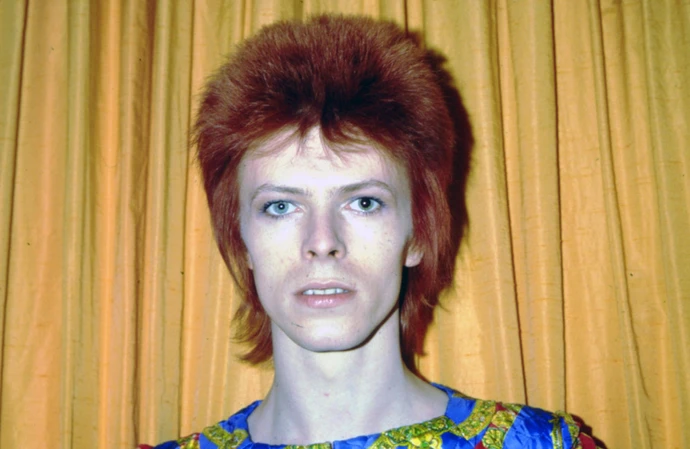
Clark declares David Bowie's Young Americans as one of the greatest soul songs made
It's an interesting thing because this is very much our love letter to that genre of music. Of course, Jaki was born out of that genre, so I've always been affected by it, but my route was a little bit different.
It's a heartfelt piece of work.
One of the messages from the song is holding on to hope for the world, which sometimes, with current events, you can't always get. Why do you think that message was important to have in the song?
Clark: I don't think it's so much about referencing the challenges in the world, because we've always had challenges in the world.
I went to see War Horse the other day, the stage production in London, which is set in the World War One, and it's very confronting. It's darker than I thought it was going to be. It reminded me that, for all the things we're aware of happening in our world today, they had it really bad.
So my answer is that I think its function is to uplift.
I'm very careful about saying that because I think so much music now is almost about diversion. It's almost about, ‘We're overwhelmed by all the terrible things happening in the world, so let's have a bit of fun and party, or talk about how bad I feel about my boyfriend or girlfriend, or a previous relationship or future relationship.’
Really, that's not my world. It's not where I come from.
Soul Believer is really about slight nostalgia, but it's also saying, ‘I don't want to let go of the quality of that music.’
One thing that was really profound about the music of the '60s and ‘70s - and I think this continued into the ‘80s - was that there was a lot of quality and a lot of thought put into the lyrics. That's where the big messages were.
Soul music, I think, was a bit late to the scene of writing songs that were socially relevant. Rock music got there earlier, and I think it all changed with Marvin Gaye when he did What's Going On, which is referenced in Soul Believer.
It's really interesting to see how soul music maintained something that I think is prevalent in pop music today - this feel-good attitude of, 'Let's not worry too much about the world.’
Yet it also developed this other side to it, which Stevie Wonder embodied in the '70s. Forget what he did in the ‘80s - in the '70s he was the man. He was writing about the big subjects, and that affected young Clark and young Mike very deeply.
That affected both of us very deeply, as I know it did a young Jaki.
So I think, in that sense, the legitimacy of the song is really saying, ‘We want that back. We don’t want to let that go.’
And so I think that’s the importance of it.
Why do you think yours and Jaki's vocals complement each other so well?
We actually recorded a track before Soul Believer. It'll come out one day. I know what it is, and so does Jaki. It's a really lovely track, very much a classic duet.
At that point, I think both me and Jaki took the recording away, listened to it, and went, ‘Wow, our voices really work together.’
Jaki's had more experience of duets, if you think about the stuff she did with David Grant in the '80s, who's a really excellent singer as well. Then, whenever Michael McDonald comes over and performs in the UK, he always asks Jaki to come on stage and sing On My Own, which he recorded with Patti LaBelle, because as far as he's concerned, she's the one in Britain.
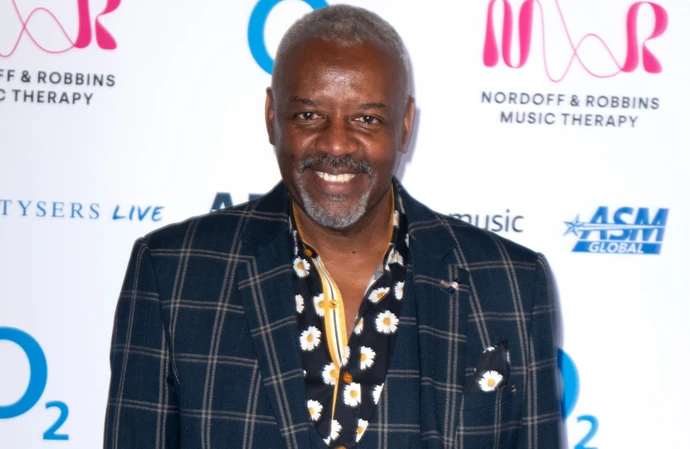
David Grant and Jaki Graham topped the charts with Could It Be I'm Falling in Love, and Mated
It's a natural place for Jaki to be as a singer. For me, I don't think I've done duets before. It's not really been my thing. Johnny Hates Jazz has always been very self-contained. We write our own stuff, produce our own stuff, so this was a new experience for me.
I do know from past experience - we’ve done work with Kim Wilde - it's a testament to singers like Kim and singers like Jaki that they know how to make their voices work around someone else's voice, or within someone else's voice. That's the mark of a true professional, but also someone who is not egotistical.
They were both, in those cases, were very sensitive to what was going to work for the recording, and that's our mantra: what's best for the recording? What's best for the song?
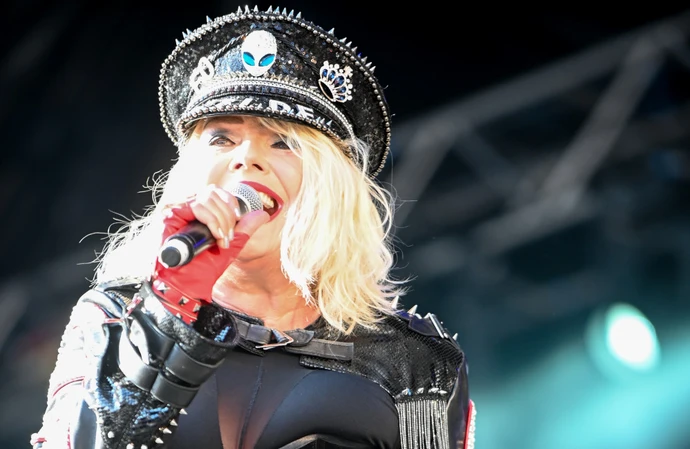
Pop star Kim Wilde
If it's best for I step back here and Jaki steps forward, that's what should happen. I don't care how many lines I get, and she doesn't care how many lines she gets. We just want the recording to be effective.
It's interesting what you said about never having done duets before. How did that impact your approach to laying down the vocals on the track? I suppose it was a bit harder compared to what you've done before, just being on your own.
Well, I had sung the song already and, to all intents, it was finished. The track was finished. We'd even mixed it and mastered it.
For some reason, things just kept happening where it felt, ‘This isn't the right time. OK, we'll give it a couple of months and get going with it.’
Then I did this other recording with Jaki, and I talked to Mike about it and said it went really well. He said, ‘What about Soul Believer as a possibility?’
Actually, Soul Believer was pretty much done. Once Jaki was on there, it was clear that certain things had to change. Certain levels had to change so Jaki was more prominent here and there, and we had to think about how it would sound when we sang together.
What has been very interesting is that a song I was working on at the same time, which was going to be a very R+B, Earth, Wind and Fire-esque track for us, made me start thinking, ‘I've got to do this with Jaki. I can hear Jaki on this.’
So you start writing, or completing the song, with a different end point in mind. I think that's what's affecting songs going forward, and the possibilities going forward.
We're doing a gig together on August 21st at the Circuit Club, Kingston-upon-Thames, and we'll be rehearsing together for the first time next month. There are a lot of things happening for the first time with us.
I can imagine when you're rehearsing for the live show you've got to work out the vocals and the timings. It must be a real thrill to get in the studio with Jaki and then go on to perform live for all the fans.
It's going to be very interesting for us because it's ostensibly a Johnny Hates Jazz gig with Jaki as special guest.
Jaki is going to come on, do three or four of her own songs, and we're going to be her backing band. So that's unusual, we’re all learning certain songs now.
Then we'll do Soul Believer together, carry on with Johnny Hates Jazz, and she'll come back at the end. We're working all of that out.
We've done gigs on the same bill before. We did a show called Eighties Classical, which is a series of '80s artists performing with the Orchestra of Opera North. We did that one in Birmingham a couple of months ago.
Jaki went on before us and she was brilliant. I turned to Mike and said, ‘How am I going to follow that?’ And we did. But it's going to be very exciting when we're all on stage together.
Looking back at making music and performing now compared to the '80s, do you prefer it now?
Well, it's an interesting one. I was having a chat with Nik Kershaw the other day, and Nick said to me - I was asking about a song he'd recorded a long time ago that I really loved - and he said, ‘Oh yeah, that was on an album called Radio Musicola, which is when things started to go downhill.’ And he said, ‘We all know how that feels.’
He said, ‘It only went silver.' And he said, ‘What we wouldn't give to have a silver album now,’ because no one's selling records in great quantities anymore. Of course, it's a streaming world.
So it's like anything in life. As things progress, you lose things and you gain things. You'll reminisce about Zoom, you'll reminisce about Spotify. It won't exist in the future - it'll have been replaced by something else. That's always the way.
You have to say, I don't want to be who I am now. I don't want to be young Clark again. I've done that. I prefer being a bit more experienced, to be honest.
There are some lovely things about our time, and there are some things we've tragically lost. So I'm in that realm of having one foot appreciating my journey and the past I grew up in, and the other foot in the present world, saying, ‘I embrace what it's become, and I look for the best in it.’
Even though there are some great challenges left, right and centre As a musician, you really have to adapt.
I don't think there's been another industry that's been forced to transform as much as music. We have lost a lot. One thing that's very important is that young people are saying, ‘No, no, no - we don't just want streaming. We want physical formats as well. We want vinyl.’
That resurgence in vinyl has been led by a younger generation. We've been there and done it. We had our vinyl and trashed it when everyone told us it was never coming back. Then it was CDs all the way, then CDs got trashed, then file-sharing, and now streaming.
I think there's a lot of hope that young people are saying, 'We don't want this brave new world you're pushing us towards. We want some of those wonderful things our parents had.’ Access to vinyl records is a magical thing.
So I still have a lot of hope that the future for musicians will be a hybrid future. It won't ever be what it was, but we'll still find our way to do what we love doing.
How has the digital-first approach impacted you and the rest of Johnny Hates Jazz? I suppose you've had to get used to Spotify, Apple Music and promoting yourselves on social media.
Yeah, you have to embrace it.
For many years I lived in the United States, and for some time I lived in Arizona in the high mountain desert. I had a solar-powered studio there, so I was quite distanced from how the urban world was developing.
I remember when I first came back to Britain with a view to possibly moving back here, MySpace had taken off. Of course, MySpace was the precursor to everything we know today - Facebook, Instagram, TikTok and so on.
I had to have someone explain to me what MySpace was. I was saying, ‘Hang on, people can hear full tracks whenever they want and they don't have to pay for them?’ My reaction was, ‘Well, what about radio? What's going to happen to radio?' All these questions started coming up.
Anyway, I got into MySpace - and now MySpace is history. Nothing is forever.
How did it affect us? Well, Mike is less embracing of social media. He's actually not on social media. He's decided he wants to live his life away from it, which only works because I'm willing to embrace it. I'm quite active on it.
You have to look for the positives. Even with the negatives, we're all still raised to believe pop stars are extremely wealthy. There's a tiny fraction who are extremely wealthy. In reality, music has become much more like the rest of society. The wealth gap is enormous. The wealthy musicians are super wealthy; everyone else is super not. The ability to survive through music has become much tougher.
That's a great shame.
So you look for the good things. One of the nice things about social media is that you're in touch with the fans. You can communicate.
We used to be much more enigmatic, and that had its positives. The fans loved it because we were enigmas. But when everyone is posting every day about what kind of jam they're putting on their toast, you can't really be an enigma anymore.
What it does do is open up a dialogue, and that's the really powerful thing. If people can't see you live, they've got another way to connect with you.
Some of those interactions are very important because people want to tell us what certain songs have meant to them. We also get that after live shows because we always meet the audience afterwards. They'll come over and tell us stories about what our songs meant to them, and sometimes those stories are really grounding and very moving.
Has there been one story from a fan that really stands out to you?
Yes. There are two songs in particular.
A lot of people have told me that Turn Back the Clock was the song they played at the passing of a dear friend or loved one. They tell me what happened, how that person died, and what that song meant to them. That's always profoundly moving.
But the one that has probably affected me the most is I Don't Want to Be a Hero, our second hit - the anti-war song I mentioned earlier.
Before we perform it now, I always say we have enormous respect for the people who serve in our armed forces. They do an incredible job.
The song isn't directed at them. It's directed at the people whose task it is to send them into harm's way. Sometimes that's for just reasons, and sometimes it's for questionable reasons. That's what the song is really about.
I've had veterans come up to me afterwards in tears. It's released something in them that perhaps they couldn't release before.
They've told me they served in Afghanistan, Iraq, the Gulf War, and even in Northern Ireland during the troubles. They share their stories about how they don't like being called heroes. That's not how they saw themselves. They were simply doing a job. It was traumatic. They lost people close to them.
For some of them, I Don't Want to Be a Hero was one of the few songs that acknowledged their experience.
That's been deeply meaningful to me, and it's something I take very seriously.
Clark, what would you say you're most proud of?
There are lots of things I could say, which makes it sound like I'm proud of everything.
There are projects I've been very proud of. I made an environmentally themed album called Tomorrow in the early 2000s, which I recorded in Arizona, California and here in the UK.
But as proud as I am of the first Johnny Hates Jazz album and everything we've done since, there are certain songs that have become especially important to me.
Soul Believer is one of them.
It's a track that I actually play for myself, and musicians never really do that. Once you've written, recorded and started performing a song, you normally move on because you're going to be playing it for years.
But every time Soul Believer comes on - whether on social media or if I simply decide to listen to it - I think, ‘That is one cool track.’
I'm really, really proud of it.
All I can say is: Soul Believer, I wish you well on your journey. You have to spread your wings now.
Soul Believer will be released on August 21st, alongside a special live performance at Circuit Club, Kingston-upon-Thames, the same day.