From Bedroom DJ to Festival Stage: The Lighting Upgrade Path Nobody Talks About
How does lighting impact a live DJ set?
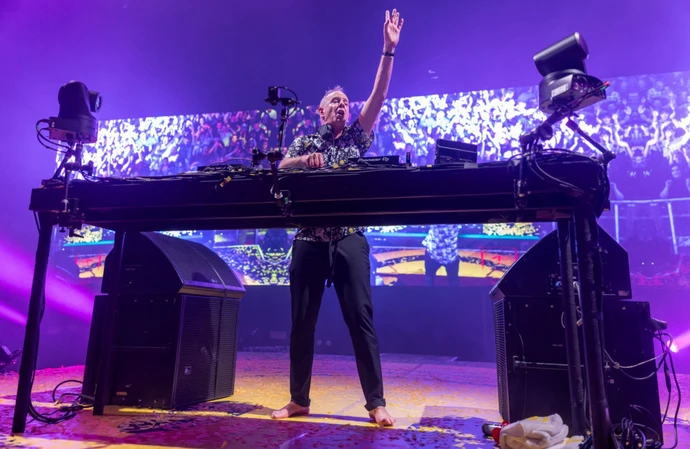
The night a DJ dragged two mismatched PAR cans, a hand‑me‑down strobe, and a dream into a friend’s backyard party is unforgettable. The sound was dialed — the sub hit just right — but the “light show” amounted to a red wash that pulsed along with the kick drum like a disco in cardiac arrest. Nobody cared. They danced. But it was clear that we were leaving something on the table.
Fast‑forward to our first gig with a real DMX‑controlled rig: four moving heads slicing through haze, color‑changing cues that snapped on the drop, and a crowd that roared before the bass even landed.
That night I learned what every serious performer eventually discovers: lighting isn’t decoration. It’s a silent instrument.
The Invisible Upgrade – Why Lighting Matters More Than You Think
Stage lighting is the silent guide that shapes emotion, directs attention, and elevates a performance from bedroom curiosity to something that feels like a show. How lighting sets the mood at live performances isn’t some esoteric art‑school theory — it’s the quiet force that makes a guitar solo ache or a buildup feel explosive. When you control that, you’re no longer just playing tracks. You’re building a world.
The numbers back up the obsession. According to Mordor Intelligence, the programmable stage lighting market already sits at $2.83 billion and is climbing at an 8.46% CAGR, on pace to reach $4.25 billion by 2030.
Festival organizers now earmark a significant portion of total production budgets for lighting — because vivid, shareable footage sells tickets for the next edition. That runaway growth isn’t about bigger venues; it’s about everyone from arena headliners to mobile DJs realizing that what the audience sees is as important as what they hear.
But here’s what nobody tells you: the upgrade path from a $200 wash light to a festival‑ready rig isn’t a straight line, and it’s not a spec‑sheet arms race. It’s a series of honest decisions about what you actually need, when budget gear delivers significant results, and at what point bulb‑based fixtures become more than a luxury.
Stage One: The $700 Bedroom Setup – Wash Lights and Sound‑Active Chaos
Most of us start the same way: a couple of PAR lights, maybe a cheap strobe or an LED bar, everything running in sound‑active mode. A beginner DJ can put together a functional rig for well under $700 — think two PAR lights and an entry‑level effect unit — exactly the kind of setup you’d use in a home studio, a practice room, or a tiny house party (Newfeel Laser).
You can achieve the look: soft color washes filling the room, and on a good night it’s enough to feel like “real” lighting. But here’s the rub: sound‑active mode is really just randomness with a tempo. The lights blink and change hue impulsively, with zero relationship to the music beyond volume spikes.
A breakdown that should go dark might get a full‑intensity strobe frenzy; a massive drop could be met with a polite fade to lavender. It’s the lighting equivalent of a drummer who only plays by himself.
DJ lighting boils down to three core types — wash lights for atmosphere, moving heads for movement, and effects like strobes and lasers for punctuation — and while sound‑active mode is the easiest entry point, DMX control is the professional standard that turns those tools from chaotic blinks into deliberate moments (Crossfader).
That realization hits everyone eventually. What you crave isn’t more brightness; it’s control.
Stage Two: $1,500 – Adding Moving Heads and a Cheap DMX Controller
The moment real moving heads are added, the whole conversation shifts. Where static washes fill a surface, motorized pan‑and‑tilt beams create depth, motion, and a sense of production that makes the set feel like an event. And a fortune isn’t needed to get there.
A well‑balanced $1,500 budget can split roughly 60% (around $850–$950) on moving heads as the centerpiece, about 25% on wash and PAR lights for backfill, 10% on effects like a strobe, and the remaining 5% — $75 to $100 — on a basic DMX controller (Betopper DJ).
Even a sub‑$100 controller, as Betopper’s advice confirmed, pulls your show out of sound‑active randomness and lets you cue looks, build scenes, and trigger moments intentionally. It’s the gateway drug to real show design.
Then comes the revelation most people don’t see coming: haze is needed. Not thick fog that chokes the room — just an invisible mist that catches every beam and transforms moving heads from distant blobs of color into tangible shafts of light that cut through the space.
It’s an accessory that instantly makes a $1,500 rig feel like a much more expensive one.
Stage Three: LED Moving Heads Take Over – The Bedroom DJ Goes Semi‑Pro
Once you’ve got DMX and haze sorted, the next logical step is upgrading to proper LED fixtures. For small to medium venues — the kind of spaces most DJs and bands actually play — 30–60W LED moving heads are often plenty, delivering reliable brightness, crisp colors, and zero drama (Music on Stage). No bulb replacements. Instant on/off. Color mixing that a halogen fixture can only dream of.
And the economics have flipped in our favor, too. Mordor Intelligence notes that average LED package costs have fallen 12% from their 2024 peaks, while color‑rendering scores now exceed 95 — meaning a single LED unit can replace multiple halogen roles.
It’s no surprise that LED fixtures captured 71.83% of stage lighting revenue in 2024. LED moving heads are a workhorse of the scene, and for the vast majority of club, bar, and mobile DJ use, they deliver everything you could ask for.
But venues don’t all scale the same way. Ceiling height is the silent spec that decides whether your LED rig cuts it. MOKA SFX offers a practical rule of thumb: for ceilings of 3–8 meters, 200–300W fixtures do the trick; 8–12 meters demands 350–480W.
As stages grow taller and rooms deeper, you bump into a hard physics wall where even a powerful LED spot struggles to push a tight, long‑throw beam through a festival tent or hall. That’s where the bulb‑versus‑LED puzzle stops being academic.
The Bulb vs LED Crossroads: When Beam Intensity Trumps Longevity
Why Bulb Beams Still Rule for Large Venues
No matter how good LED engines get, a discharge lamp moving head still produces a tighter, brighter, more penetrating beam at equivalent wattage — the kind of razor‑sharp aerial effect that can reach 20 or 30 meters and still look intentional, not washed out.
Bulb‑based beam moving heads (HID lamps like the 7R, 10R, 14R, and 17R) give you that intensity, but they require bulb replacement every 2,000–3,000 hours and need a 1–2 minute warm‑up.
MOKA SFX confirms that bulb beam lights offer higher brightness and greater penetration than LED beams at the same wattage, while LEDs counter with longer life, energy efficiency, and a wider color palette.
For festival stages, big‑room clubs, and any venue where the ceiling disappears above, bulb beams still hold a throne that LEDs haven’t yet usurped. If mid‑air columns of light that read from the back of a 2,000‑person room are wanted, discharge lamps are hard to beat.
The Decision Point: LED or Bulb?
The good news is that bulb‑beam options are no longer priced out of reach for independent artists: Stage lights moving head spotlight has carved out a reputation for making HID fixtures genuinely affordable. Their 230W 7R beam moving head, clocking in at $321 USD, packs a 1.2°–30° beam, 13 colors, 14 gobos, and a 6‑in‑1 rainbow prism in a 10.1 kg package.
Move up to the GalaxyJet 14R 311W at $487, and you’re looking at 365,800 lux at 5 meters, a 1.9° beam, and dual rotating prisms.
So how to make the choice? If you play in venues with ceilings above 8–10 meters and need razor-sharp aerial effects stretching 20–30 meters — and carrying a spare lamp and waiting for warm-up isn’t a problem — bulb-based moving heads in the 10R to 14R class are a smart bet. Larger 17R and 19R units tackle full-scale festival stages. On the flip side, if your reality is low-touch reliability, no bulb swaps, and rooms under ~12 meter ceilings, then stick with tight-beam LED spots and pocket the difference.
What’s happening on the world’s biggest stages proves that lighting is as much an instrument as a synthesizer. The ABBA Voyage show at the purpose-built arena deploys more than 30,000 lights and a 65-million-pixel screen to create spectacle that has generated significant revenue for the UK economy since 2022.
Beyond Gear: The Production Mindset – Haze, DMX Programming, and Creative Vision
None of this gear matters without production thinking. The first accessory every moving-head owner needs isn’t a bigger amp or a better controller — it’s a haze machine. It reminds performers that beam effects are essentially invisible without atmospheric mist, and a budget hazer under €995.00 can be a cost-effective upgrade.
DMX then turns the rig from a collection of blinking fixtures into an instrument to be played: cues that mirror breakdowns, color shifts that signal mood changes, chases that drive energy. Suddenly the set becomes something people watch, not just hear.
Production upgrades transform the entire audience experience, even at mid-tier events. ContactMusic’s review of Wild Life Festival 2017 noted that when one stage got a complete makeover — twice the size, superior lighting and sound — it instantly elevated the whole festival’s vibe.
Lighting design isn’t a happy accident; it follows a deliberate five-step process of analysis, research, concept, implementation, and evaluation, built on the four core functions of visibility, mood, composition, and focus (Gear4music).
The best bedroom DJs don’t just buy gear — they learn to think like a designer.
The Upgrade Path Checklist: From Your First PAR Can to a Festival-Ready Rig
Stage 1: Grab two color-wash PARs and a strobe (under $700) — learn placement, but don’t expect synchronicity.
Stage 2: Add a pair of budget LED moving heads, a sub-$100 DMX controller, and a hazer (~$1,500 all-in). Now dynamics can be cued.
Stage 3: Scale to proper 30–60W LED moving heads and expand to full DMX programming — the show looks intentional and the gear handles small-to-medium venues.
Stage 4: Decide: stay LED for maximum reliability and simplicity, or add a pair of bulb-beam moving heads (consider wallet-friendly 7R or 10R units) to get those razor-sharp aerial beams for festivals and large rooms.
Haze enables beams. DMX enables art. Thoughtful design beats random gear accumulation every time. The path from bedroom to festival doesn’t demand a lighting-rig lottery win — it just asks performers to pay attention to what the audience sees, and to be honest about which stage they’re really on.