Pop
Gimp masks, dopamine drenched BANGARANG-ers and a Temu Aristotle... What was going on at the Eurovision Song Contest?
Louisa Eagle recaps the 2026 Eurovision Song Contest, which walked a fine line between artistic expression and depravity…
Europe is still recovering from the spectacle that was the Eurovision Song Contest 2026… let’s just say it was less glitter and sequins, and more medieval torture-chamber with gimp masks, metallic corsets, chainmail and a heavy dose of leather-clad theatrics.
I’m still not over the tragedy of ignoring my gut and failing to put actual money on Bulgaria, because for once, I actually called it!
I could be rolling in riches right now, but no - I played it safe, too busy worrying that Finland, the bookies’ favourite, might win instead.
But it's fine. I'm flying to Sofia next year for Eurovision. It's official!
My Bulgarian friend who denied their heritage for complex reasons - socio-political, and a desire to escape the strains of traditional cultural expectations - has had a full circle moment with a newfound appreciation for his Balkan roots.
Nothing like a Eurovision victory to heal generational ambivalence.
It's murder on the Dancefloor
The 70th edition of Eurovision took place on 16 May at Vienna’s Wiener Stadthalle in Vienna, Austria, hosted by Victoria Swarovski and Michael Ostrowski.
After two semi-finals, 30 countries were whittled down to 20, joined by the automatic finalists: host country Austria and the so-called “Big Five”, although this year it was just four - France, Germany, Italy and the UK.
Spain - usually part of that elite club - was notably absent this year after withdrawing ahead of the contest, alongside Iceland, Ireland, the Netherlands, and Slovenia in protest over the European Broadcasting Union’s decision to allow Israel to participate amid the ongoing conflict in Gaza.
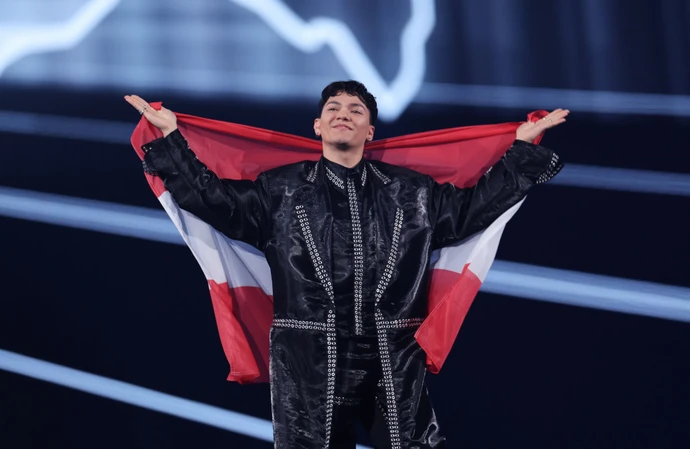
JJ Austria ESC 2025 // Credit: Avalon
Last year’s winner, JJ, opened the show with Wasted Love - and while it was a welcome return, I can’t say I was entirely sold on the reinvention.
Where last year’s performance felt raw, vulnerable, and refreshingly stripped back before that euphoric techno climax, this year was giving Cirque du Soleil vibes.
Whoever was responsible for this musical autopsy should be held accountable for murdering a masterpiece. The gritty techno element of the song, in my opinion the very backbone, was dissected and removed.
Like taking a hacksaw to a Leonardo da Vinci.
Over the next four hours, the 25 countries that made it to the final battled it out on the sweaty dancefloor, with Denmark opening proceedings and Austria closing the night.
As always, there were entries that evaporated from memory the second they ended - pleasant, polished, and entirely forgettable. Others, however, lingered… for the sheer depravity.
One thing was certain. Whilst most countries came to battle, The Balkans came to war carrying out an absolute massacre.
My Big Five: Bulgaria, Greece, Romania, Albania and Croatia.
#12 Bulgaria: DARA - Bangaranga | Eurovision 2026
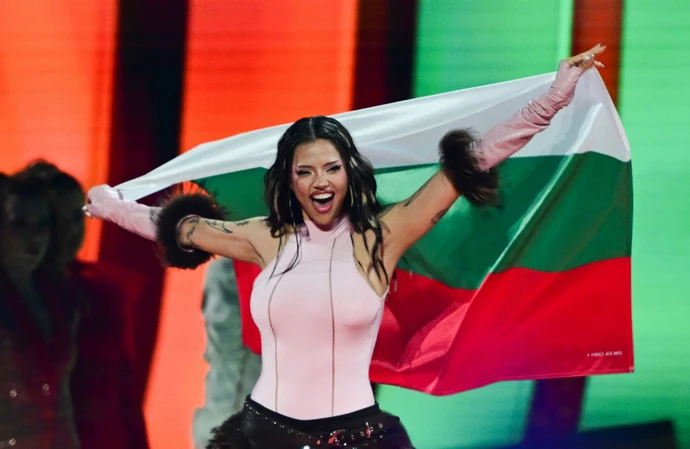
DARA delivered Bulgaria’s first-ever win with dopamine-soaked banger BANGARANGA
Catchy, chaotic, infectious and impossible to ignore.
#06 Greece: Akylas - Ferto | Eurovision 2026
Akylas is to modern-day Greece what Aristotle was to the ancient world.
While Ferto - meaning “Bring It” in Greek - presents itself as an upbeat pop entry on the surface, there’s a far deeper undercurrent at play.
The track wrestles with personal and societal tensions - material ambition, unchecked greed, and the human tendency to fill emotional voids through relentless consumption.
Rejecting hollow hedonism, Akylas delivers his philosophy dressed up as something beautifully unhinged.
Ferto serves as a critique of modern consumerism. Because it’s not the ancient ruins that are crumbling, it’s modern values, eroded by excess.
Akylas's 10th-place finish with 154 points solidified his musical thesis that intellectual philosophy can coexist with a grand Eurovision stage presence.
#24 Romania: Alexandra Căpitănescu - Choke Me | Eurovision 2026
If Evanescence and Nirvana ever had a love child, it would probably sound something like this.
Choke Me stirred predictable controversy, with critics clutching their pearls over lyrics deemed “dangerous” and “reckless” for allegedly promoting strangulation.
A brief moral panic followed, complete with a familiar witch-hunt orchestrated by the virtue-signalling woke brigade, petitioning for Alexandra to be removed from the competition.
Nevertheless, she made it through, finishing in third place with a total of 296 points.
Alexandra insisted the song's dark, intense aesthetic and provocative lyrics, "I want you to choke me, make my lungs explode", were metaphorical and actually about being strangled in a toxic relationship.
#05 Albania: Alis - Nân | Eurovision 2026
Albania’s Alis brought Nân, serving what can only be described as Johnny Depp in chainmail - cathedral-core, all echoing bells and haunting grandeur, like a Eurovision detour through Notre-Dame.
While it was an emotional heartfelt song dedicated to his mother, one can’t help but wonder if there are unresolved mummy issues lurking beneath the surface.
The performance ultimately earned Albania 145 points to finish in 13th place.
#13 Croatia: Lelek - Andromeda
Croatia’s Lelek brought Andromeda, serving a cinematic masterclass in haunting folk that felt like stumbling into a dark fairytale.
The performance carried the eerie, solemn energy of lost Little Red Riding Hoods wandering through a shadowy forest, draped in striking traditional motifs and historical weight.
Beneath the gorgeous, atmospheric window-dressing of echoing ethno-vocals was a harrowing undercurrent. The track beautifully yet devastatingly unmasks the generational trauma of Balkan history, specifically paying homage to sicanje - the ancient practice of Catholic Croat women tattooing themselves to protect their identity and escape forced captivity.
It was a breath-taking, spine-chilling moment that transformed the stage into a living monument of historical endurance - ultimately earning 15th place with 124 points.
A few honourable mentions...
#20 Sweden: Felicia - My System
Sweden’s Felicia with My System was pure early 2000s eurodance nostalgia, like Everytime We Touch by Cascada got a sleek, slightly existential makeover courtesy of Anyma. Somehow both dated and futuristic at the same time. The high-energy club track ultimately landed in 20th place with 51 points,
#08 Australia: Delta Goodrem - Eclipse
The Neighbours star soared the stage at Eurovision belting out a celestial power ballad.
Looking dazzling, Delta Goodrem delivered a stellar performance that was out of this world with her oozing star power.
An an iconic moment in Eurovision, though it was not enough to Eclipse the leader board, finishing fourth with 287 points.
#18 Poland: ALICJA - Pray
As a half-Polish viewer - bias aside - Poland’s entry took me by surprise.
I literally had no idea Poland did gospel music. But ALICJA absolutely nailed it. Like Poland's very own Aretha Franklin, hitting every single high note with precision.
While the performance ultimately landed in 12th place with 150 points, lines like "I think you need a sip of holy water..." made a statement. I'll be using that as a sophisticated comeback for sure.
This was a triumphant, soulful redemption of Poland’s soiled Eurovision reputation.
#21 Cyprus: Antigoni - Jalla
From Love Island straight to the Eurovision main stage.
Despite facing a wave of harsh press regarding her live vocal delivery, there is no denying that Antigoni’s Jalla - a nod to Cypriot slang meaning "give me more" - is an infectiously catchy pop track.
While the British-Cypriot singer was proud to fly the flag for the Mediterranean island, her reality TV background unfortunately made her an easy target for cynical critics.
The noise reached a boiling point earlier this month when an open letter signed by various public officials and artists lobbied CyBC to pull the entry entirely, claiming the music video promoted "dangerous road behaviour".
Ultimately, the summer banger landed in 19th place with 75 points.
Sounds like evil eye to me. Return to sender and keep doing your thing girl. Jalla, Jalla
#17 Finland: Linda Lampenius x Pete Parkkonen - Liekinheitin
It was one of the bookies favourites to win. I could clearly see why.
Finland absolutely scorched the stage with this number. The dualities presented a striking fire and ice contrast.
A dark, brooding and mysterious Pete Parkkonen delivered smouldering, heavy pop vocals, while classical icon Linda Lampenius - looking every bit the Scandinavian ice queen in radiant white - tore through a blistering live violin solo on a rare 18th-century instrument.
Surrounded by silver staging that abruptly gave way to massive, towering jets of pyrotechnic flames, the performance perfectly mirrored the song’s lyrics about a lover who is simultaneously burning hot and ice-cold.
Blazing all the way to 6th place with 279 points, it was an unforgettable, high-octane spectacle.
A Nail Biting Grand Finale and a History Defying Moment
After watching the Semi-Final on Thursday, I knew from Bulgaria’s explosive opening they were my winners.
What a way to make a comeback! After a few years out of the competition, Bulgaria didn’t just return, they detonated.
And for the first time EVER, they won!
Pop powerhouse DARA (Darina Yotova), already a household name back home, absolutely destroyed the stage with Bangaranga - an electrifying, dopamine-saturated dance track.
While she completely dominated the night by winning both the jury and public votes to rack up a colossal 516 points, it was a highly anticipated, neck-and-neck points race against Israel's Noam Bettan.
Israel put up a massive fight with a strong public televote, but ultimately finished comfortably behind in second place with 343 points.
DARA's historic performance left the rest of the competition completely in the dust.
UNHINGED in the best way possible
Now, when I say unhinged, I don’t use it lightly. Sometimes it means a performance that spirals so far into creative madness you’re left questioning your own grip on reality.
UK’s entry Look Mum No Computer – Eins, Zwei, Drei is the perfect example. Like early 2000s took a tab of acid and fell headfirst into a neon-lit rabbit hole, mixed with a fever dream.
A descent into pure psychic entropy.
But Bangaranga is a different beast entirely.
It walks a fine line between artistic expression and depravity, but never loses grip on reality, because it knows exactly what it’s doing. The chaos is choreographed. The madness has a spine.
Where many dance tracks are all sugar rush and no substance - like the musical equivalent of McDonald’s - Bangaranga has structure beneath the frenzy. There’s intention in the disorder.
And that’s what makes it hit harder.
Madness is Genius
Beyond the surface-level chaos, the track carries something more grounded: rebellion, identity, emotional release.
Which makes sense when you learn that DARA was diagnosed with ADHD as an adult, a theme she explored in her 2025 album ADHDARA.
And while ADHD doesn’t define a person, it undeniably shapes how they experience and express the world. DARA leans into that, without turning it into a gimmick or a label. Instead, she turns it into art.
She told The Independent: “Last year I released my most personal album yet, ADHDARA – named after the fact that I was diagnosed with ADHD as an adult. That album was about owning every contradictory part of yourself: the chaos, the sensitivity, the fire. It was terrifying and liberating in equal measure. “
Musical alchemy, but make it pop
That’s what Bangaranga does so well. It alchemises chaos into something powerful. Where overthinking becomes energy, emotional intensity becomes a wellspring for creativity and restlessness becomes movement.
Bangaranga is transformation.
She added: “Bangaranga is pop music with folklore bones. The word itself comes from Jamaican slang - it means uproar, commotion, a beautiful kind of disorder. It has this raw, phonetic power that bypasses translation – you feel it before you understand it. We wanted a song that could land in Vienna or London or anywhere and hit you physically before it hit you intellectually.
When I think about what it truly is for me, at its deepest level, I keep coming back to the kukeri – the ancient Bulgarian ritual where men dress in extraordinary costumes of bells and fur and animal masks, and move through villages at the start of the year making the most ferocious noise imaginable.
The purpose is to scare the bad spirits away. The energy is overwhelming, almost frightening – and yet it is entirely joyful, entirely communal, entirely alive.
That is Bangaranga. It is noise and fire and rhythm deployed as a force for good – to chase away whatever darkness has settled, to shake the room back to life.
Bangaranga is a riot - but it's a happy one. An invitation, not a threat. "Come in, surrender to the lights, no one's going to sleep tonight".