
Pop
EINS ZWEI DREI! Filthy, Feral and Loud: How Eurovision traded Camp Catharsis for a Brutal Electronic Takeover
It’s no longer Eurovision, It’s EDM-vision… and there is nothing polite about this evolution. It’s a savage sonic assault...
In a modern cultural landscape obsessed with boundaries and mutual consent, electronic music recognises no such borders.
Eurovision has evolved. The days of sequined divas chasing effortless camp catharsis through predictable key changes and wind machines are giving way to something entirely different.
The contest has officially entered its EDM-Vision era. Trading safe traditional pop for a relentless sonic frontier defined by high-production electronic elements, weaponised folk-hybrids, and industrial sound design experiments.
While the rest of the world plays by polite rules of engagement, this new wave of production is unashamedly depraved.
Look no further than Eurovision 2025 winner JJ’s Wasted Love, proving that Austria is no longer content with just birthed Mozart and high opera, but would rather drag those pristine operatic vocals into a dark industrial warehouse and weaponise them as raw lead synth material.
While Cezar of Romania delivered an unhinged, gothic dubstep anthem with 2013's It’s My Life and Sweden's two-time reigning queen Loreen dropped a filthy banger with Euphoria, both tracks merely served as prototypes. This new, high-energy direction is increasingly visceral.
Enter Look Mum No Computer, the British mad scientist who clearly understood the assignment by leaning into the absurdity of Eurovision chaos. Plugging into the stage with Eins Zwei Drei - wires exposed and hardware synths buzzing - he brings a DIY rave mystique.
Injecting 90s Brit-pop energy into the competition, the gritty track functions as a raw, unstable alternative to polished Eurodance nostalgia.
With aggressive, repetitive vocals and Scooter-adjacent DNA, Look Mum No Computer embraces a live-wired, filthy unpolished sound, re-embracing the contest's inherently feral nature to become the ultimate agent of electronic rebellion.
If traditional pop is a polite conversation, modern EDM-Vision is a relentless, live-wired guerrilla assault. In this musical arena, consent is an extinct concept.
The production is dirty, feral, and aggressively intrusive. It corners you in the dark, grabs you by the throat, and rattles your skeleton with an uncompromising sonic violence that leaves you zero choice but to surrender to the noise.
JJ- Wasted Love (Austria 2025)
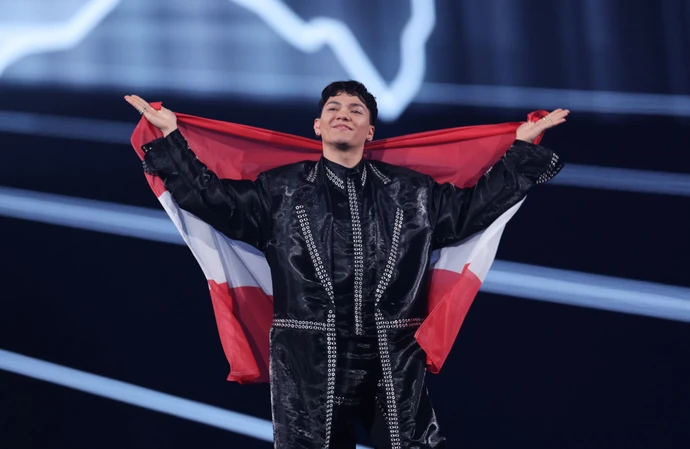
Austria's entrant JJ Wasted Love wins ESC 2025 / Credit: Getty
When Austria walked away with the glass microphone thanks to JJ's Wasted Love - securing a massive 436 points overall - it didn’t just break the scoreboard…it staged a ruthless audio violation.
This wasn't your standard, run-of-the-mill big vocal moment where a diva in a glittery Bond-girl gown begs for your attention through a wind machine.
This track doesn't ask for permission. It is a depraved sonic assault where the bass forces its way directly into your nervous system. This is not a song entry, this is in invasive, beautifully controlled acoustic demolition.
Wasted Love is what happens when you strip operatic vocals of their theatrical, high-brow pretension and treat them like raw, weaponised lead synth material.
We’ve all seen the lazy Eurovision formula before - slapping a random opera singer over a generic four-to-the-floor beat and calling it "art."
JJ completely skips that cliché. Instead, it feels like A Night at the Opera got locked inside the deepest, darkest depths of Berghain at 4:00 AM, and some madman decided the ultimate emotional peak should double as a skull-shattering bass drop that rattles your rib cage until your bones splinter.
What makes it truly brilliant, though, is the sheer, menacing restraint underneath the chaos. Everything is held back just enough that when the track finally releases, it feels mathematically engineered to violently conquer a dancefloor rather than an accidental mess.
It is high drama without the theatrical untidiness. Rejecting the perfectly polished and the safe by diving headfirst into the dark.
Gabry Ponte – Tutta L’Italia – San Marino 2025
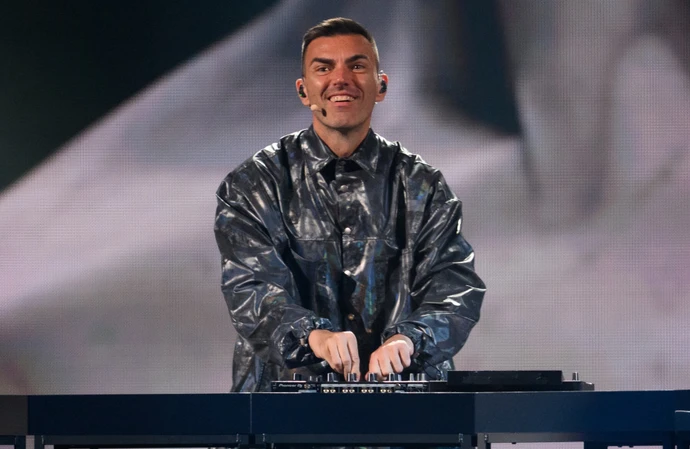
Gabry Ponte for San Marino ESC 2025 // Credit: Getty
Talk about a blast from the past. Eurodance royalty and former Eiffel 65 maestro Gabry Ponte traded his 1999 Blue world for the blinding lights of the Eurovision Song Contest. Representing San Marino in Basel, Ponte unleashed Tutta l'Italia - a high-octane EDM assault that proved too loud for the juries.
He spun his way straight to the Grand Final, ultimately landing a 26th-place finish.
Hey, when you already birthed Blue (Da Ba Dee), you do not need a trophy to prove you dominate the decks.
Nemo – The Code (Switzerland 2024)
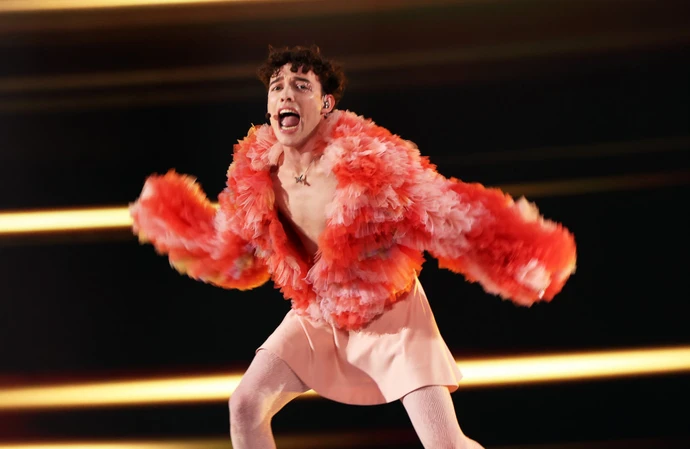
Swiss entrant Nemo The Code wins ESC 2024 / Credit: Avalon
Nemo’s The Code felt like the exact moment the Eurovision rulebook was thrown into a digital blender and set to pulverize - an audacious gamble that captured the crown with a staggering 591 points.
But this wasn’t a victory won by polite seduction, it was a hostile psychological breach.
The Code is like trying to decipher a mind-game, a chaotic symphony of fractured emotional states being aggressively forced into your headspace and unloaded in real-time like a glitching, malicious operating system.
One minute you’re listening to a deceptive, slick pop hook, the next your ears are subjected to a violent, non-consensual assault by fractured hyperpop.
Right when you think you’ve escaped the grip, Nemo drops an operatic break that twists the knife - something that absolutely should not belong in the same audio file, yet it ruthlessly penetrates the mix and locks you in.
It was almost infuriating how deliberate this sonic violation truly was. The track put on a masterful performance of pretending to spiral out of control, while secretly tracking its targets and knowing exactly what it’s doing with every single millisecond.
It is chaotic and messy on the surface, but brilliantly, engineered to overpower the listener beneath it.
Kathleen - We Will Rave You (Austria 2024)

Kaleen from Austria performs We Will Rave You at ESC 2024 / Credit: Getty
A true slave to the rave!
Kaleen’s We Will Rave is a sleek, 90s-inspired club track engineered for maximum forward motion. Unlike the entries that thrive on chaotic energy, this track delivers a highly controlled intensity. Though it ultimately finished 24th in the Grand Final with 24 points, its sonic architecture remains a masterclass in modern Eurodance.
The song focuses entirely on a polished, radio-friendly structure, perfectly embodying a growing trend within the contest. Capturing raw, late-night club subculture and distilling its energy into a highly refined, three-minute commercial format.
Windows95man - No Rules! (Finland 2024)
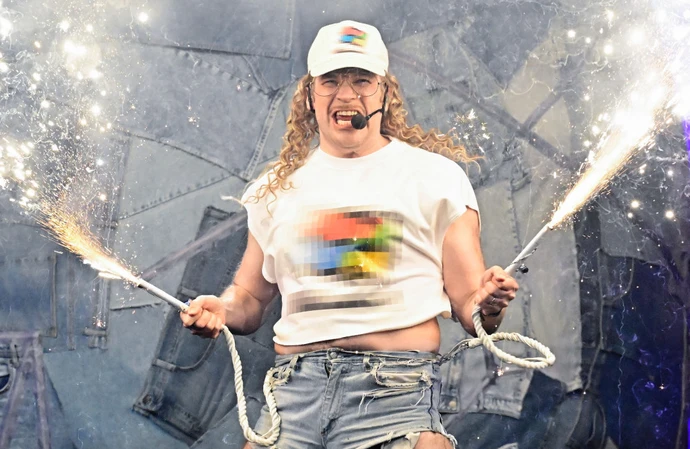
Windows95man for Finland at ESC 2024 / Credit: Getty
Then there is Finland’s 2024 entry, Windows95man, whose track No Rules! bypassed international juries through a predatory, relentless late-90s warehouse energy.
While the staging wore a mask of absurd, pantsless comedy, the track's underlying architecture executed a serious, hyper-charged, and brutal techno-pop assault. Beneath the chaotic vocals lies a fiercely fast-tempo, industrial-strength bassline that pins down your rib cage like a savage, unforgiving 130-BPM four-on-the-floor kick drum.
It is a sinister piece of electronic nostalgia that relies on raw, unfiltered rave synths to violently breach your space. By pairing a soaring high-register chorus with dirty, mechanical instrumentation, the entry proved that heavy, vintage club energy can weaponise humour for primal attack, securing a roaring, televote response despite finishing 19th overall.
Käärijä – Cha Cha Cha – (Finland 2023) & Baby Lasagna – Rim Tim Tagi Dim (Croatia 2024)
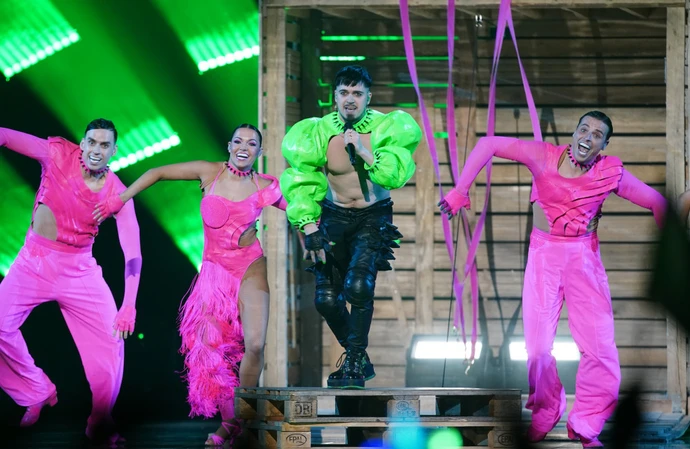
Finish entry Kaarija performs Cha Cha Cha at ESC 2023 / Credit: Getty
To understand how Eurovision transformed from a polite pop contest into a full-scale industrial rave, you have to look at the twin peaks of the modern televote.
Käärijä and Baby Lasagna. These two entries didn't just borrow elements from electronic subgenres, they weaponised hyperpop, metalstep, and industrial techno to stage a hostile takeover of the European public's subconscious. They are the twin deities of the Heavy-EDM-with-a-silly-prop era.
Their individual movements were so culturally massive that they ultimately merged into a singular electronic monolith at Eurovision 2025 in Basel. Returning as the ultimate public favourites, the duo took the stage together for a chaotic, video-game-esque mash-up duel of their respective hits.
The resulting joint track, #Eurodab, made history by shattering records to become the most-viewed Eurovision interval act of all time. It was the ultimate, official validation that the contest's raw rave transformation was no longer a temporary anomaly, but its permanent new identity.
First came Finland's Käärijä in 2023 with Cha Cha Cha, a track whose sonic architecture is split into two wildly opposing halves. The first 90 seconds are pure, unadulterated industrial electronic brutality. The sound design centres on a filthy, over-distressed synth bassline that hits with the mechanical violence of Rammstein, paired with aggressive, hyper-compressed rap vocals.
Then, right at the midpoint, the production pulls off a staggering genre-pivot. It completely drops the industrial distortion, modulating instantly into a sparkling, neon-drenched hyperpop Schlager melody.
It’s a jarring, brilliant piece of audio engineering, simulating the exact chemical transition from an aggressive, sweat-soaked warehouse rave to a euphoric, dopamine-heavy club floor.
The staging for Cha Cha Cha was a visual manifestation of this split-personality production. Käärijä emerged in a now-iconic, toxic-green padded bolero jacket - bare-chested and primal - trapped inside a giant, shadowy wooden pallet box. The lighting design was stark, industrial, and heavy on the strobe effects. But the moment the genre shifted, the stage erupted into a blinding neon pink. A troupe of terrifyingly smiley ballroom dancers broke free from the shadows, forming a human centipede of camp energy.
A year later, Croatia’s Baby Lasagna took that heavy electronic blueprint, added a heavy dose of rural anxiety, and delivered Rim Tim Tagi Dim.
If Käärijä was hyperpop chaos, Lasagna was a masterclass in aggressive, stadium-sized techno-rock. The track is built around an incredibly infectious, loop-based synthesizer riff that mimics a heavy metal guitar chug, locked to a relentless, four-on-the-floor big-room techno beat.
Production-wise, it is an absolute juggernaut. The sub-bass is mixed so heavily that it acts as a physical engine, driving the track forward without a single moment of acoustic relief. The vocal phrasing is staccato and mechanical, functioning as just another rhythmic element pinned tightly to the sequencer grid.
Visually, Baby Lasagna married industrial techno with traditional Balkan folklore in a way that should have been a complete disaster, but instead proved madness is genius.
Dressed in oversized, historical white puff-sleeves paired with neon-pink strobe lace, he and his band looked like agrarian peasants who had accidentally wandered into a hardcore rave in Berlin.
The LED backdrops were a manic, stylised montage of neon farm animals dancing to the beat, perfectly mirroring the song's themes of rural flight. The lighting design was a masterclass in stadium scale, utilising towering columns of pure white strobe lights and massive, timed pyrotechnic bursts that erupted precisely on the main rhythm drops.
Alessandra – Queen of the Kings (Norway 2023)

Norwegian entry Alessandra performs Queen of the Kings at ESC 2023 / Credit: Getty
If you want to witness the exact moment Eurovision pop production was completely weaponised by TikTok-era algorithmic sequencing, look no further than Alessandra’s Queen of the Kings. A highly compressed, 130-BPM hyper-pop-opera assault engineered to hijack your dopamine receptors in under three seconds.
It completely bypassed the traditional slow-burn build of older Eurovision entries to deliver an unrelenting, peak-time festival anthem wrapped in Viking-pop mythology.
From a sound design perspective, the track is a textbook example of modern, high-compression electronic production. The acoustic foundation - a pseudo-medieval folk rhythm - is instantly crushed and locked into an aggressive, driving Euro-dance four-on-the-floor kick drum.
The production genius lies in how it treats vocal frequencies. Alessandra’s operatic whistle notes and fierce, staccato delivery aren't mixed as a traditional vocal line, they are gated, compressed, and layered so they cut through the mix with the exact same piercing velocity as a digital saw-wave synth.
The track entirely ditches subtle chord progressions in favour of pure, vertical energy architecture. It gives you a massive, bass-boosted drop right out of the gate, resets instantly for the verse, and then builds tension with a rising snare-roll that practically demands a stadium-sized reaction.
Clad in a regal, emerald-green velvet bodysuit with structural gold pauldrons, Alessandra looked less like a traditional pop diva and more like a high-fantasy video game boss who had just walked onto a mainstage.
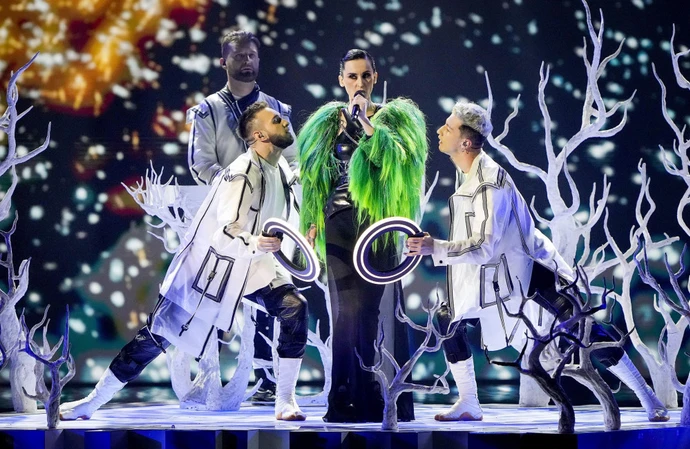
Go_A – Shum (Ukraine 2021)

Go_A performs Shum at ESC 2021 / / Credit: Getty
Welcome to the Ancient Apocalypse.
Go_A's Shum is where folktronica actually stopped being a gimmick and became a weapon. This isn’t one of those lazy, patronising Eurovision entries that merely blends traditional folk elements with an electronic beat to look cultured.
No, Shum forcefully hijacks ancient folklore, loops it into a relentless rhythmic engine, and locks it in a basement with no hope of escape. Kateryna Pavlenko’s piercing white-voice vocals cut through like bass a pagan ritual chant, synchronised to the futuristic sounding rhythm.
From a production standpoint, the track is haunting. Completely defies standard pop songwriting architecture. The driving, industrial bassline and the frantic, hyper-speed sopilka (folk flute) riffs act as a sonic vise, ratcheting up the BPM and the atmospheric pressure until its euphoric release.
The staging and visual execution were equally brilliant in their dystopian intensity. Placed on a minimalist, stark white neon stage populated by skeletal, glowing trees, the band looked like a post-apocalyptic cult summoning ancient spirits via a modular synth rig.
The lighting shifted from cold, industrial blues to aggressive, strobe-heavy flashes that mirrored the accelerating tempo. As the track reached its peak, the LED screens erupted into a manic, spinning vortex of digital iconography, perfectly visualising the transition from ancient woodland folklore to raw, cybernetic rave energy.
Because modern Eurovision staging isn't about sparkly backdrops anymore, it’s about creating a fully synchronised, audiovisual assault.
Cezar – It’s My Life (Romania 2013)
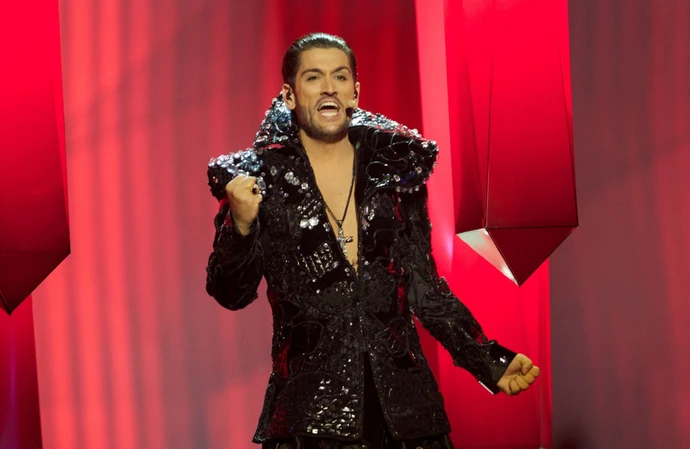
Cezar or Romania at ESC 2013 // Credit: Getty
Let’s be entirely honest...Cezar’s It’s My Life remains one of the most wildly misunderstood, jaw-droppingly unhinged artifacts in the entire Eurovision archive. Back in 2013, the collective continent watched this performance with a look of pure, unadulterated horror, collectively asking What on earth is this Dracula-opera-dubstep monstrosity?...
But looking back through our contemporary, EDM-poisoned lens, Cezar wasn't a joke. He was a terrifyingly ahead-of-its-time prototype.
Production-wise, the track is a chaotic collision of frequencies that shouldn't legally be allowed to exist in the same master file. You have a countertenor delivering extreme, glass-shattering operatic technique, which is then violently dropped directly into a filth-laden, early-2010s dubstep structure.
Instead of smoothing out the abrasive edges to make it accessible for casual radio listeners, the production leans entirely into the friction. The sub-bass lines rattle the lower frequencies while Cezar's falsetto assaults the upper limits of human hearing, leaving absolutely no mid-range safety net for the faint of heart.
The staging, of course, was pure, unadulterated camp-gothic theatre masquerading as a mainstage rave. Emerging from the floor like a vampire lord ascending from a digital crypt, Cezar stood flanked by half-naked dancers writhing in some sort of electronic purgatory, while the LED screens flashed with literal lightning and molten imagery.
At the time, the juries treated it like a bizarre theatrical mistake. In hindsight, it was the structural blueprint for the opera-meets-Berghain hybridisation we celebrate today.
Cezar walked in a giant, billowing red dress so that acts like JJ could run.
Loreen – Euphoria (Sweden 2012)

Swedish entry Loreen wins ESC 2012 with Euphoria/ Credit: Getty
Fourteen years later, and Loreen’s Euphoria remains the undisputed, holy-grail blueprint for electronic pop in the contest. Every single dance-adjacent track that has crossed the Eurovision stage since 2012 is either desperately trying to replicate this song, or actively reacting against it.
This isn't just a surface level pop track with a heavy beat, its deep emotional EDM, stripped down to its most raw, lethal, and essential form. There are no tacky Eurodance gimmicks here, no desperate pandering to radio playlists, and absolutely no filler.
Euphoria takes you on Loreen's journey to spiritual enlightenment by transporting you to her realm where you ride the sonic waves.
The track relies on a dark, pulsing synth pad and a sparse, echoing beat that leaves massive amounts of negative space for Loreen’s vocals to inhabit.
Instead of blowing its budget on a massive, premature chorus, the production utilises an intentional, slow-burning controlled build. The pre-chorus stacks subtle vocal layers and rising synthesiser frequencies, so that when the four-on-the-floor kick drum finally locks in and the main hook drops, the release of kinetic energy feels, well, euphoric. It’s an exercise in supreme restraint, using structural minimalism to achieve maximum emotional devastation.
The staging was equally revolutionary, completely tearing up the traditional glamorous Eurovision diva rulebook. Bathed in low-key, atmospheric blue-shadow lighting and choked with an obscene amount of stage fog, Loreen performed in near-darkness, looking more like an indie-electronic club shaman than a pop star as she executed her famously jagged, contemporary choreography.
There were no flashing LED screens or exploding pyrotechnics to distract you. Instead, the visual climax relied entirely on a simulated snowstorm and a single backing dancer appearing out of the mist for a frantic, shadowy martial-arts-inspired duet.
It was moody, artistic, and fiercely cinematic, showing that perfection is not always about control, it's also about letting to.
Sunstroke Project & Olia Tira – Run Away (Moldova 2010)
Long before TikTok algorithms began dictating what tracks live or die on the charts, Moldova accidentally engineered a piece of viral internet history that fractured the Eurovision timeline forever. In 2010, Sunstroke Project and Olia Tira unleashed Run Away, a track that would go on to live a double life. To the casual viewer at the time, it was a hyperactive, slightly unhinged slab of Euro-house, but to the internet, it was the birthplace of the immortal Epic Sax Guy meme.
From a technical perspective, the track’s sound design is a brilliantly aggressive example of early-2010s club compression. Structurally, it is laughably simple, but culturally, it is exceptionally loud.
The production abandons any pretense of intricate songwriting to rely entirely on a relentless, driving Euro-house rhythm grid, heavy on the side-chaining, with digital synth stabs that feel like they were ripped straight out of a Casio keyboard presets menu.
The real stroke of production genius, however, lies in how it weaponises its instrumentation. The violin and saxophone aren't used for traditional, soaring solos - they are treated as short, punchy, hyper-repetitive digital loops.
Sergei Stepanov’s legendary saxophone hook is mixed right to the front of the track, compressed within an inch of its life so it hits the eardrums with the exact same mechanical velocity as a synthesised lead line.
It’s loop-based composition at its most unapologetically infectious.
Last month KSI's dreams came true when he got to meet his idol Epic Sax Man. KSI admitted he adopted the infamous hip thrusting dance move and even wore a gold body suit in tribute of this Eurovision legend.