
Filming the Pit: Why Your Smartphone Video at a Gig Could Land You in Legal Trouble
How filming gigs on your smartphone can get you into legal trouble...
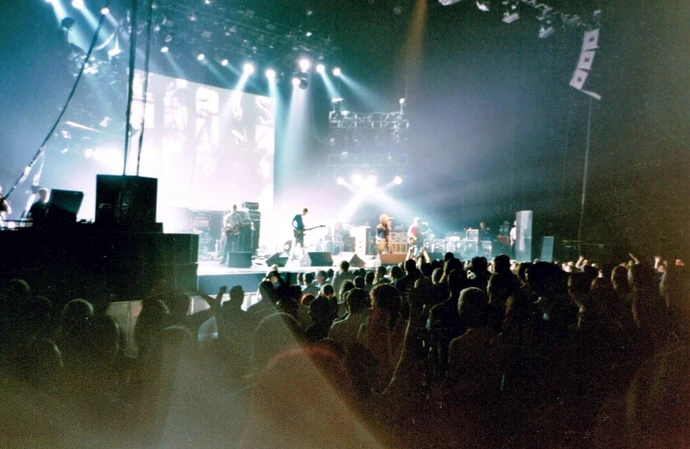
For live music fans, capturing the perfect moment - the stage lights, the crowd surge, or even just a favourite guitar solo—is standard practice. However, experts are cautioning that the impulse to film and share content from festivals and concerts, especially when accidents or emergencies occur, carries significant legal risks concerning privacy and data protection.
In the wake of a tragic accident at an Oasis concert in 2025, where a fan sadly fell to his death, experts are warning about the potential risks of filming at events and sharing content online.
Legal expert Theodore Martin, of Ex Offener Grants, an organisation that helps people with criminal backgrounds access support and financial help, warns that regardless of any potential new laws, “street-based content creators” risk breaking current laws without even realising it.
The Right to Film: A Grey Area in the Crowd
Many concert-goers operate under the assumption that filming in a public venue is completely unrestricted. However, while it is generally accepted that you can expect to be recorded in public, this freedom is not absolute.
Theodore Martin notes that “Many members of the public seem to believe that they can’t be filmed without giving consent, which isn’t true”. He clarifies the legal standard in the UK: “In the UK, it is not against the law to film someone in public. That’s because it’s very hard for anyone in a public space to claim that they have a reasonable expectation of privacy”. This applies heavily to crowded events, where people accept they are being observed.
However, the ease of filming does not negate consequences. As Martin cautions: “This does not mean that content creators can simply shove a camera in someone’s face without any legal consequences”.
The Line in the Sand: Filming Distress
While the music is playing, filming is mostly fine. The legal dynamic shifts dramatically, however, if someone is injured or in distress, such as during a crowd crush or a fall.
There are specific scenarios where a person who is in public may have a reasonable expectation of privacy, even at a large concert. These scenarios include when people are suffering medical emergencies, people in distress and victims of crime.
This principle was established in a case where, despite being in public, supermodel Naomi Campbell successfully sued a newspaper for publishing photos of her leaving a Narcotics Anonymous meeting, arguing that she had a reasonable expectation of privacy.
Mr. Martin illustrated the potential dilemma, using an analogy applicable to a large venue: “Let’s say for example you’re filming at a popular tourist destination, like Trafalgar Square. By chance, someone in the frame has an accident or falls ill. What you do next can and will influence whether or not you breach any of that person’s rights”.
Publishing the Footage: The Risk of Disclosure
The law treats the act of making images of people and publishing them “very differently”. Both actions may fall under the Human Rights Act 1998 or the Data Protection Act 2018, which exist to protect people from others meddling in their private affairs.
When a serious incident occurs, the decision to share the footage is where the greatest legal risk lies. “Most reasonable people would not even think about sharing a video of an innocent person in distress, regardless of where they were,” but some people rush to post content on platforms like TikTok or YouTube, hoping for it to go viral.
In these scenarios, “it’s possible that the subject’s rights could have been breached”. Furthermore, under the General Data Protection Regulation (GDPR), a person’s health status is defined as “special category data”. If a fan shares footage of someone receiving medical attention for an injury or medical event, the person publishing the content may be breaching the regulation by disclosing that individual's health status.
The consequences of losing control over footage once it is uploaded can be devastating for those involved. Fiona Ferris, who helped a car crash victim whose resulting footage went viral, shared her emotional fallout:
"I wondered who else had seen it, I wondered if I had given CPR correctly," she added. "I was really sad, really angry, a whole flurry of emotions, the helplessness of where this video has gone". She concluded: "Once it's gone, it's out of your control, it's shared everywhere.".